

Free roof inspection with deck photos before we talk money - GAF and Owens Corning certified installation






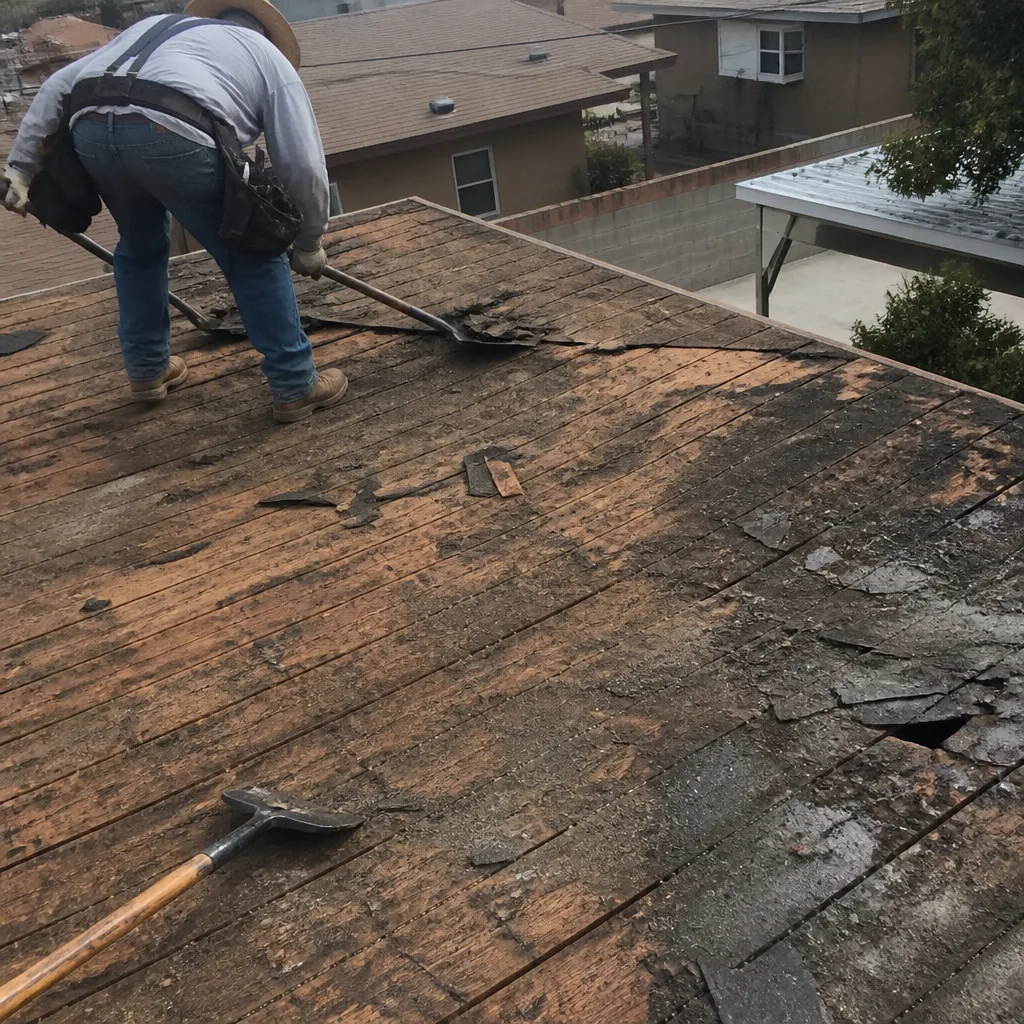 Before
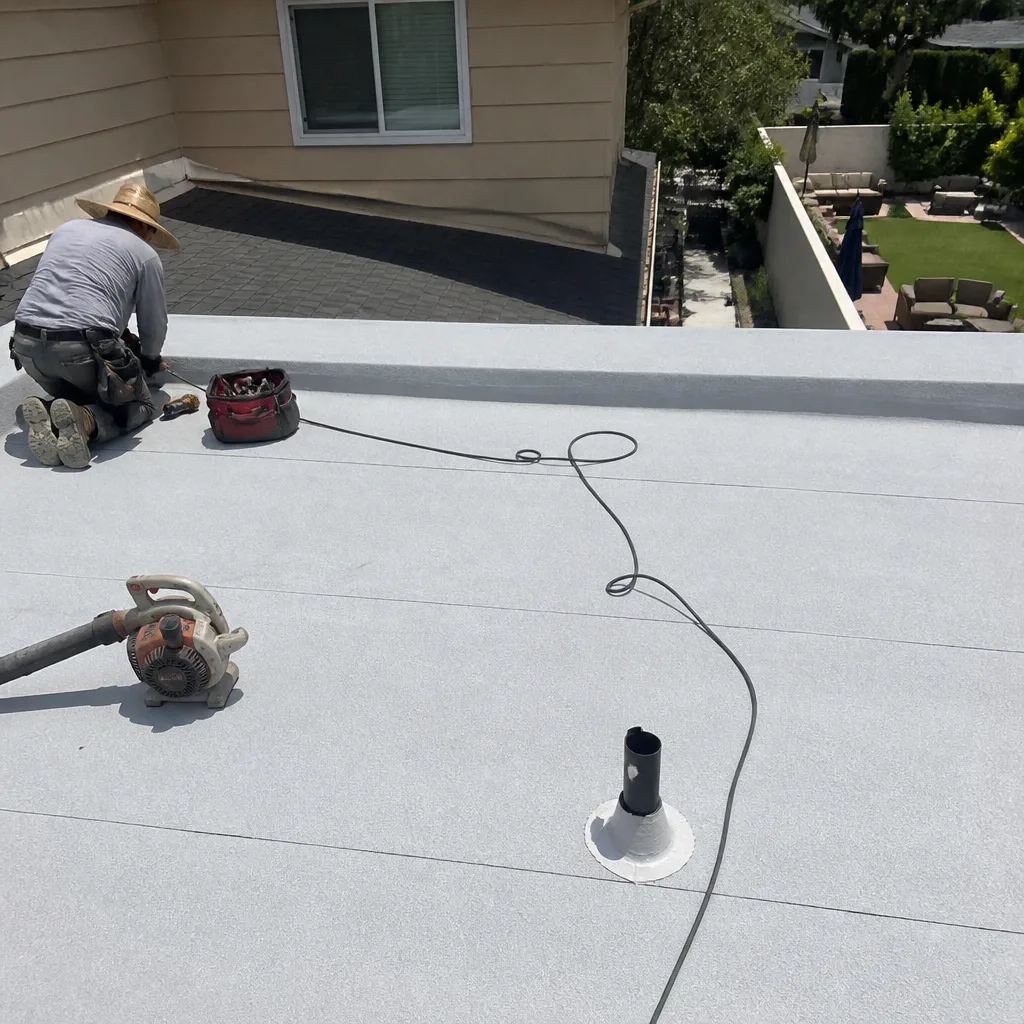 After
After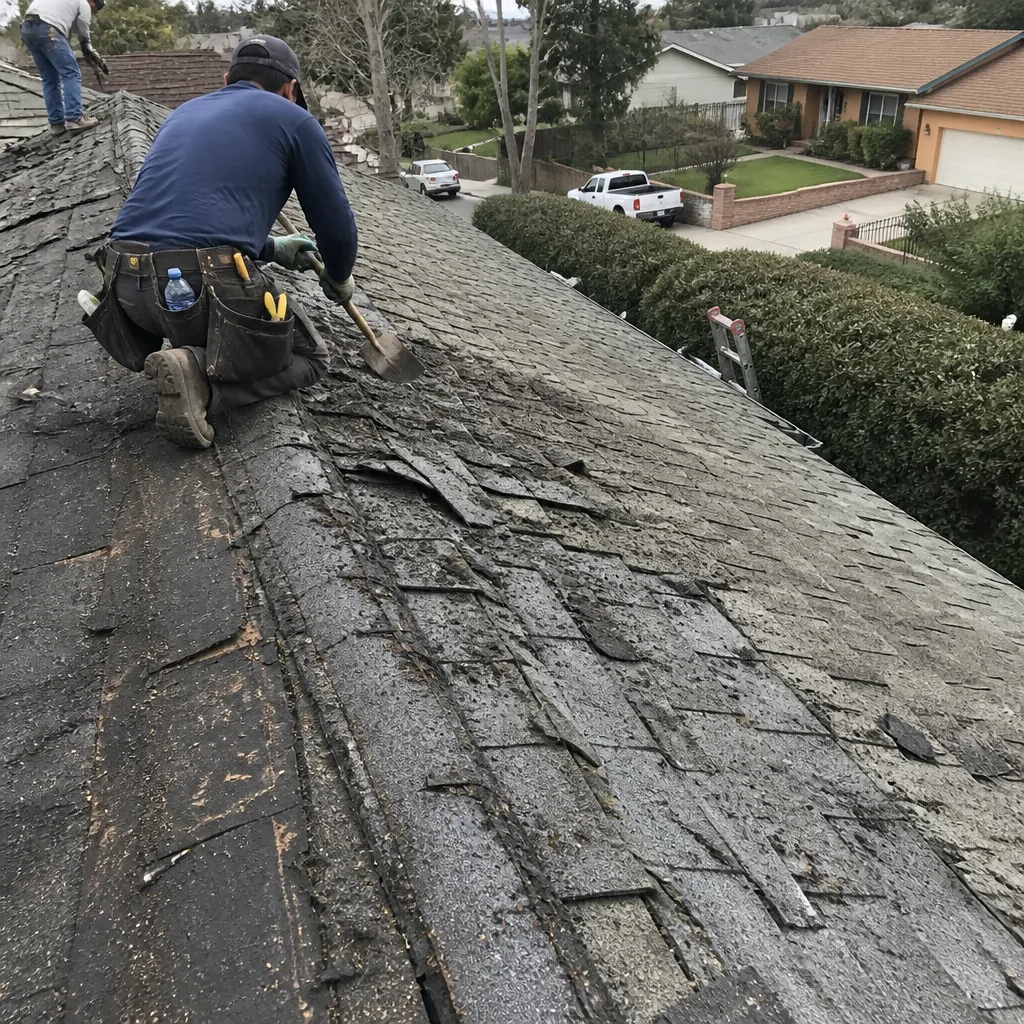 Before
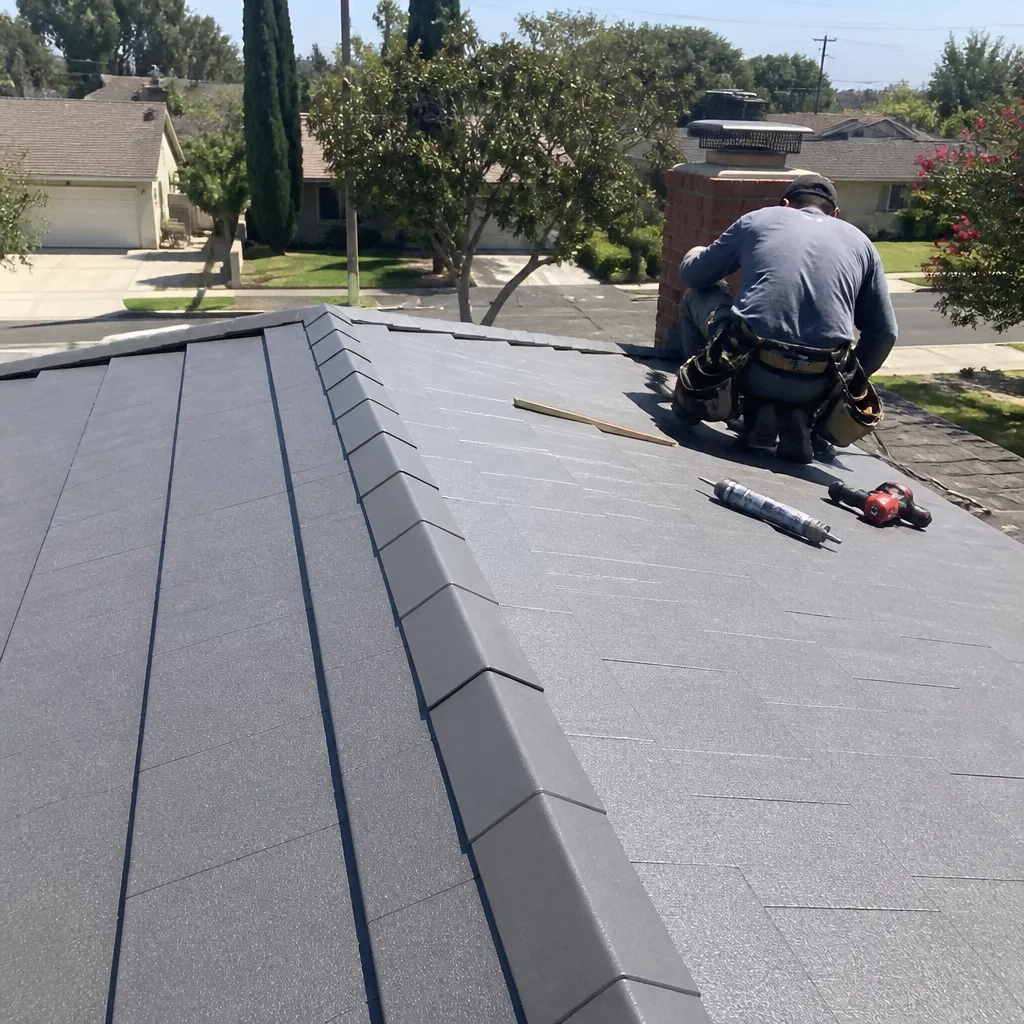 After
After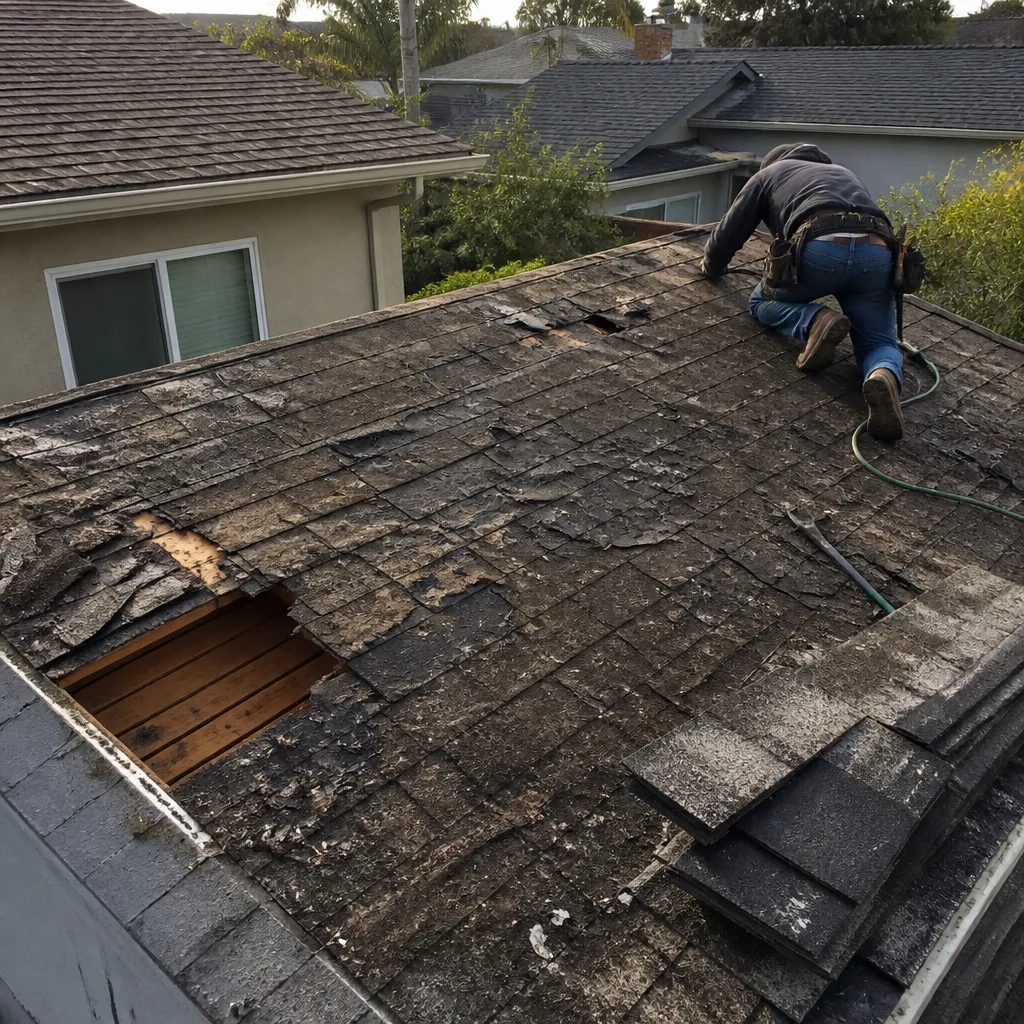 Before
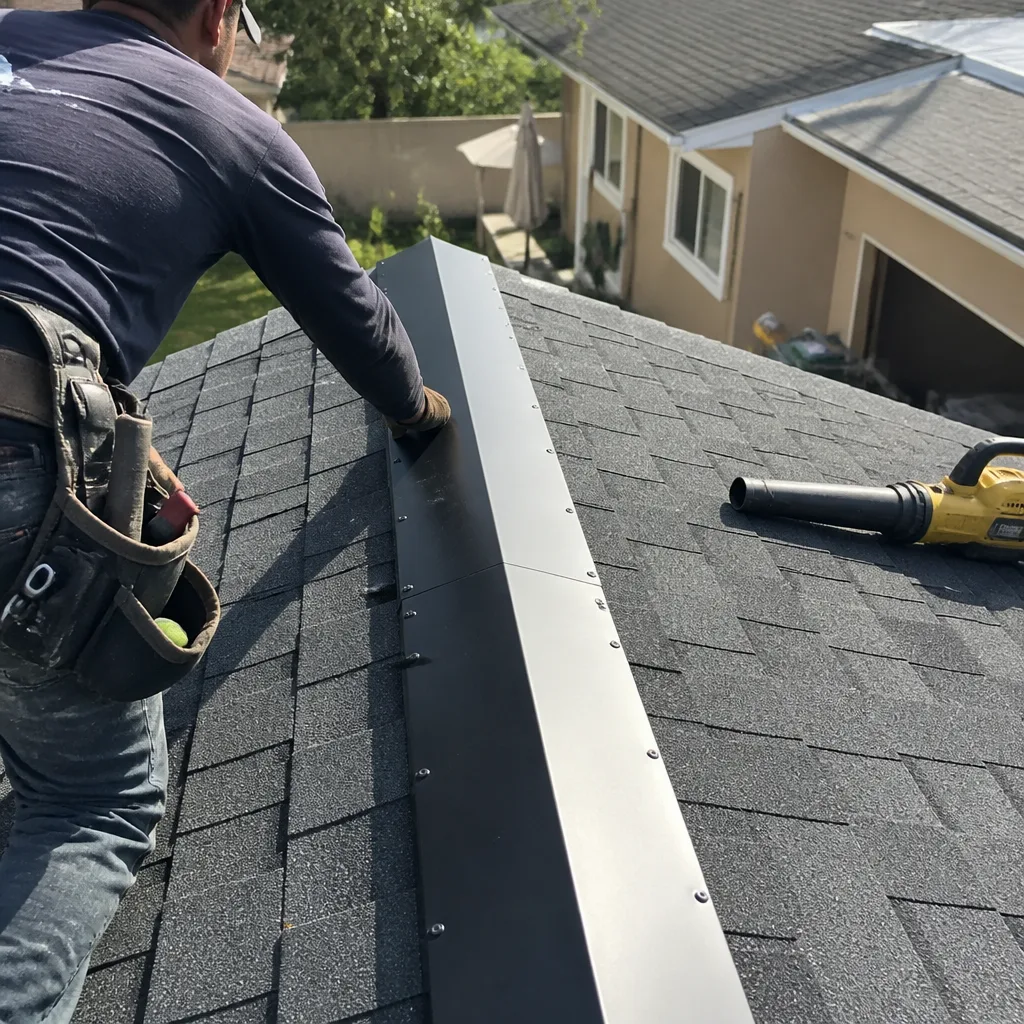 After
AfterWater stains spreading across the ceiling
What’s Happening
A water stain spreading across your ceiling almost always means water has found a path through your roof and is pooling on top of the drywall or plaster below. The stain is not the leak itself; it is where the water stopped traveling. The actual entry point is usually somewhere else entirely.
That distinction matters a lot when you are trying to figure out what to fix. Water enters the roof system at one point, then moves along rafters, decking, or insulation until gravity wins and it drips onto your ceiling. A stain appearing directly below a plumbing stack is not necessarily a plumbing problem. A stain in a bedroom corner is not necessarily caused by a leak directly above that corner. The roof needs a proper inspection before anyone can say with certainty what is going on, because guessing at the entry point and patching the wrong spot is how stains come back three months later in the exact same place.
Why It Happens
Flashing failure at a roof penetration or transition
Flashing is the thin metal strip that seals every joint where your roof meets something else: a chimney, a skylight, a plumbing vent, a wall, or a valley where two slopes meet. Over time, the sealant around flashing cracks and shrinks, or the metal itself lifts away from the surface it was protecting. When that happens, even ordinary rainfall can drive water straight in. If your stain is near an exterior wall or directly below a chimney or skylight, flashing is the first thing a roofer is going to look at.
Damaged or missing shingles
Shingles take a beating: wind, hail, sun, ice, and the simple passage of years all degrade them. When a shingle cracks, curls at the edges, loses its granules, or gets blown off entirely, the underlayment beneath it becomes the only thing standing between your attic and the rain. Underlayment is not meant to be the last line of defense. Look at your roof from the ground after a storm; if you can see a bald patch, a shingle sitting at an odd angle, or dark stripes where the granules have stripped away, that is a likely entry point.
Clogged or failing gutters creating ice dams or water backup
Gutters that are blocked with debris cause water to back up under the shingle edge instead of flowing away from the house. In colder climates, this same backup freezes into an ice dam that forces melt water up and under the shingles from below. The stains that result from gutter backup often appear near exterior walls rather than in the center of a room, and they tend to grow steadily during prolonged wet weather rather than appearing immediately after a single hard rain.
Deteriorated pipe boots or vent seals
Every plumbing vent and HVAC exhaust pipe that pokes through your roof is sealed at the base by a rubber or metal collar called a pipe boot. Rubber pipe boots typically last 10 to 15 years before they crack and separate from the pipe. When that seal goes, water runs straight down the pipe and into the ceiling cavity below. If the stain on your ceiling is roughly circular and sits near the center of the house, close to where you might expect a plumbing vent to run, a failed pipe boot is a common culprit.
What to Do Right Now
- Put a bucket down and protect what’s below. If water is actively dripping, catch it. Move anything valuable out of the area. The ceiling material above you may be holding more water than you can see, and it can let go without warning.
- Do not go onto the roof yourself. This is not a question of skill – it is a question of safety. Wet roofing material is extremely slippery, and a fall from even a single-story roof causes serious injury. Leave the height work to someone with the right footwear, harness, and training.
- Photograph everything before it dries. Take pictures of the stain now, including its edges and any visible drips. If the stain changes in size or color over the next few hours, photograph that too. This helps a technician understand how fast water is moving and how long the problem has likely been active.
- Check your attic if you can safely access it from inside. A quick look from the hatch with a flashlight can show you whether insulation is wet, whether there is visible daylight coming through the decking, or whether there is mold already forming. Do not step onto attic joists; stay on the hatch ladder or a safe walking board only.
- Note what the weather has been doing. A stain that appeared after last week’s hard rain is a different story from one that has been growing slowly through a dry month. Write down when you first noticed it and what the weather was like. That information helps narrow down the source faster than almost anything else.
How We Fix It
When your local Mercer Roofing team arrives, the first thing the technician does is a proper inspection: on the roof, not just from the ground. They are looking for the actual water entry point, which is often a short distance from the stain below. Before any work starts, you get a written price – that is not optional, it is how Mercer operates on every single job.
Most ceiling stains trace back to a Roof Repair: replacing cracked flashing, swapping out a failed pipe boot, re-securing lifted shingles, or resealing a valley. Where the shingle field itself has deteriorated beyond repair in a given area, a Roof Installation or partial replacement may be the more practical solution. Mercer works with manufacturer-recognized brands including GAF, CertainTeed, Owens Corning, IKO, Atlas, Tamko, and Boral, so the replacement material matches quality standards your roof was likely built to.
The repair itself typically takes a few hours once materials are on hand. Every repair comes with a written guarantee, and if it fails within a year, we come back at no charge. That is the 365-Day Done Right Promise, and it is in writing from the first visit.
Frequently Asked Questions
A spreading water stain should be looked at as soon as possible – not because we want to alarm you, but because the damage compounds quickly. Water sitting in insulation or on top of drywall leads to mold growth, and mold can begin forming within 24 to 48 hours of saturation. A stain that looks small from below can represent a much larger wet area above the ceiling surface. Call (743) 200-8347 to get someone out to you before the next rain hits.
Not necessarily. A stain that is not actively dripping often means the water has spread out horizontally in the ceiling cavity and is evaporating, or that you are in a dry weather window. The entry point is almost certainly still there, and the next rain will reactivate it. The stain boundary you are seeing now is a record of how far water already traveled; the roof itself has not self-healed.
Your local Mercer Roofing team can tell you exactly what is available when you call – a real person picks up at (743) 200-8347 any time of day or night, not a voicemail. Scheduling depends on your location and the current workload of your local team, but getting you on the books quickly when there is active water intrusion is a priority. Call now and we’ll tell you what we can do.
No. Mercer provides a written price before any work begins, every time. If the inspection reveals something different from the initial assessment, the technician will walk you through what changed and give you a revised written price before a single shingle is touched. You will never open a final invoice and see a number you didn’t agree to in advance.
Get It Fixed
A spreading ceiling stain is not a wait-and-see situation. Call (743) 200-8347 and a live person will pick up – day or night. Your local Mercer Roofing team will inspect the roof, identify the real entry point, and give you a written price before anything starts. The 365-Day Done Right Promise is included on every repair.
Written by Grant Whitlock, Owner at Mercer Roofing, part of the Threshold Group family of home-service companies, serving communities across the country since 2000.
What Our Customers Say
"Honest inspection. He went up, took photos, and told me I had maybe five more years instead of selling a full replacement."
- Xavier L."Leak showed up in the hallway ceiling after a big storm. They found the failed pipe flashing in about ten minutes, replaced it, and checked the attic for wet insulation."
- Sophie R."Chimney flashing was the culprit for years of dark stains on the ceiling. Fixed it in one visit and no more stains."
- Ian O.