
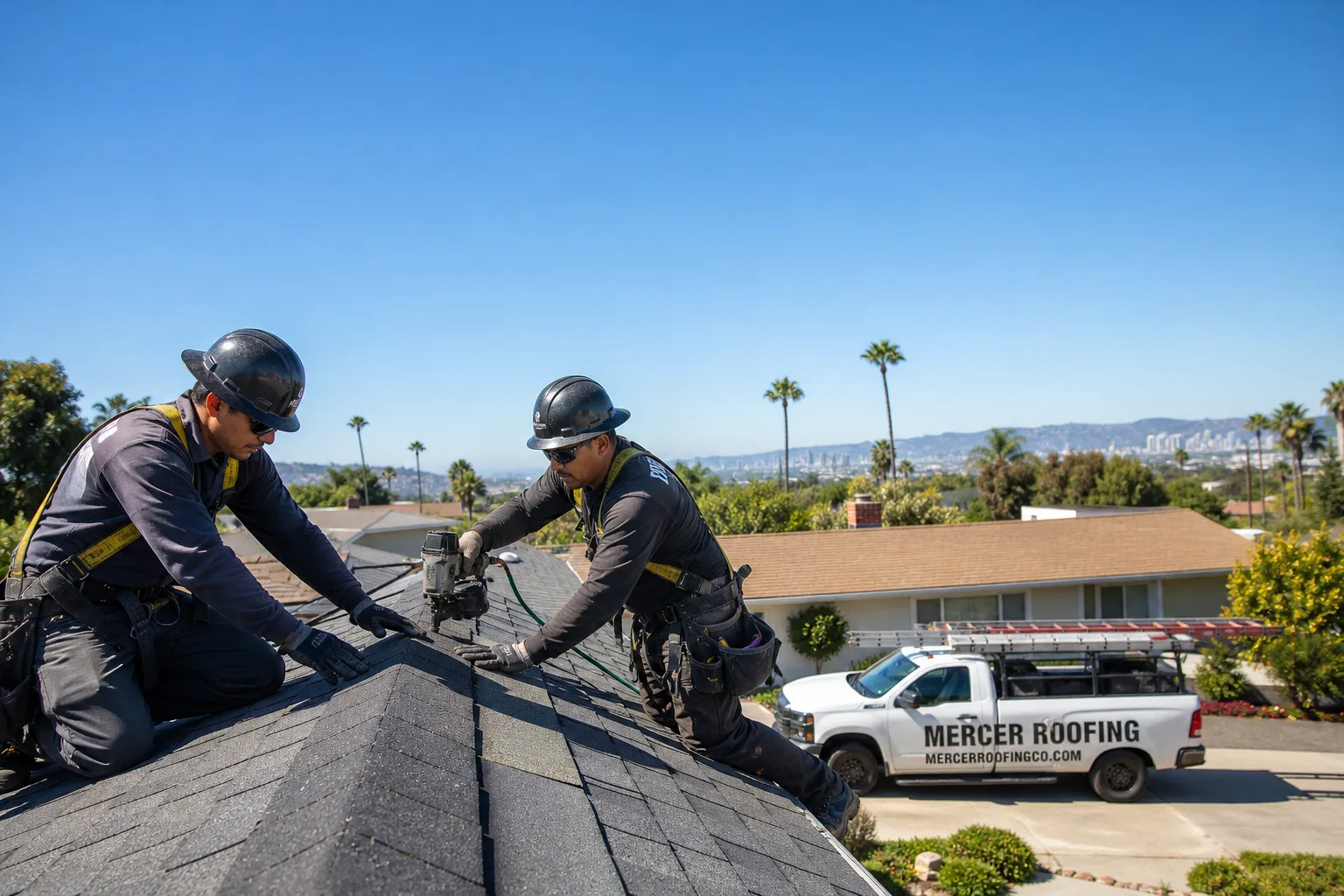
Free roof inspection with deck photos before we talk money - GAF and Owens Corning certified installation
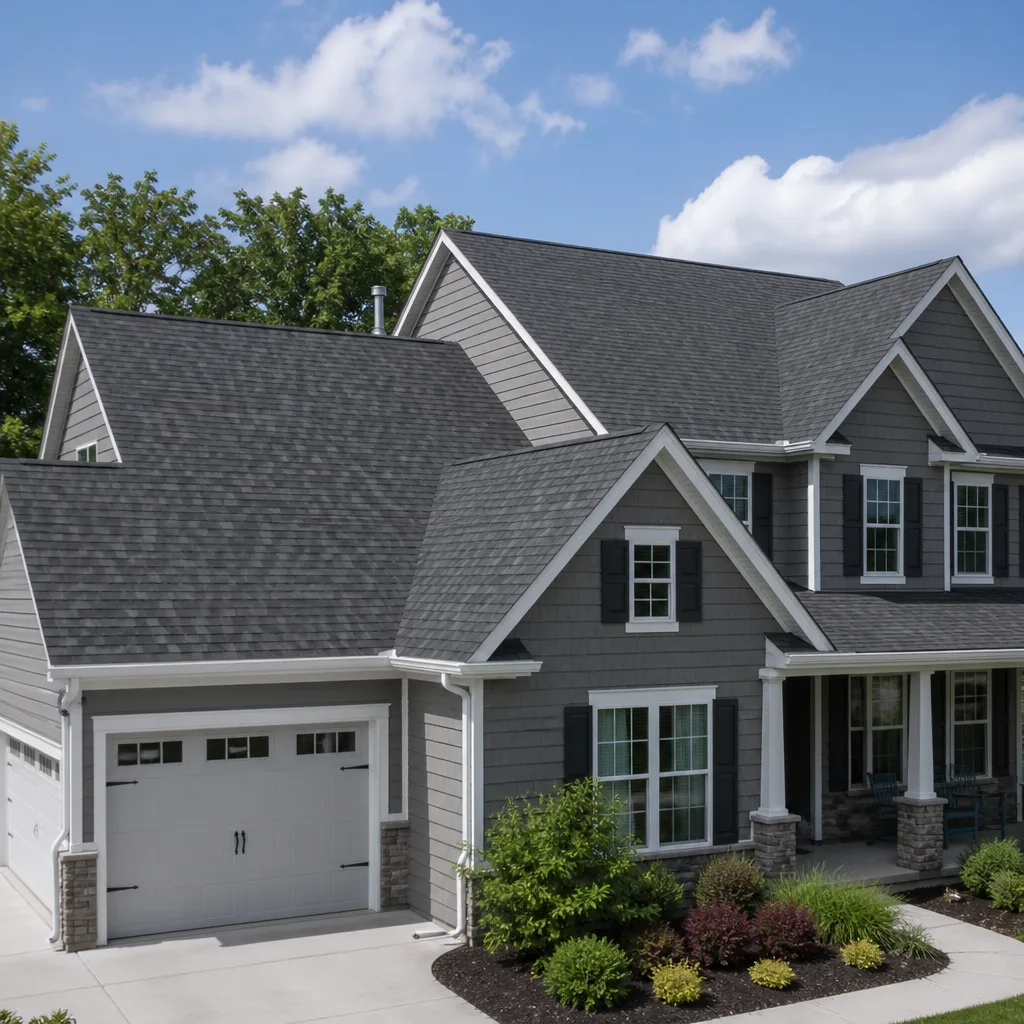
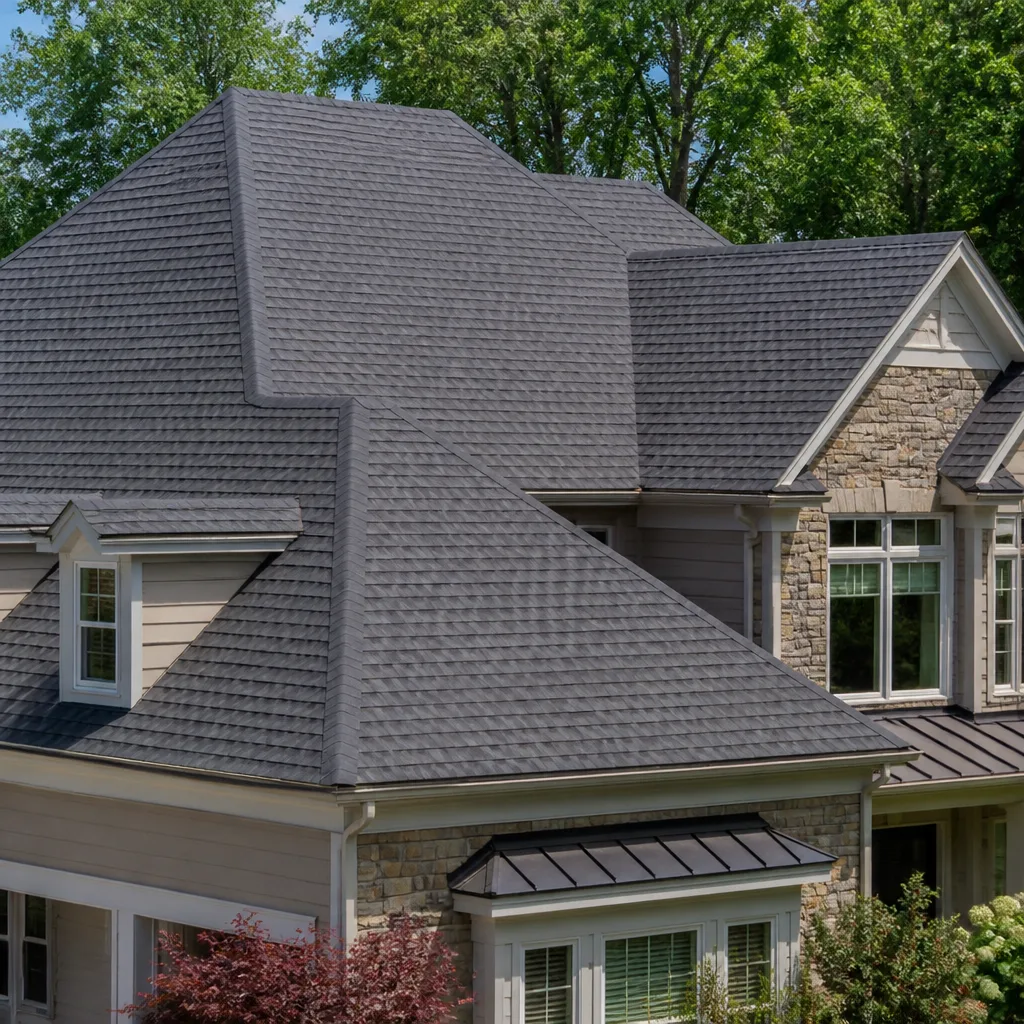
 Before
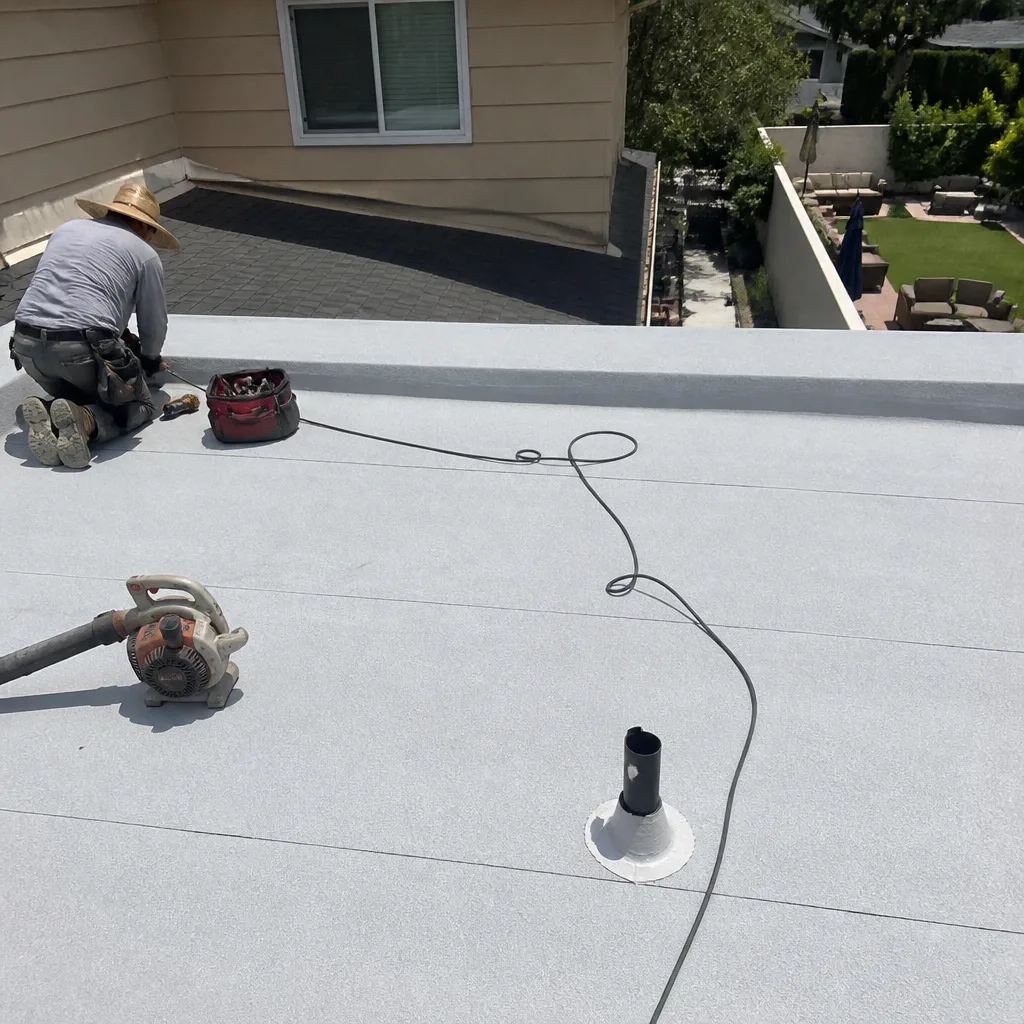 After
After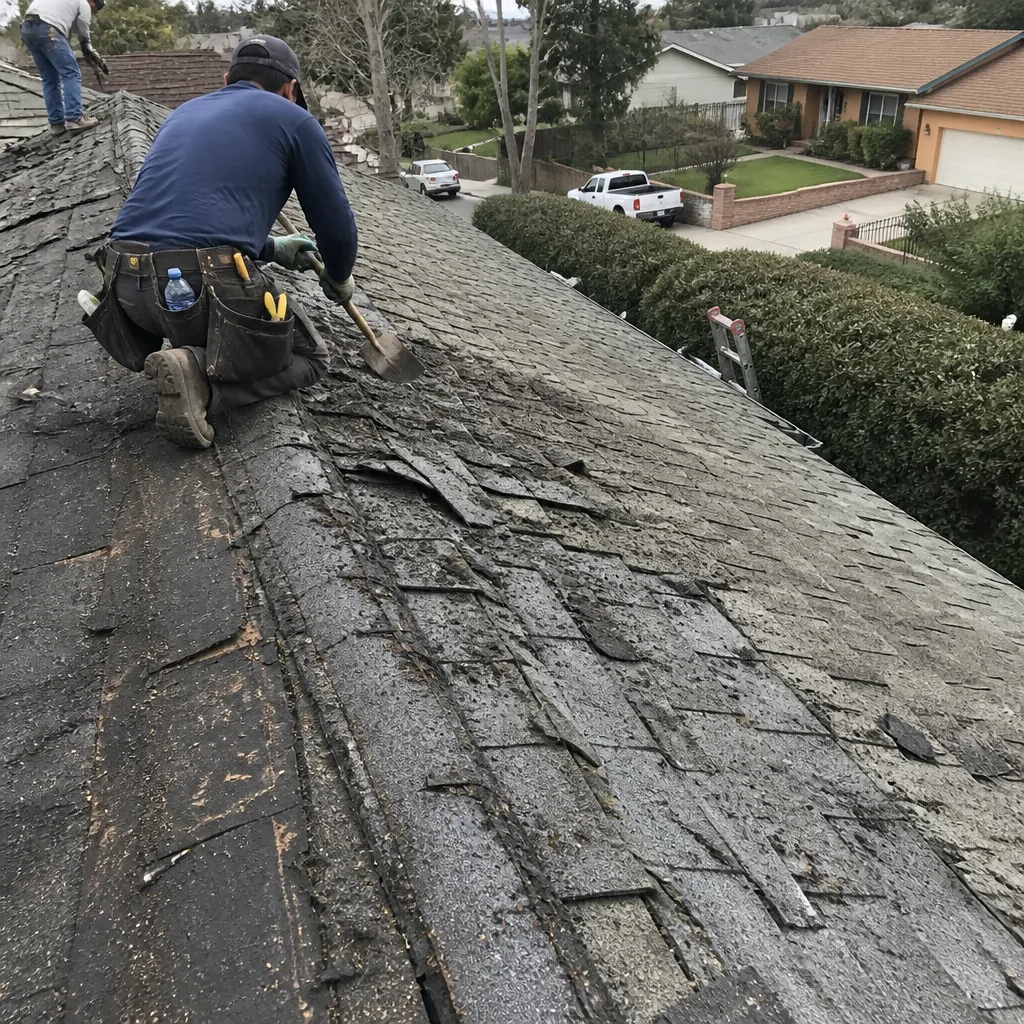 Before
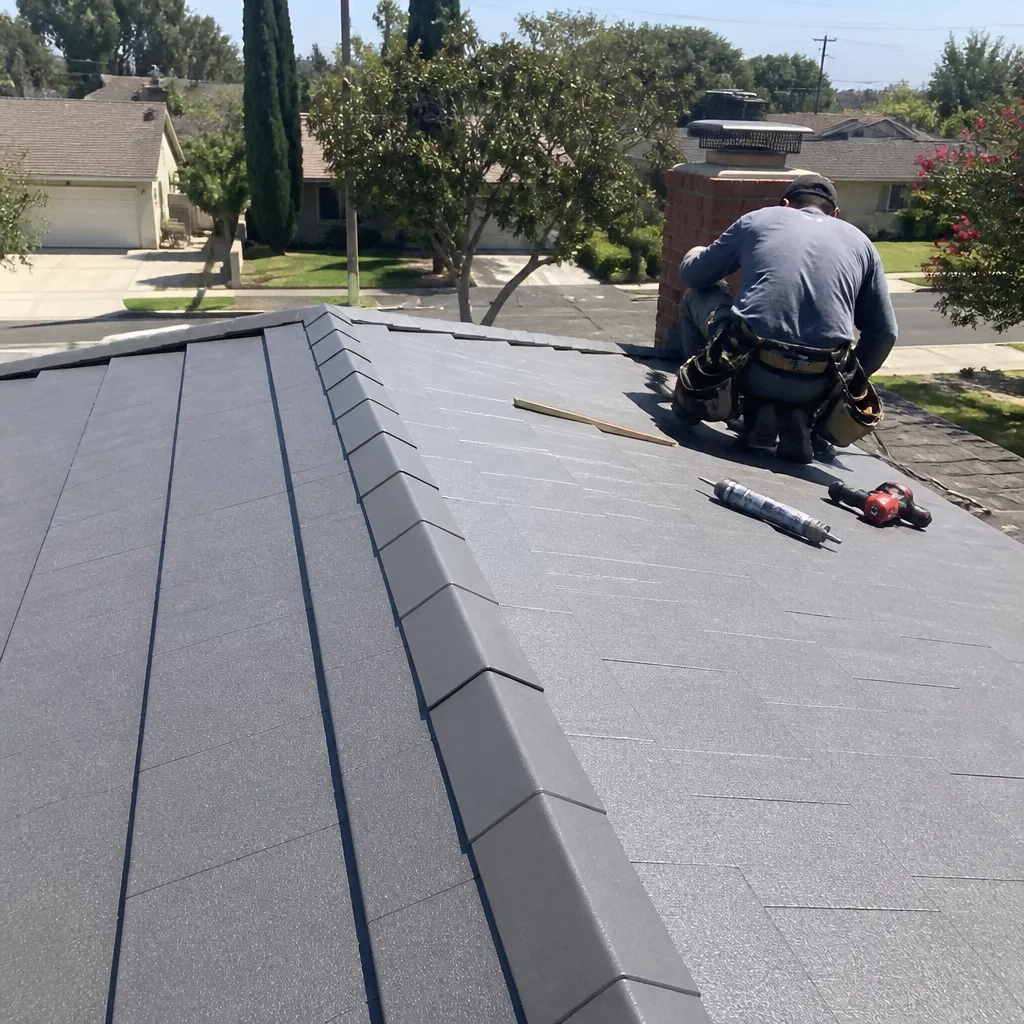 After
After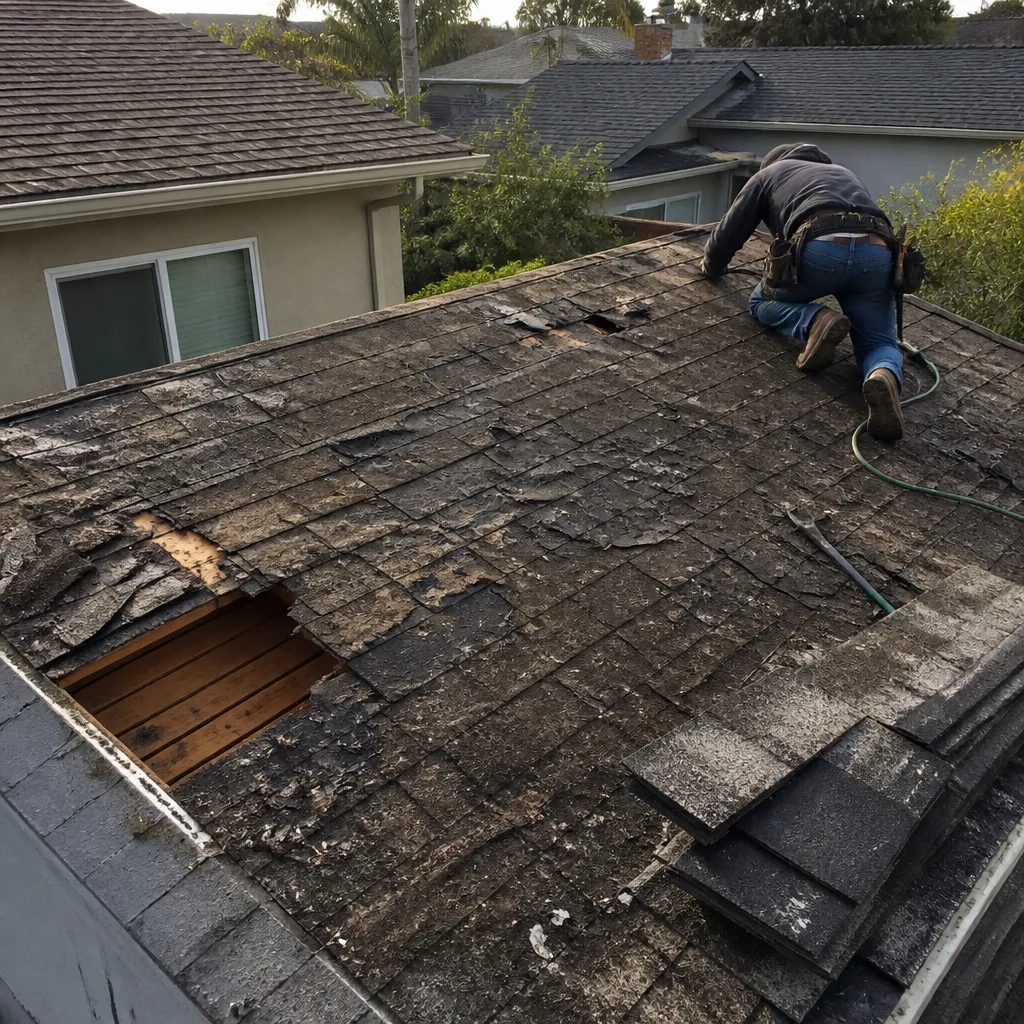 Before
 After
AfterFast, Reliable Roof Installation Across Chino Hills
A complete roof installation in Chino Hills typically runs between $14,500 and $38,000 depending on the roof’s size, pitch, and whether the home sits inside the Cal Fire Very High Fire Hazard Severity Zone. That fire zone changes everything about material choices, permit requirements, and final cost, and we’ll explain exactly why below. Our crew knows Chino Hills rooflines, the wind corridors off the Puente Hills, and the aging concrete tile that covers most of this city. Call (743) 200-8347 for a written, line-item quote before any work starts.
Why Mercer Roofing Is Chino Hills’s Preferred Roof Installation Company
We’re part of the Threshold Group family, founded in 2000, and every technician we send into Chino Hills carries the Threshold Standard: background-checked, identity-verified, uniformed, and wearing a photo ID badge at your door. Before any visit, you get the technician’s name and photo sent to you. That matters when you’re home alone, when your kids are napping, or when you simply want to know exactly who is walking your roof.
Our crews work the hillside tracts off Pinehurst, the Los Serranos-adjacent subdivisions, and the neighborhoods around Chino Hills Parkway. We know these rooflines: complex hipped profiles, multiple valleys, concrete tile that looks fine from the curb while the felt beneath it has turned to dust. That local knowledge means our quotes account for what we’ll actually find, not what a flat-ground roofer assumes.
Dispatch and scheduling are coordinated from our Inland Empire office. Every job gets a written price before any work starts, and every installation carries our 365-Day Done Right Promise: if it’s not right within a year, we make it right.
Roof Flashing Installation in Chino Hills
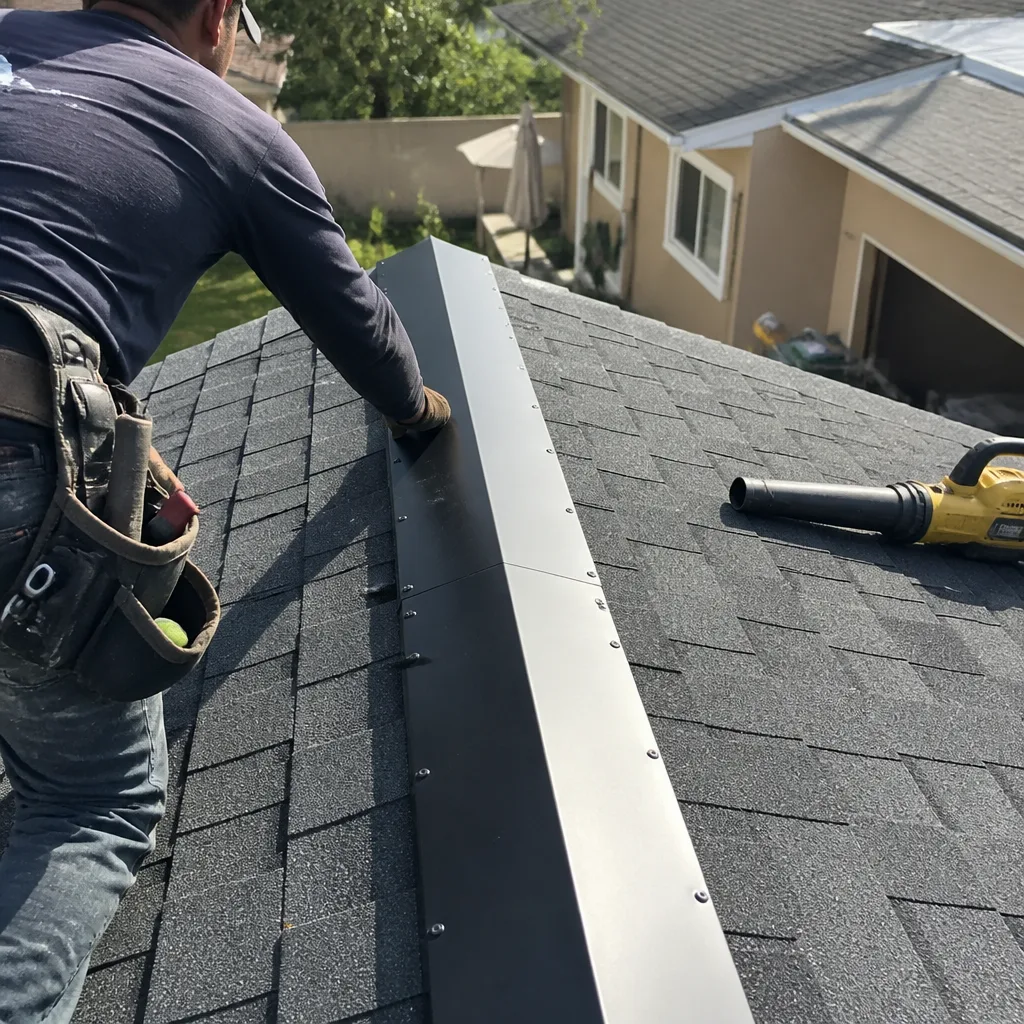
Roof Flashing Installation in Chino Hills addresses one of the most common failure points on the city’s 1985 – 2000 tract homes: the metal transitions where chimneys, skylights, walls, and valleys meet the roof deck. Flashing keeps water moving off the roof instead of into the attic, and on Chino Hills’s hipped, multi-valley rooflines, there are simply more flashing points than on a simple gable roof in flat Chino. A typical flashing replacement or new flashing installation in Chino Hills runs $650 to $1,800 when tied to a full re-roof, with stand-alone valley flashing work ranging from $1,200 to $3,400 depending on linear footage and accessibility.
What we mean when we say flashing: the galvanized or aluminum metal bent and fitted at every roof penetration and transition point, then sealed with a quality roofing mastic. When original 1980s and 1990s flashing fails, water follows it into the decking, and by the time you see a ceiling stain, the decking beneath is usually compromised.
What Chino Hills Homeowners Should Watch For
Rust streaks beneath tile edges near chimneys, visible separation between flashing and stucco walls, and granules collecting in gutters near valley bends are all early indicators. If you see those, the flashing has already started to lift. Given the wind acceleration through the Chino Hills – Puente Hills corridor, even freshly installed flashing can separate if it was never secured to the deck with proper fastener spacing.
How We Install Flashing So It Holds
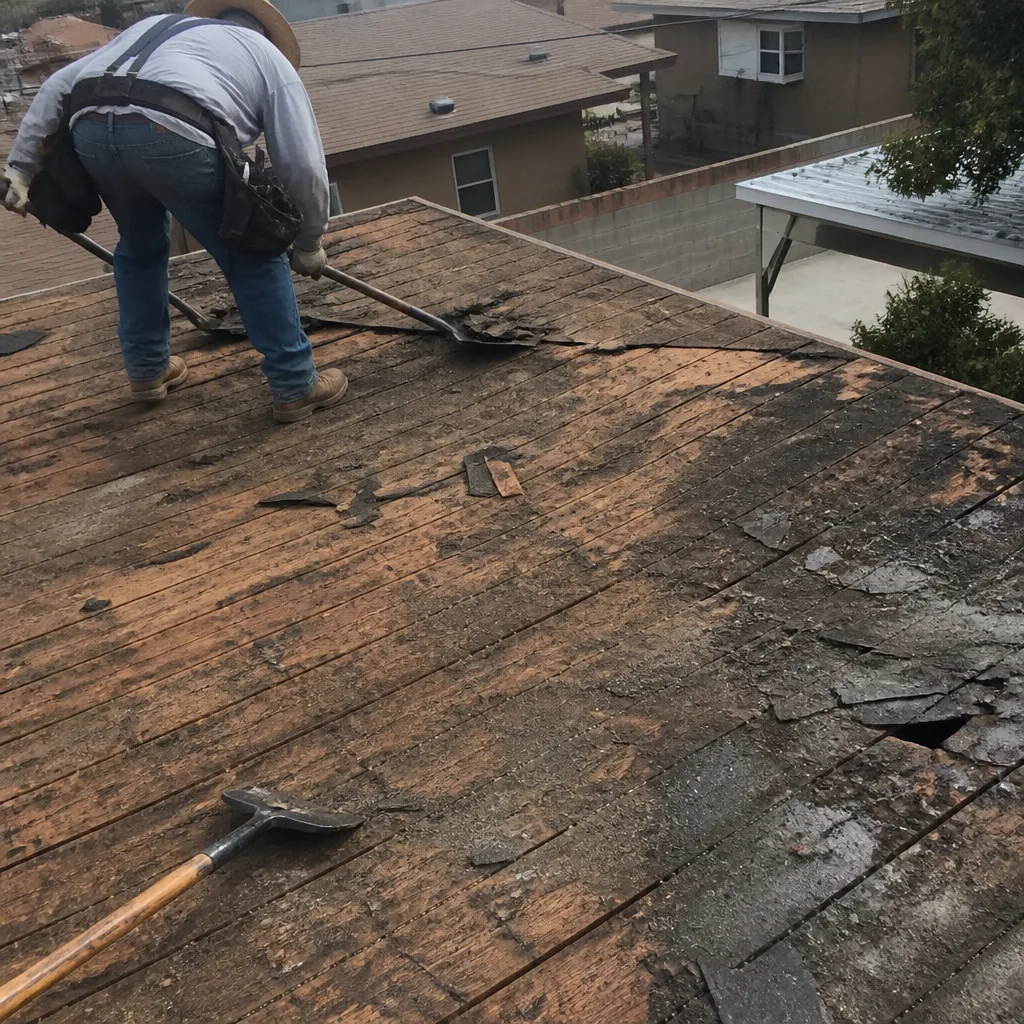
We strip the old flashing to the deck, inspect the wood beneath for rot, and install new flashing with staggered fasteners and full sealant coverage before setting tile or shingles back over it. On a re-roof, flashing replacement is included in the line-item quote, not added as a change order after we find the damage.
TPO Roofing Installation in Chino Hills
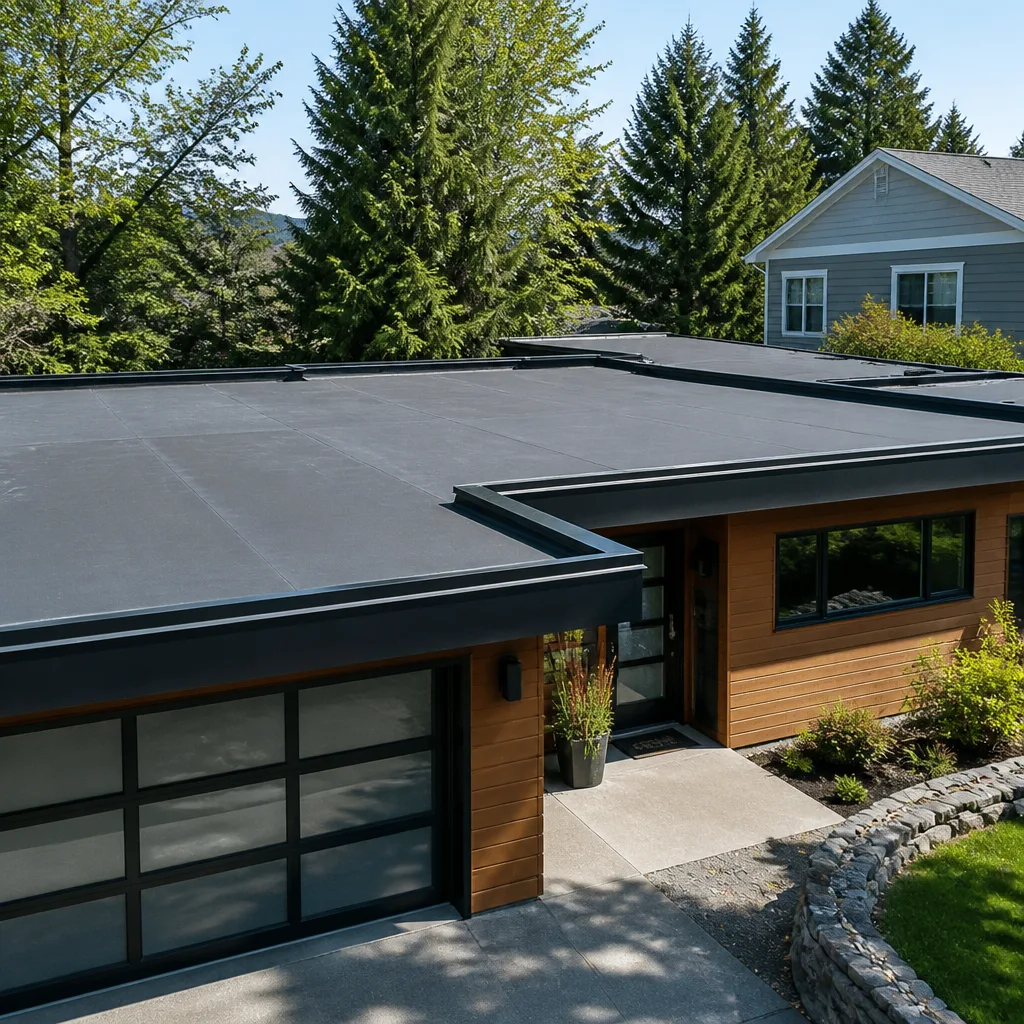
TPO Roofing Installation in Chino Hills is typically reserved for flat or very low-slope sections of a home: patio covers, attached garages, or the modern flat-roof aesthetic on some newer hillside builds. TPO, or thermoplastic polyolefin, is a heat-welded single-ply membrane that handles Chino Hills’s intense inland UV exposure far better than traditional built-up roofing. In Chino Hills, a TPO installation on a residential low-slope section runs $8 to $12 per square foot installed, which translates to roughly $6,400 to $14,400 for the typical 800-to-1,200-square-foot residential application.
Unlike shingles or tile, TPO goes down as large, heat-welded sheets, which means fewer seams and fewer points for wind-driven rain to enter. That matters in the hillside neighborhoods where Santa Ana winds push gusts through the natural corridor and routinely tear poorly adhered materials.
When TPO Makes Sense on a Chino Hills Home
If any section of your roof carries less than a 2:12 pitch, tile and shingles won’t shed water fast enough, and that’s where TPO becomes the right call. Homes in the Los Serranos-adjacent subdivisions with flat garage additions or covered patios are common candidates. We also see TPO used on whole-roof replacements for contemporary Chino Hills builds where the architectural style calls for clean, flat lines.
TPO Installation Details That Matter Here
We mechanically fasten the membrane to the deck, then heat-weld every seam so the roof acts as one continuous sheet. On re-roofs, we inspect the existing insulation and decking first, because a TPO membrane will only perform as long as the substrate beneath it is sound. The inland diurnal swings, hot afternoons and cool nights, mean adhesives and sealants must be rated for thermal movement, and we spec them accordingly.
Trusted Brands We Service in Chino Hills
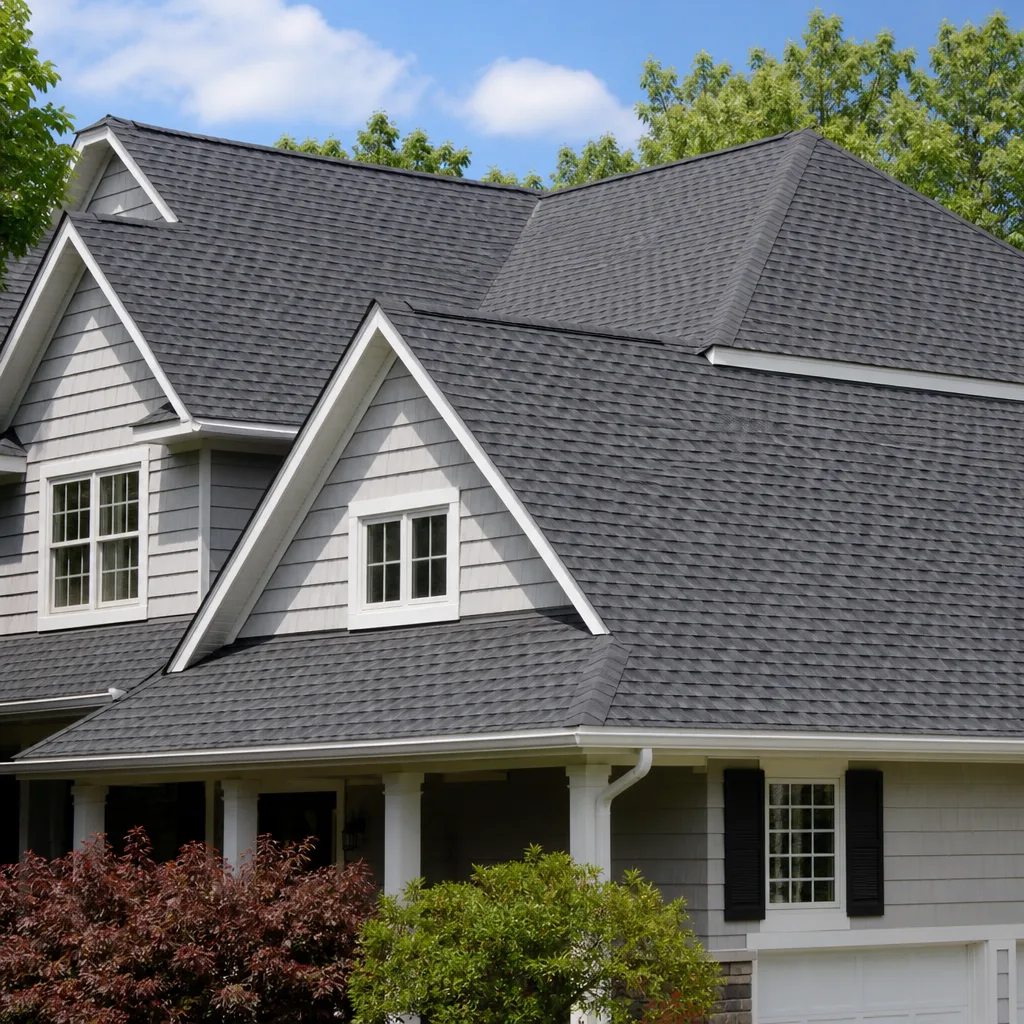
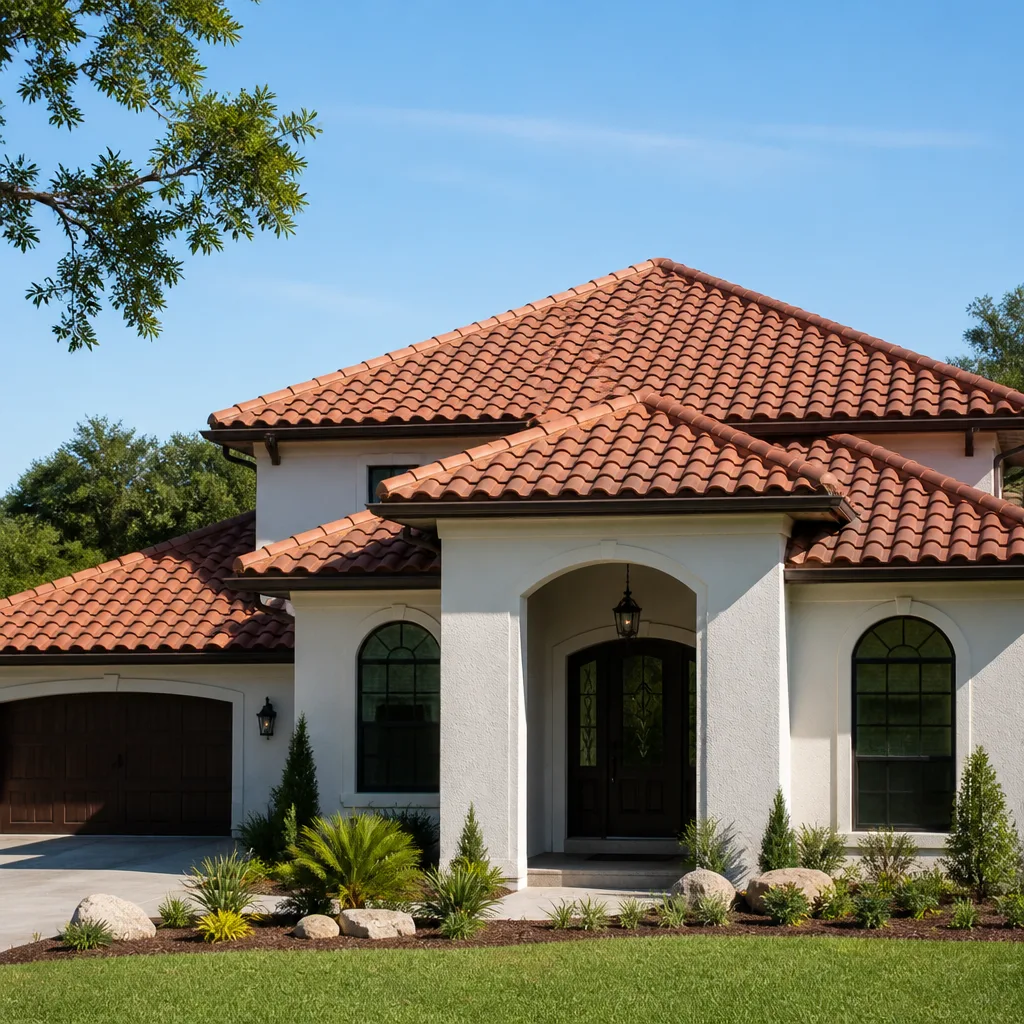
We install and repair GAF, CertainTeed, Owens Corning, IKO, Atlas, Tamko, and Boral roofing systems, and we’ll help you choose what fits your Chino Hills home’s fire zone requirements and wind exposure. For hillside tract homes replacing concrete tile with Class A-rated systems, we frequently spec Boral for its true tile profile and fire rating. On neighborhoods where architectural shingles are allowed by the Chino Hills Building & Safety Division, we default to GAF and Atlas for their wind warranties. We stock the parts, underlayment, and fasteners these systems require locally, so your installation does not stall waiting on a distributor.
Common Roof Installation Problems We See in Chino Hills Homes
- Original 15-lb felt underlayment failing beneath intact concrete tile. The S-shaped tile on 1990s hillside homes looks serviceable from the street, but the felt beneath has long since dried and cracked. By the time water reaches your ceiling, the decking may already be soft.
- Santa Ana wind displacement at ridge caps and hip caps. The wind corridor between the Chino Hills and Puente Hills ranges funnels gusts that routinely lift ridge caps and hip caps. Once those are displaced, the fire-rated assembly is compromised at exactly the points the VHFHSZ rating depends on.
- Complex hipped rooflines concentrating water at valleys. Virtually all residential construction in Chino Hills features multi-valley, multi-pitch rooflines designed for hillside lots. Every valley and dormer is another flashing point and another potential leak path.
- UV and diurnal swing degradation of adhesives and underlayment. Inland UV intensity and wide temperature swings bake roofing adhesives and underlayment decades before coastal roofs show the same age. A Chino Hills roof can be functionally finished while its neighbors west of the hills still have years left.
Pricing for Roof Installation in Chino Hills, CA
A full roof installation in Chino Hills runs $14,500 to $38,000 on the typical 2,000-to-3,200-square-foot tract home, with the final number driven by material choice, roof complexity, and whether the home sits in the Cal Fire Very High Fire Hazard Severity Zone. Tile re-roofs with Class A fire-rated underlayment start around $16,500. Architectural shingle replacements in non-designated pockets run $14,500 to $22,000. A TPO section adds $8 to $12 per square foot. We do not give loose verbal ranges and then adjust upward mid-project. Every job gets a written, line-item quote before work starts, with allowances for damaged decking and flashing written into the contract so any surprise is priced and approved in writing before we touch it. Call (743) 200-8347 for a free estimate on your Chino Hills home.
We Also Serve Cities Near Chino Hills
Our crews work throughout the hills and flatlands around Chino Hills, and we regularly handle Roof Installation projects for homeowners in Pomona, Diamond Bar, Chino, and Montclair. If you live just over the city line, the same written pricing, Threshold Standard vetting, and 365-Day Done Right Promise apply to your roof.
Serving Chino Hills, CA - Our Local Coverage Area
We’re based in the Chino Hills area and know this community well. Use the map below to see our service coverage - if you’re nearby, we can almost certainly help.
FAQs About Roof Installation in Chino Hills
The short answer is the Cal Fire Very High Fire Hazard Severity Zone designation that covers large portions of Chino Hills. The Chino Hills Building & Safety Division enforces Class A fire-rated roofing assemblies on permitted re-roofs, requiring fire-rated underlayment and, in many cases, specific tile or shingle profiles that add $2,500 to $6,500 to the typical project compared to non-designated areas like flat Chino north of the 71. Chino Hills rooflines are also more complex, with more valleys, dormers, and flashing points than flat-terrain tract homes, which means more labor. Call (743) 200-8347 and we’ll walk you through exactly what your address triggers at permit time.
You often cannot tell from the street, and that is the problem. On a 1994 hillside home off Pinehurst, our crew lifted the original S-shaped concrete tile expecting an easy re-lay and found the 15-lb felt underlayment had dried to powder under every valley. The only way to know is to lift tile at the valleys and penetrations and look. If your home was built between 1985 and 2000 and still carries original underlayment, the felt is almost certainly at end-of-life or past it. We inspect first, show you what we find, and price any surprise in writing before work touches your roof.
Yes. Once the decking is open, the Building & Safety Division may require upgrades to roof-to-wall shear connections, ventilation, and any decking sections that are water-damaged or undersized. On older Chino Hills homes, we regularly find water-softened fascia and rotted valley boards once tile comes off. Because the VHFHSZ permit requires a Class A assembly anyway, the re-roof often becomes a full tear-off to the decking, with those repairs written into the contract allowance. We price them before we touch a single tile.
More valleys, more flashing, more labor. Chino Hills’s 1985 – 2000 tract homes typically feature complex hipped and multi-valley rooflines designed to fit rolling terrain, and every valley, dormer, and pitch change adds flashing details and slows installation compared to a simple gable roof. Steeper pitches also trigger additional safety requirements and slower work. Our quotes account for the actual roof we’ll be standing on, not a generic square-footage multiplier.
Architectural shingles with the right wind rating, typically 110 mph or higher, are adequate for most Chino Hills homes outside the fire zone, provided the underlayment and fastening schedule are done correctly. Inside the VHFHSZ, you’ll likely need a Class A-rated assembly, which often means a fire-rated underlayment beneath the shingles, not just a wind-rated shingle. The wind corridor off the Puente Hills displaces ridge caps and hip caps when fasteners are under-driven or spaced too far apart, so the installation standard matters as much as the shingle rating itself. Call (743) 200-8347 for a written assessment of what your specific home and fire zone require.
Written by Grant Whitlock, Owner at Mercer Roofing, serving Chino Hills and the surrounding Inland Empire communities with written pricing, background-checked crews, and a 365-Day Done Right Promise on every installation.