
Free roof inspection with deck photos before we talk money - GAF and Owens Corning certified installation
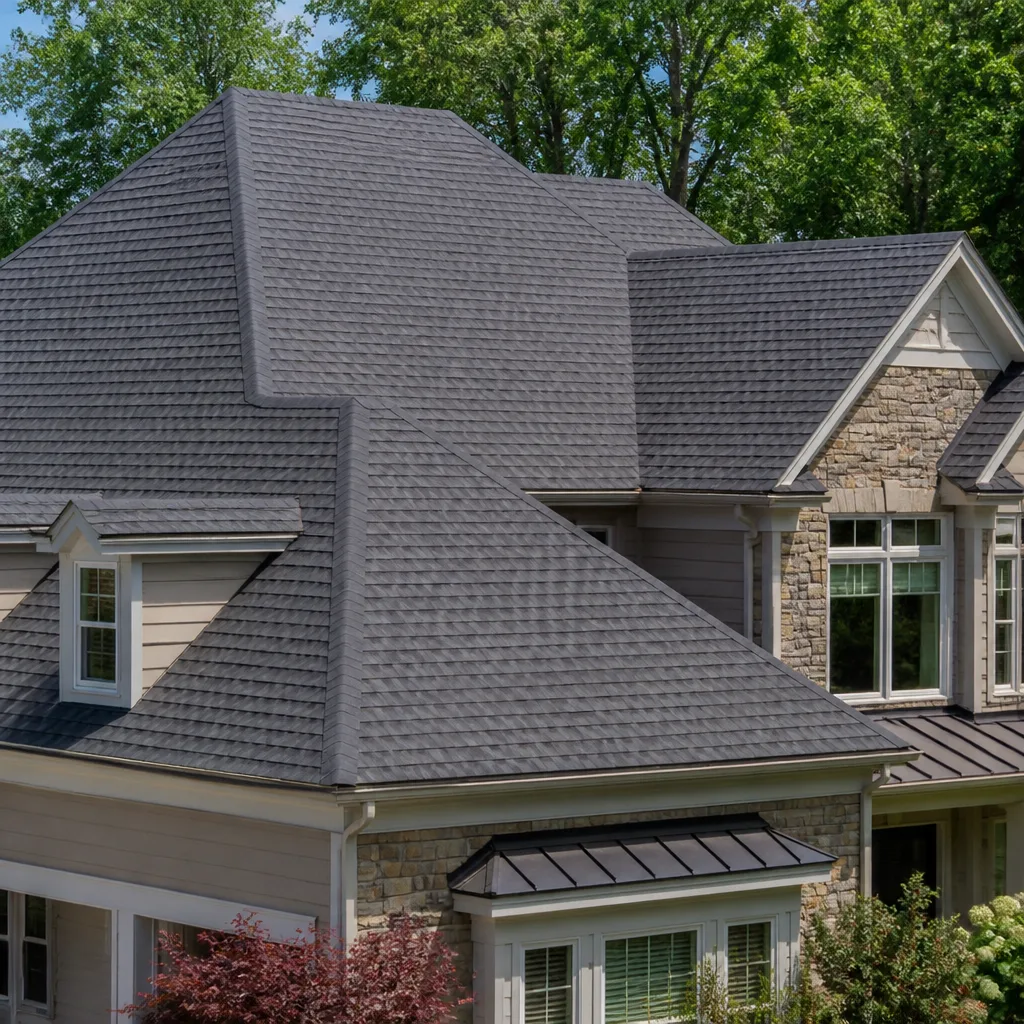
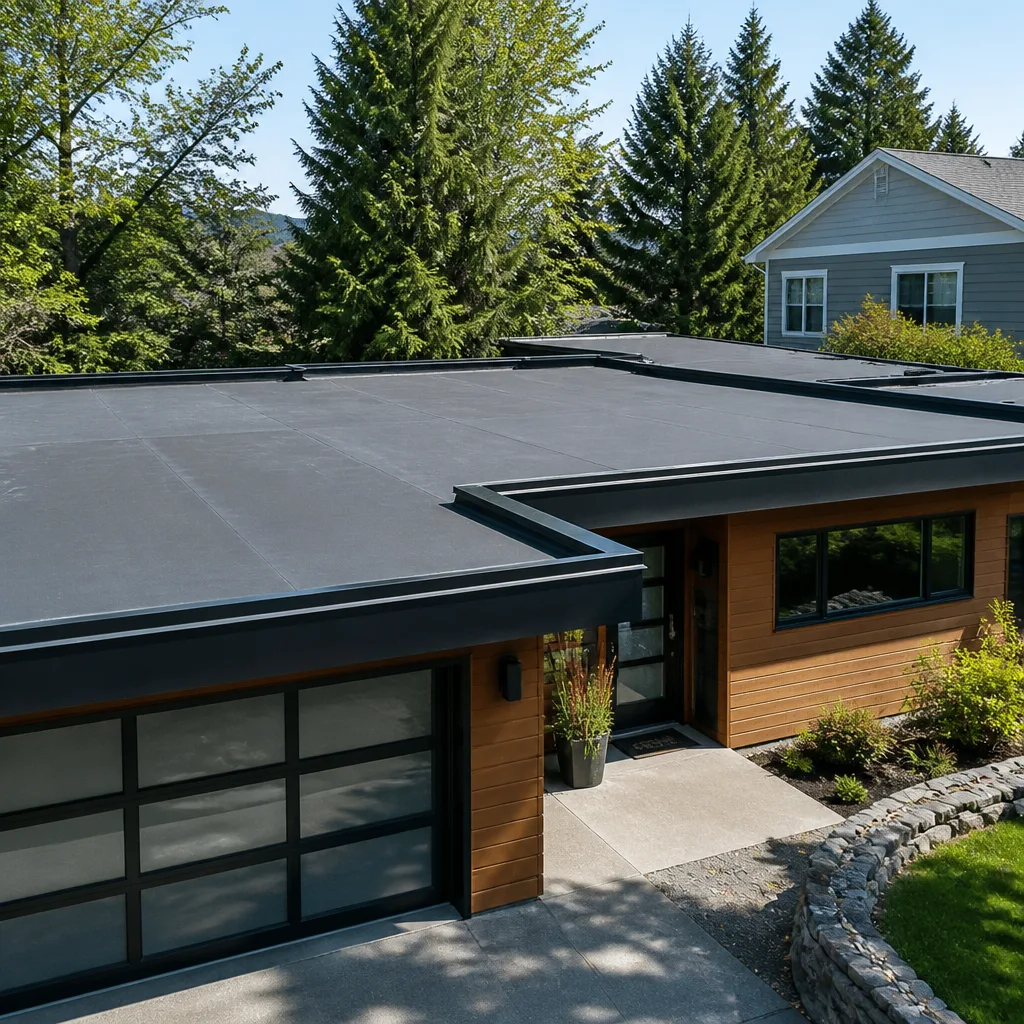
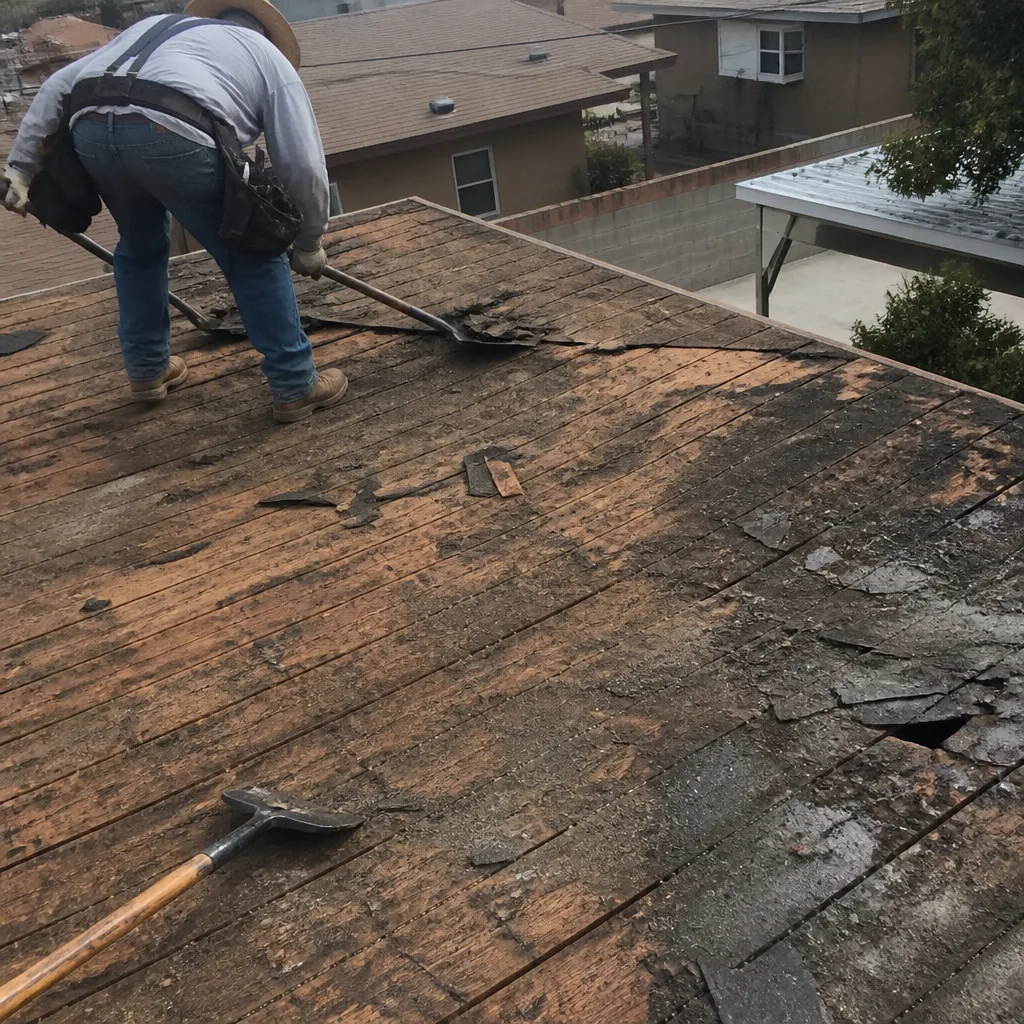 Before
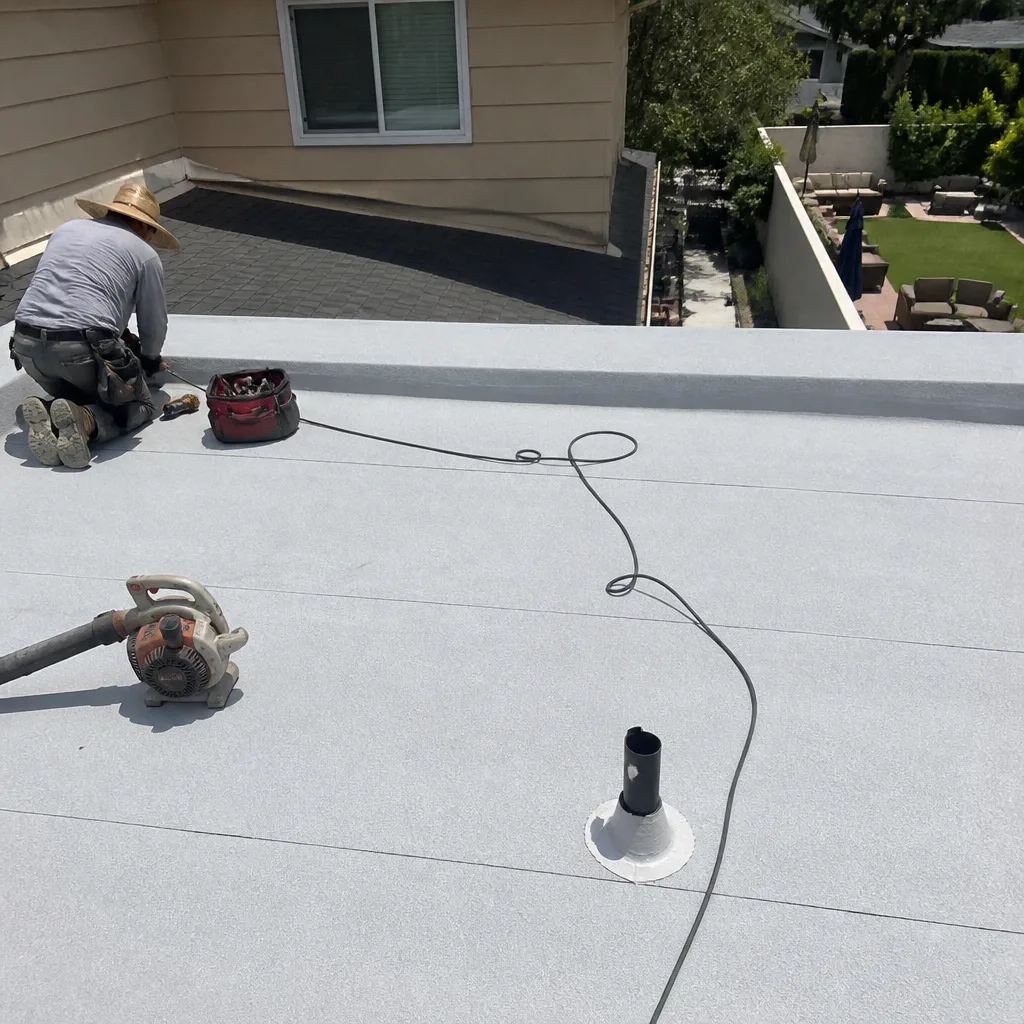 After
After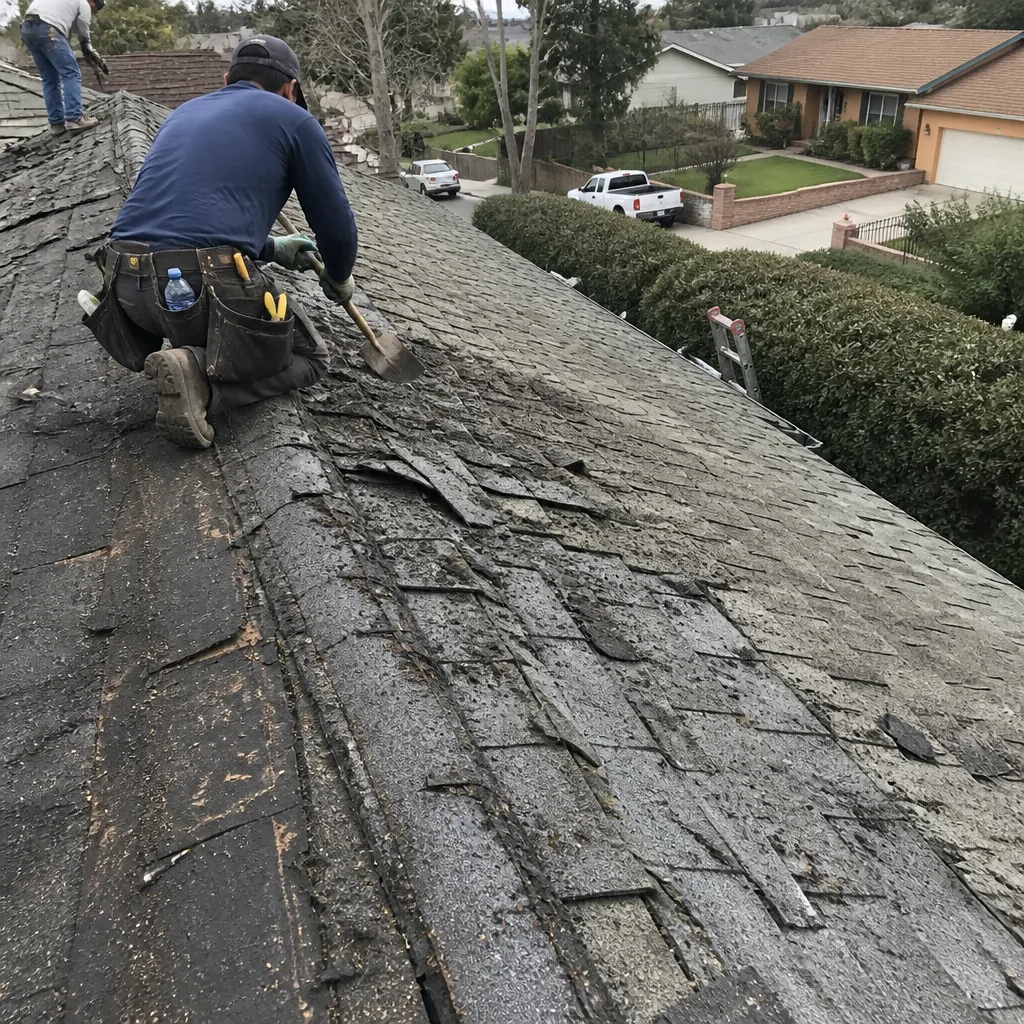 Before
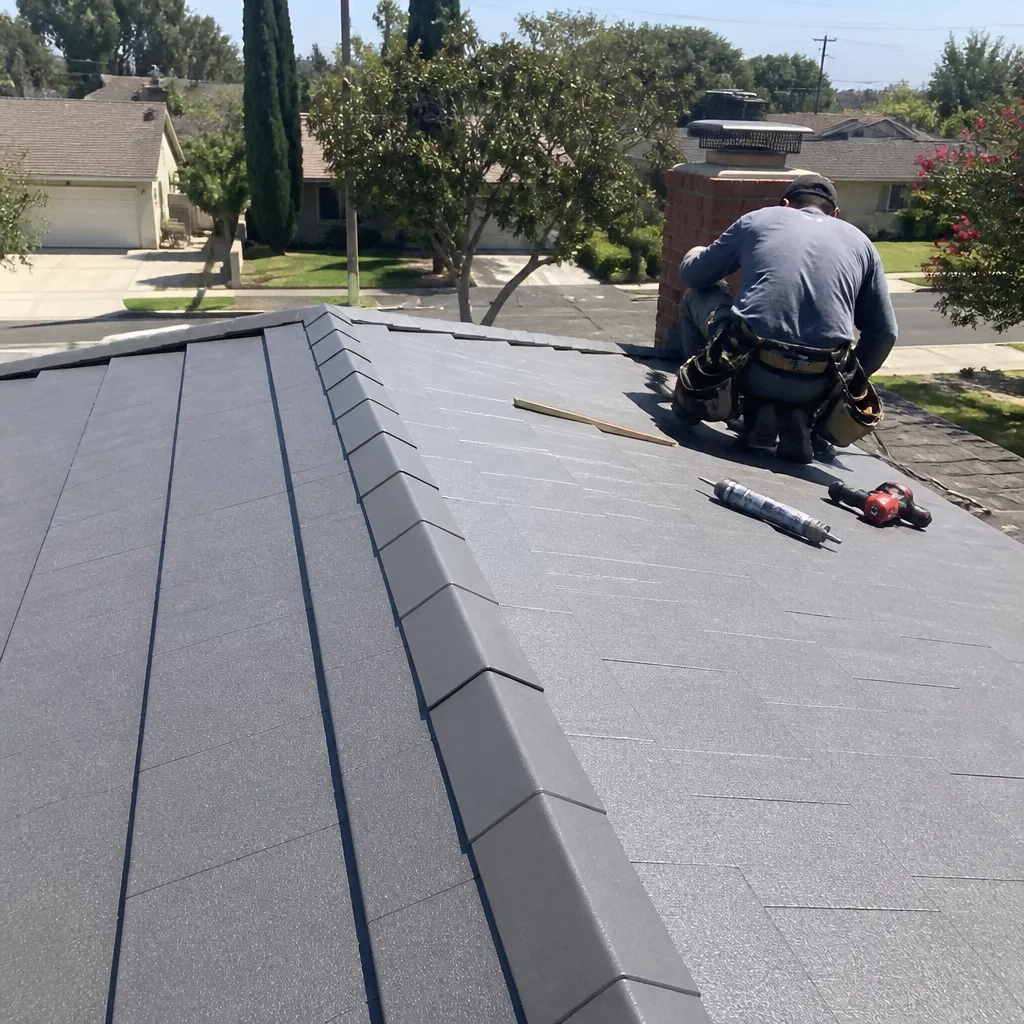 After
After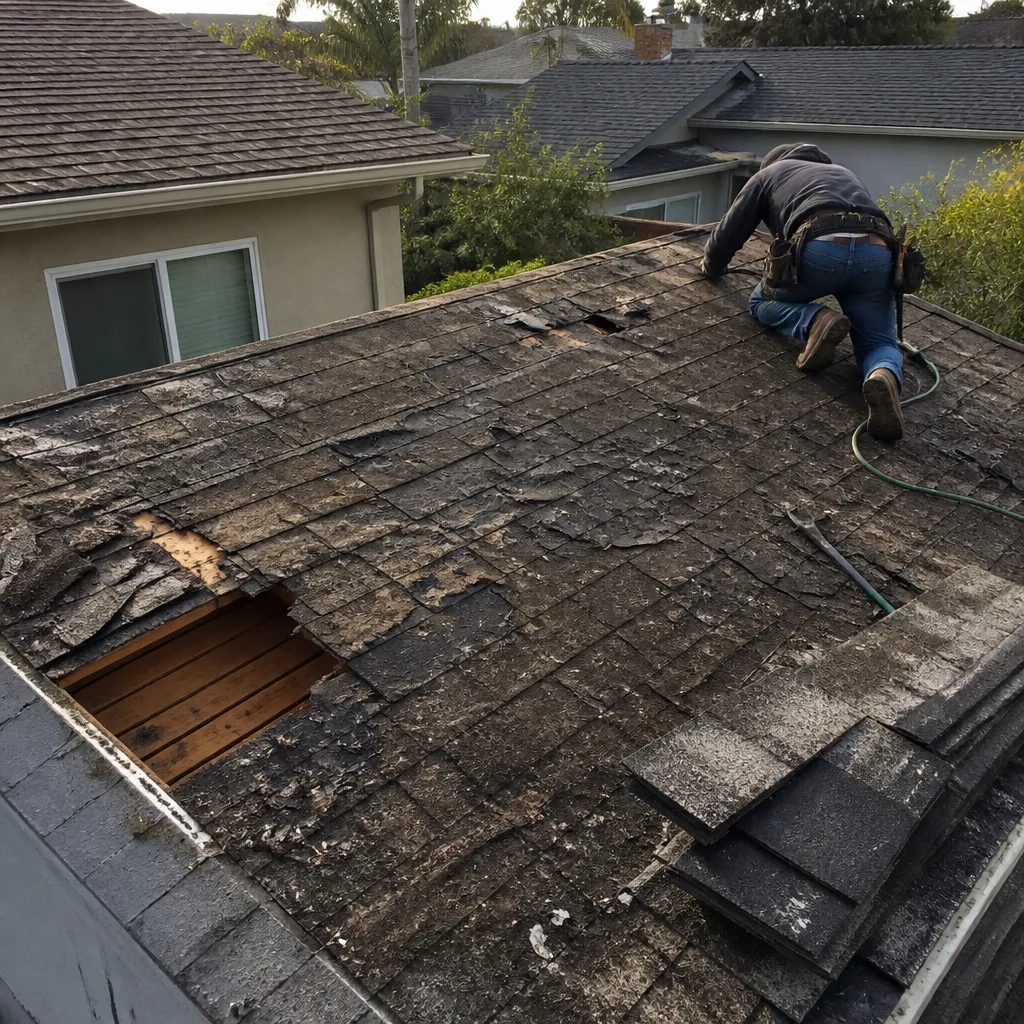 Before
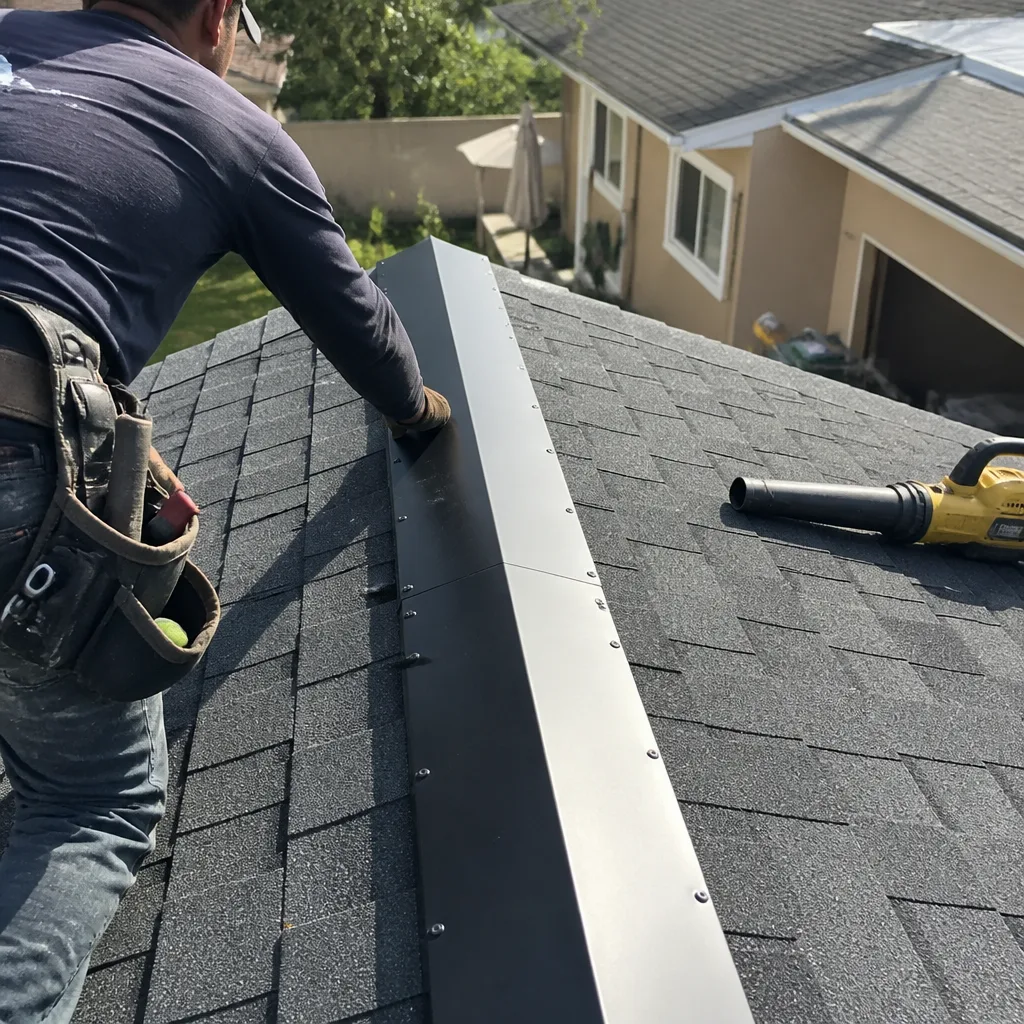 After
AfterTamko Flashing Replacement: The Los Angeles Owner’s Guide
Tamko flashing replacement in Los Angeles typically costs $425 – $1,150 installed, depending on where the flashing sits and how much surrounding shingle work is involved. We stock Tamko-compatible step flashing, valley flashing, and pipe boot flashing on our trucks, so most single-flashing jobs get done in one visit. Where homeowners usually discover the problem: a water stain on the ceiling after a Santa Ana wind event, or granules collecting in a gutter below a wall intersection. The flashing itself rarely fails visibly from the ground. It corrodes, lifts, or tears behind the shingles, and the leak is the first clue.
Flashing is the metal that redirects water where the roof meets something vertical: a chimney, a wall, a skylight, a vent pipe. When it fails on a Tamko roof, the shingles above it can look perfectly intact, which is why the problem often gets misdiagnosed as a shingle issue. It isn’t. The shingles are fine. The metal underneath has given up.
Mercer Roofing is an independent Los Angeles roofing contractor. We’re not affiliated with Tamko, but we install and repair flashing on Tamko roofs regularly, and we’re familiar with how their shingle profiles sit against metal transitions.
Key Takeaways
- Tamko flashing replacement in Los Angeles runs $425 – $1,150 for most single-piece jobs, installed.
- We carry Tamko-compatible flashing on the truck: step, valley, pipe boot, and wall flashing.
- Flashing fails from corrosion, thermal movement, and LA’s UV cycle, often while the shingles still look good.
- Every quote is written before work starts, and every repair carries our 365-Day Done Right Promise.
Which Tamko Models This Applies To
Tamko’s architectural lines most common in Los Angeles are Heritage, Heritage Premium, and Titan XT, with Elite Glass-Seal appearing on older homes. The flashing underneath these shingles is not model-specific in the way a starter strip or hip cap might be. What matters is the flashing’s profile and gauge, and whether it was cut for a three-tab or an architectural shingle’s thicker butt edge.
The compatibility gotcha we see most often in LA: a Tamko Heritage Premium shingle is roughly 20% thicker than a standard three-tab, so flashing that worked with the old roof can sit too low against the new shingle’s edge. If water pools against the shingle butt instead of flowing over the flashing face, it’ll find its way behind the metal within a few years. We measure the exposed flashing face and the shingle butt height before we decide what gets replaced.
OEM Tamko-branded flashing does exist, but most Tamko-approved installations use third-party flashing that meets the same ASTM specs: 26-gauge galvanized steel, or aluminum in coastal zones within three miles of salt water. In Los Angeles, the marine layer influence in Santa Monica and Playa del Rey makes aluminum the smarter call there. Inland, in Van Nuys or Sylmar, galvanized steel is fine and typically costs less. We carry both, plus a stock of standard 10-foot flashing rolls cut to length on-site, so we’re not cutting corners to make a prefab piece fit.
If you’re checking the part yourself before calling, look for the shingle wrapper in your garage or in the original roofing paperwork. That tells us the series. Then the flashing type, step versus continuous, tells us the install method. We match both.
Signs Your Tamko Flashing Replacement Is Failing
- Water staining on ceilings or upper walls, especially after wind-driven rain. Santa Ana winds push rain sideways and uphill against flashing in ways LA roofs don’t see the rest of the year. A leak that only appears during Santa Ana events is almost always flashing, not shingles.
- Rust streaks or rust-colored drip marks on siding below a roof-wall intersection. Galvanized flashing eventually loses its zinc coating, and once bare steel is exposed to LA’s morning marine layer, corrosion accelerates. Rust streaks on stucco below the roofline tell you the flashing is shedding.
- Lifted or cupped shingles at the wall line or chimney base. When flashing pulls away from its substrate, the shingles it overlaps no longer sit flat. You’ll see a small ridge or gap at the transition. That gap is how water gets in.
- Granules in the gutter along the bottom of a valley, paired with a dull gray line down the valley’s center. Valley flashing takes the most water volume on any Los Angeles roof. When it wears through, it abrades the shingle underside and strips granules with it.
- Visible sealant or caulk already smeared over flashing by a previous repair. Good flashing doesn’t need sealant. When someone has gooped silicone or roof cement over a flashing joint, that’s a patch, not a fix, and the underlying metal is usually already failing. We see this a lot on older South LA homes where quick fixes were the norm.
Replacement Cost & What’s Included
In Los Angeles, you’ll pay roughly $425 – $750 to replace a single pipe boot flashing, $550 – $950 for a section of step flashing along a wall, and $800 – $1,150 for valley flashing replacement where the old metal has worn through. These are installed prices, including the flashing material, fasteners, any small areas of shingle rework needed to access the old piece, and our written workmanship guarantee.
What pushes a job toward the top of that range is access: a second-story wall flashing on a steep pitch in Silver Lake costs more in labor than a one-story pipe boot in Torrance. We also price for what’s underneath. If the old flashing leaked long enough to damage the decking or underlayment, that repair adds to the quote, and we’ll show you exactly what we found with photos before we touch it.
Every quote is written before work starts. No change orders, no “we found something once we got up there” surprises. The number on the page is the number you pay.
| Flashing Type | Typical Los Angeles Installed Price | What’s Included |
|---|---|---|
| Pipe boot / vent pipe flashing | $425 – $750 | Flashing, sealant, shingle re-seat around the pipe |
| Step flashing (wall intersection) | $550 – $950 | Flashing section, counterflashing where needed, shingle rework |
| Valley flashing | $800 – $1,150 | Flashing replacement, valley shingle trimming, underlayment check |
| Chimney flashing (full re-flash) | $950 – $1,400 | Step and counterflashing, reglet cut, sealant |
DIY or Call Us?
You can safely check a few things from the ground: rust streaks, lifted shingles at wall lines, stuff like that. You can even climb a ladder and eyeball the flashing where it meets a wall, if you’re comfortable and the ladder is set right. But replacing flashing means lifting shingles, cutting metal, and working where the roof’s water-shedding integrity is thinnest. This is not a high-tension danger like a garage door spring. But it is a part of the roof where a small installation mistake creates a leak that hides for months before it shows up on your ceiling. We don’t recommend most homeowners attempt a flashing replacement themselves.
If you want to take a look at the flashing and shoot us photos before we come out, that works too. Call (743) 200-8347 and we’ll give you an honest read on whether the photos look like a flashing problem or something else. A written quote is free.
FAQs
Steel flashing in Los Angeles typically lasts 15 – 25 years, but homes within a few miles of the coast often see corrosion faster because of salt and marine-layer moisture, so aluminum flashing is the better material out there. If your flashing is rusted through or lifting, replacement is the fix, not resealing.
Small isolated splits can sometimes be patched, but patched flashing is a temporary measure on any Tamko roof, and we’ve pulled enough failed patches off LA homes to know they don’t buy you much time. If the metal is rusted, separated, or cupping, replacement is the only fix that lasts. Call (743) 200-8347 and we’ll tell you straight which category yours falls into.
A single pipe boot flashing takes our crew about an hour. Step flashing along a wall usually runs two to three hours. A full chimney re-flash can take half a day. Most flashing-only jobs in Los Angeles are done in a single visit, start to finish.
We stock standard step, valley, pipe boot, and wall flashing in 26-gauge galvanized steel and aluminum on our trucks, so most Tamko flashing replacements don’t need a special order. We also work with GAF, Owens Corning, and CertainTeed systems, which matters when a roof was installed with mixed-brand materials and the flashing has to match what’s already up there.
When you call Mercer Roofing, a real person answers, day or night. The technician who comes out is background-checked, uniformed, and will show you a photo ID at the door before they step inside, because we send their name and photo to you ahead of the visit. You’ll know who’s coming, and the price will be in writing before anything gets touched. A roof that’s doing its job is one you never think about. Let’s keep it that way.
Written by Grant Whitlock, Owner, Mercer Roofing at Mercer Roofing, serving Los Angeles and nearby areas.