

Free roof inspection with deck photos before we talk money - GAF and Owens Corning certified installation






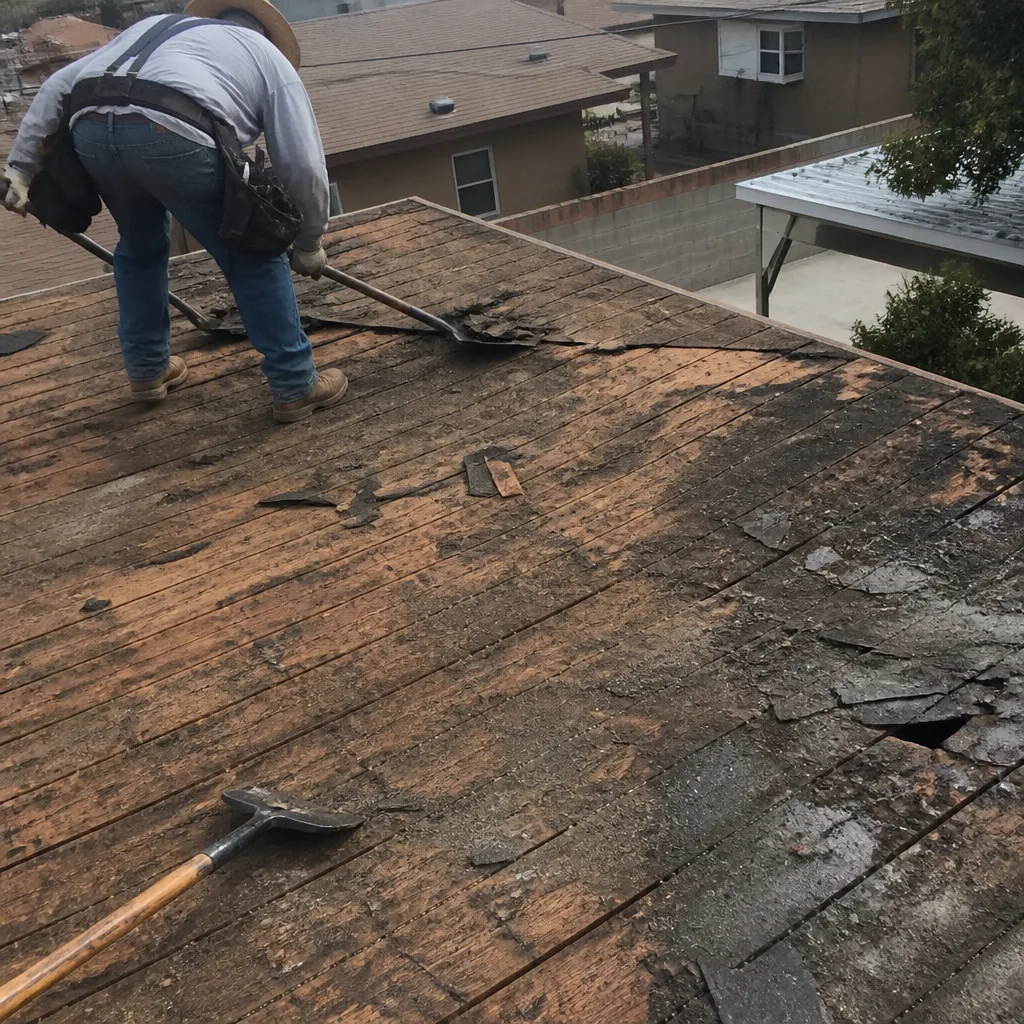 Before
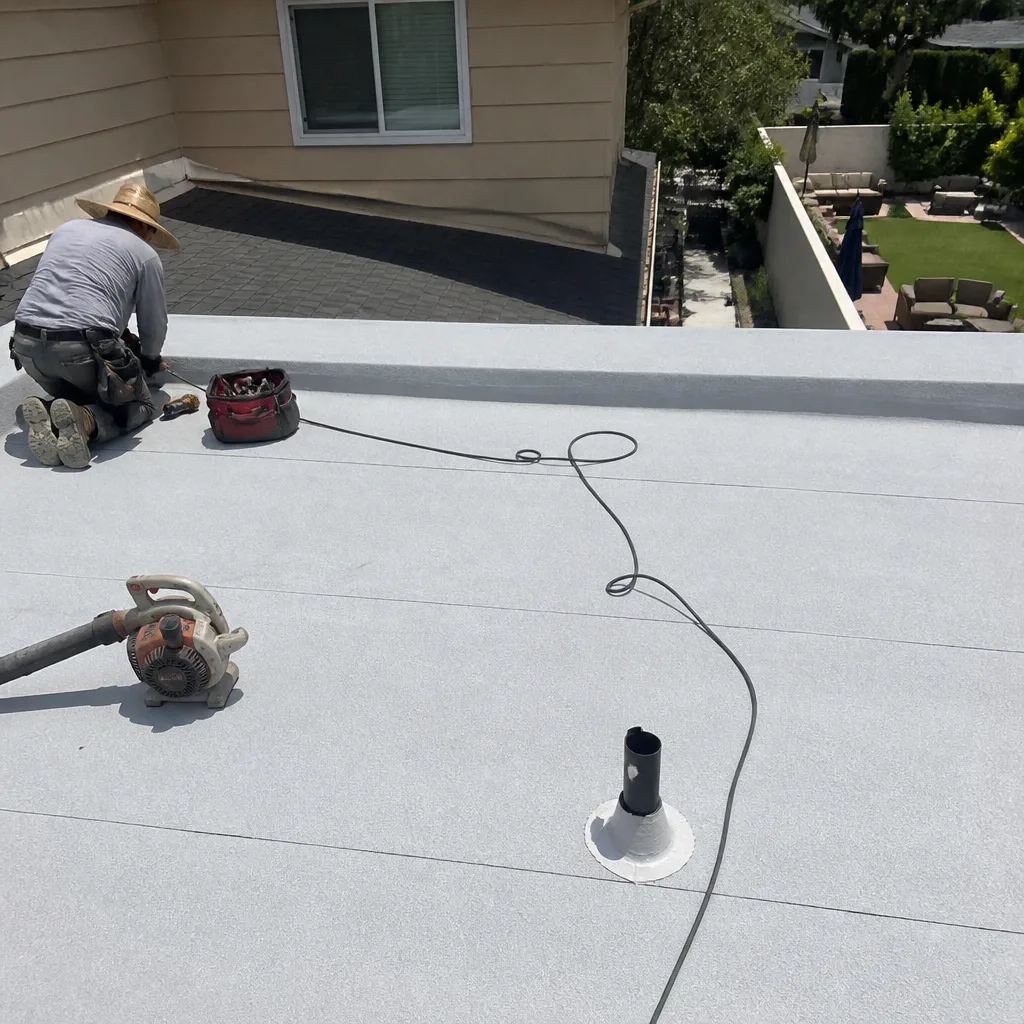 After
After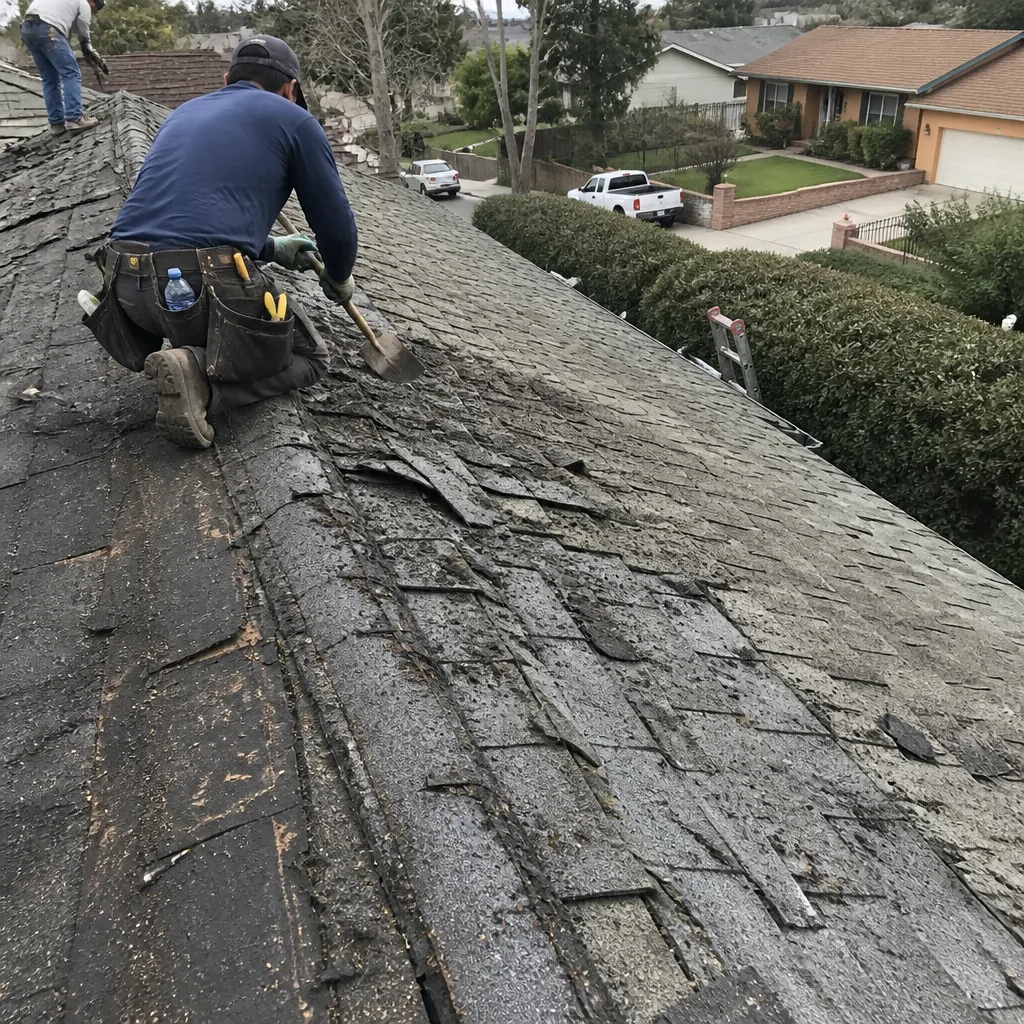 Before
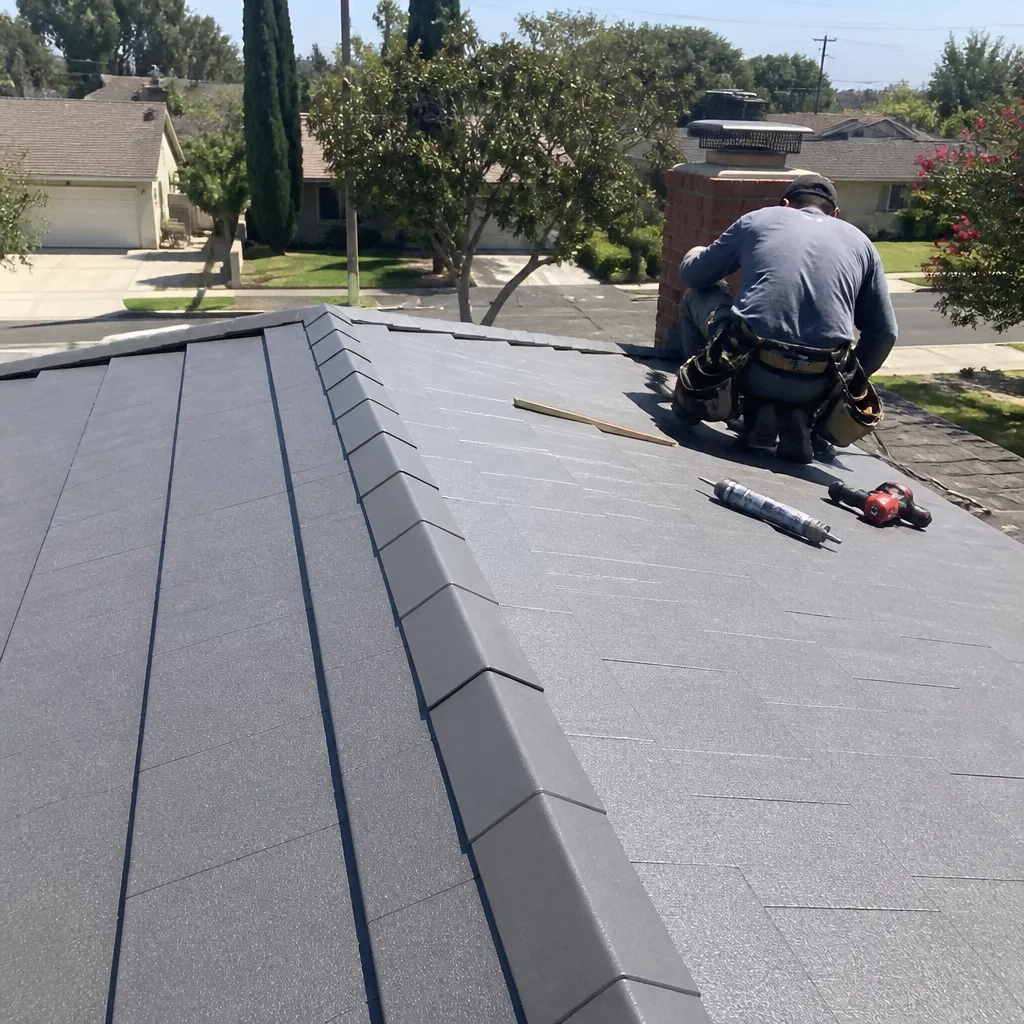 After
After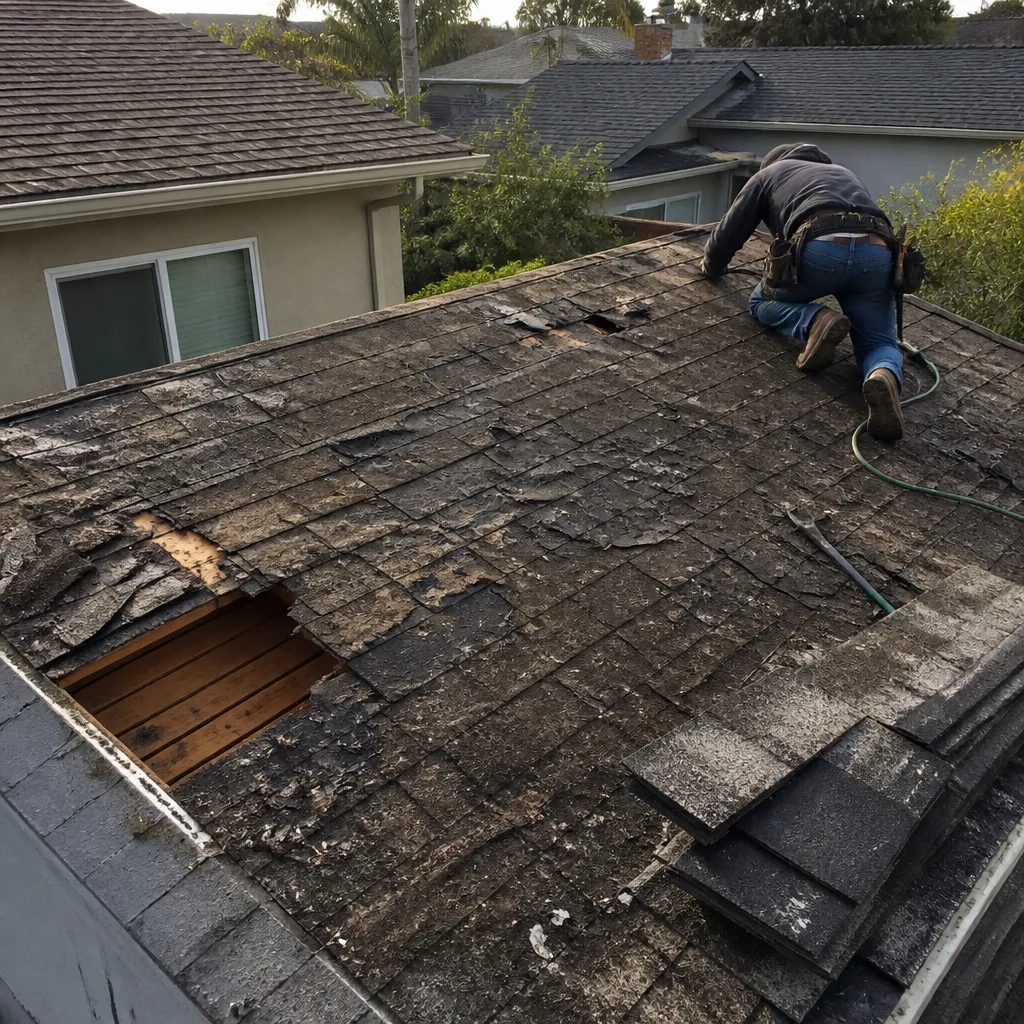 Before
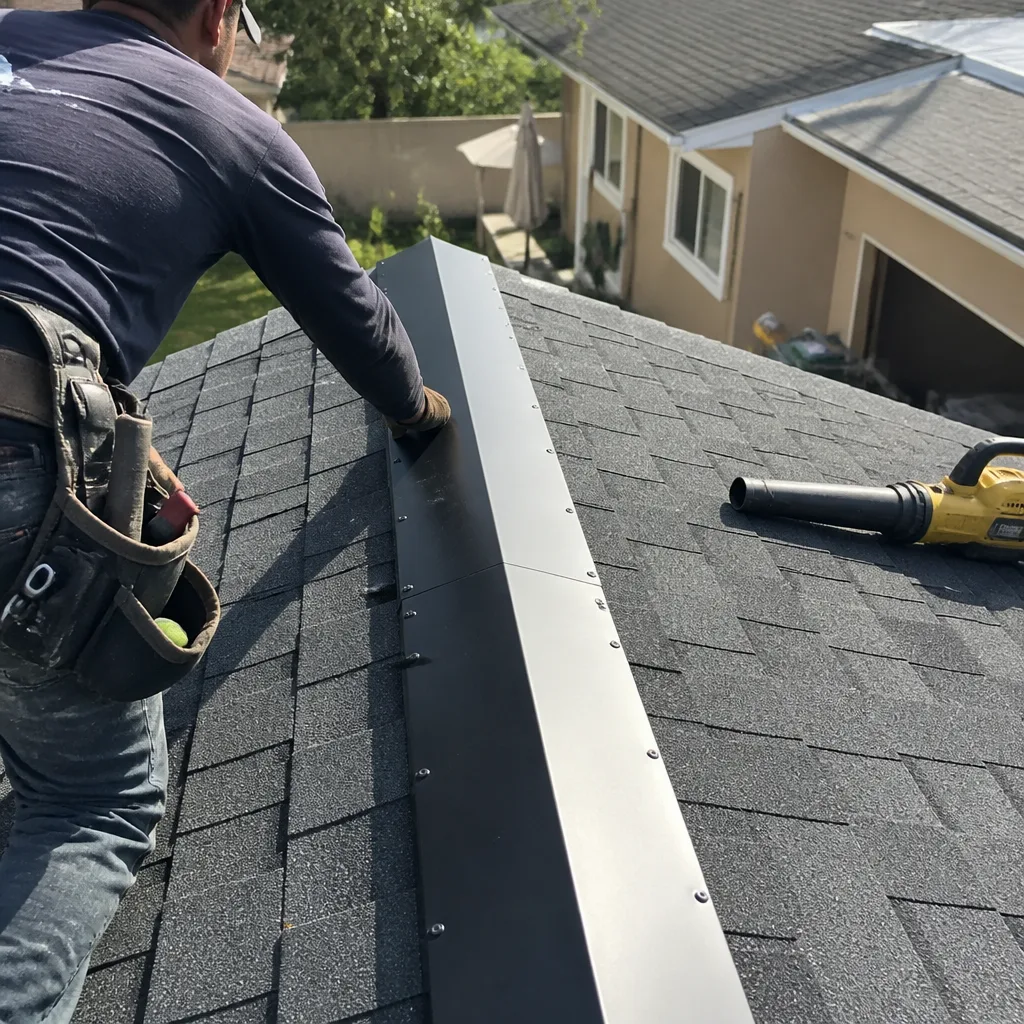 After
AfterHail Dents on the Roof and Gutters
You’re seeing the damage. The question is whether it’s cosmetic or whether water is already finding a way in. Here’s how to read what you’re looking at.
What’s Happening
Hail dents on your roof and gutters almost always mean the protective granule layer on your shingles has been knocked loose, leaving the underlying asphalt exposed to UV and rain. This is not just cosmetic – exposed asphalt degrades fast, and once it starts cracking, water gets under the shingle field. If your gutters are dented, your shingles almost certainly took a hit too, even if the dents up top are harder to spot from the ground.
Gutters are soft aluminum or steel, so they show hail impact clearly and visibly. Shingles are trickier. The granules that protect them look like coarse sand, and a hail strike scours them off in a circular bruise pattern that’s easy to miss unless you know what you’re looking for. When those granules collect in your gutters and downspout outlets after a storm, that’s a reliable tell that your shingle surface took a real hit. The damage underneath may not produce a leak for weeks or even months, but the clock starts at the moment of impact.
Why It Happens
Granule Loss from Hail Impact
Each shingle is coated with mineral granules that block UV and shed water. A hailstone – even a small one moving fast – hits that surface and knocks granules loose in a circular pattern called a hail spatter. Once the granules are gone in that spot, the asphalt mat beneath is exposed directly to sunlight and rain. That spot ages at several times the normal rate, and the shingle eventually cracks or curls there first.
Dented or Cracked Shingle Tabs
Larger hail doesn’t just strip granules – it can physically crack a shingle tab or leave a soft spot in the mat that isn’t visible until you press it. You may not see a hole, but the structural integrity of that tab is compromised. Water can pool in a slightly depressed shingle and work its way under the overlap above during a heavy rain.
Damaged Flashing at Seams and Valleys
The metal flashing around your chimney, skylights, and in the valleys where two roof planes meet is a common failure point after hail. A hard enough strike can slightly lift or crimp flashing, breaking the seal at the seam. These spots are where leaks tend to show up first, and they’re easy to miss on a visual scan from the ground. If you’re seeing water stains on interior ceilings near a chimney or skylight wall, this is likely where it’s entering.
Gutter and Downspout Damage Affecting Drainage
Dented gutters can hold their shape well enough to look functional but lose their pitch – the slight slope that moves water toward the downspout. A dented section that now pitches slightly backward will pool water against your fascia board instead of draining it away. Over time that standing water rots the fascia and works back under the roof edge. If you see a gutter sagging or water dripping over the front edge during rain rather than coming out the downspout, the pitch is off.
What to Do Right Now
- Photograph everything from the ground before anything changes. Walk the perimeter and take photos of every dented gutter section, every downspout, and any shingles you can see clearly. Time-stamp matters for insurance documentation. Don’t get on the roof yourself – a wet or hail-damaged roof surface is genuinely dangerous underfoot, and a fall from even a single-story home can be serious. This is a job for someone with the right safety equipment.
- Check your gutters and downspout outlets for granules. Scoop a small amount of the debris sitting in your gutter trough and look at it. If you see gritty, sand-colored granules mixed in with the usual leaves and dirt, your shingles lost surface material in the storm. More granules mean more exposure.
- Check your attic for daylight or wet insulation. Go into your attic during daylight with the lights off. If you see pinpoints of light coming through the decking, there’s a breach. If the insulation feels wet or compressed in one area, water has already been getting in. Note exactly where on the floor plan that wet spot falls so you can direct the technician to the right section of the roof.
- Check interior ceilings for new water stains. Run your hand along ceiling drywall near skylights, chimneys, and exterior walls. A fresh stain will feel slightly cool and may still be damp. Take a photo of any stain with something in frame for scale.
- Don’t apply any temporary sealant or patch products yourself. Roofing sealants applied incorrectly can trap moisture under the shingle rather than blocking it, and can complicate a proper repair later. Leave the surface alone until a technician can assess it properly.
How We Fix It
When your local Mercer Roofing technician arrives, they’ll do a full roof inspection – walking the surface, checking the shingle field for hail spatter patterns, pressing tabs for soft spots, and inspecting all flashing seams. They’ll look at your gutters from above as well as from the ground. Before anything is touched, you’ll receive a written price covering exactly what needs to be done. No work starts without it.
Depending on what the inspection finds, the path is either Roof Repair – replacing damaged shingle sections, resealing or replacing affected flashing, and correcting any compromised gutter pitch – or, if the damage is widespread enough, a full Roof Installation. Mercer works with manufacturer-recognized brands including GAF, CertainTeed, Owens Corning, IKO, Atlas, Tamko, and Boral, so the replacement material matches or upgrades what was there. Every repair comes with a written guarantee and a free second visit if the repair fails. The 365-Day Done Right Promise covers the work for a full year. A typical hail repair inspection and written estimate can usually be completed in a single visit.
Frequently Asked Questions
It can wait a few days for a professional inspection, but not weeks – especially if another rain event is coming. The damage from the hail itself is already done, but the deterioration from exposed asphalt and compromised flashing seals accelerates every time water runs over those spots. What starts as surface granule loss can become active water intrusion by the next heavy rain. Call (743) 200-8347 and get your local Mercer Roofing team out to assess it while the damage is still contained to the roof surface.
Your local Mercer Roofing team will do everything they can to get to you quickly, especially after a storm event when active water intrusion is a concern. Availability depends on your specific location and current scheduling – the best thing to do is call (743) 200-8347 right now. A live person answers 24/7, not a voicemail, and they can tell you exactly when your local team can be there.
Hail damage is a standard covered peril under most homeowner’s insurance policies, but coverage depends on your specific policy terms, deductible, and how your carrier defines the damage. What helps your claim most is a documented professional inspection with written findings – which is exactly what Mercer provides. Your written estimate is a document you can hand directly to your adjuster. We don’t work the insurance claim for you, but we make sure you have the paperwork a claim needs.
There’s no honest answer to that question before someone gets on your roof and sees the actual extent of the damage. Hail repairs can range from replacing a handful of shingle tabs and resealing flashing to a full roof replacement, and the written price for those jobs are very different. What Mercer does every time, without exception, is give you that price in writing before any work starts – so you know the number before anyone picks up a tool. Call (743) 200-8347 to schedule your free written estimate.
Get It Fixed
Call (743) 200-8347 – a real person picks up, day or night – or book online to schedule your free written estimate. Your local Mercer Roofing team will inspect the damage, hand you a written price, and get the work done under our 365-Day Done Right Promise.
Written by Grant Whitlock, Owner at Mercer Roofing, serving communities nationwide as part of the Threshold Group family since 2000.
What Our Customers Say
"Roofer showed his ID and gave me the crew lead's name before anyone climbed the ladder. Replaced a patch of missing shingles and resealed two vent boots. Written estimate matched the final bill."
- Brian J."Full tear-off and new shingles on our two-story. They covered the landscaping with tarps and ran a magnet over the yard afterward. Didn't find a single nail."
- Karen V."Good roof repair. The crew was a day later than planned because of rain, which I understand, but the scheduling got moved twice. Work itself is clean and has held up."
- Dale T.