
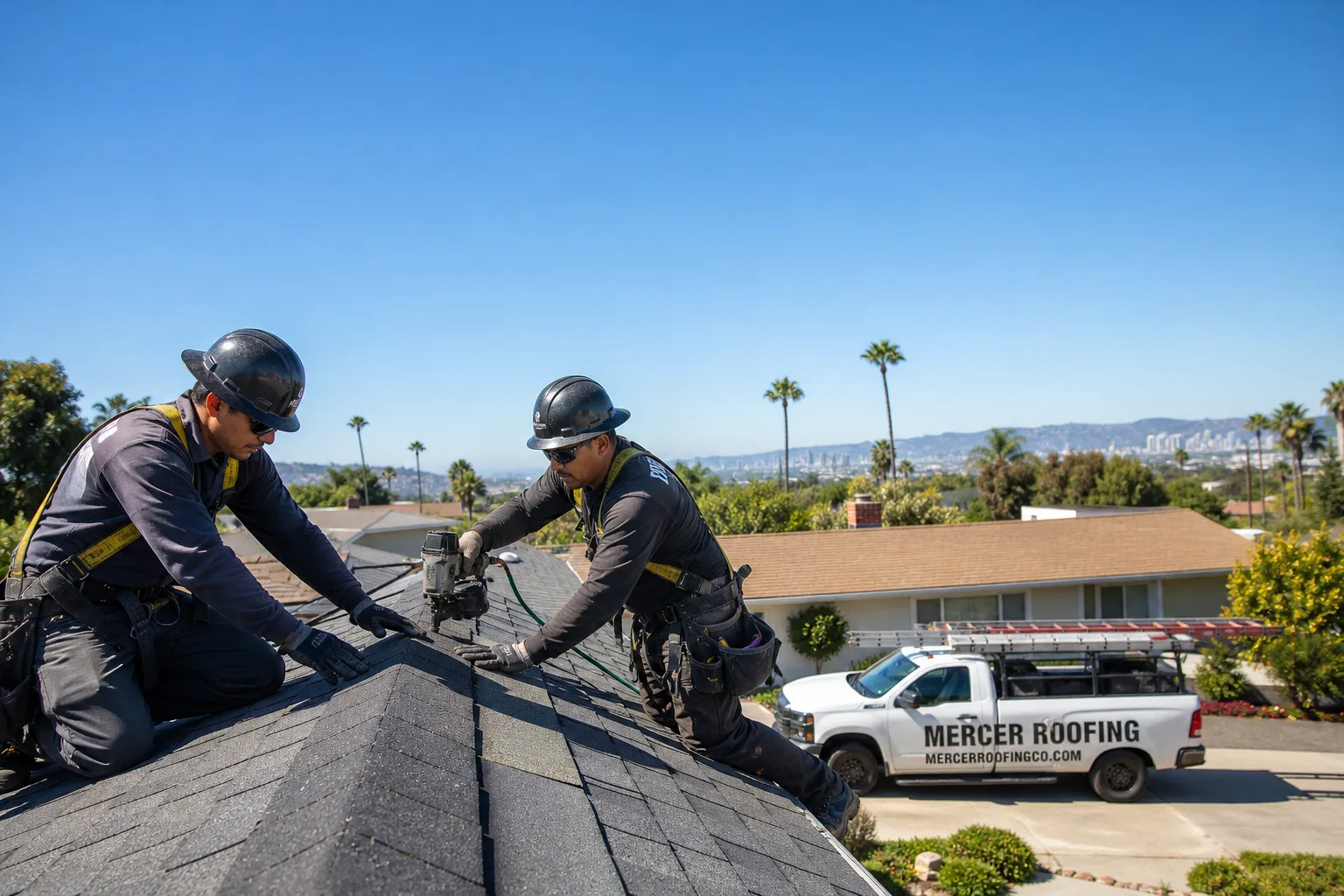
Free roof inspection with deck photos before we talk money - GAF and Owens Corning certified installation
 Before
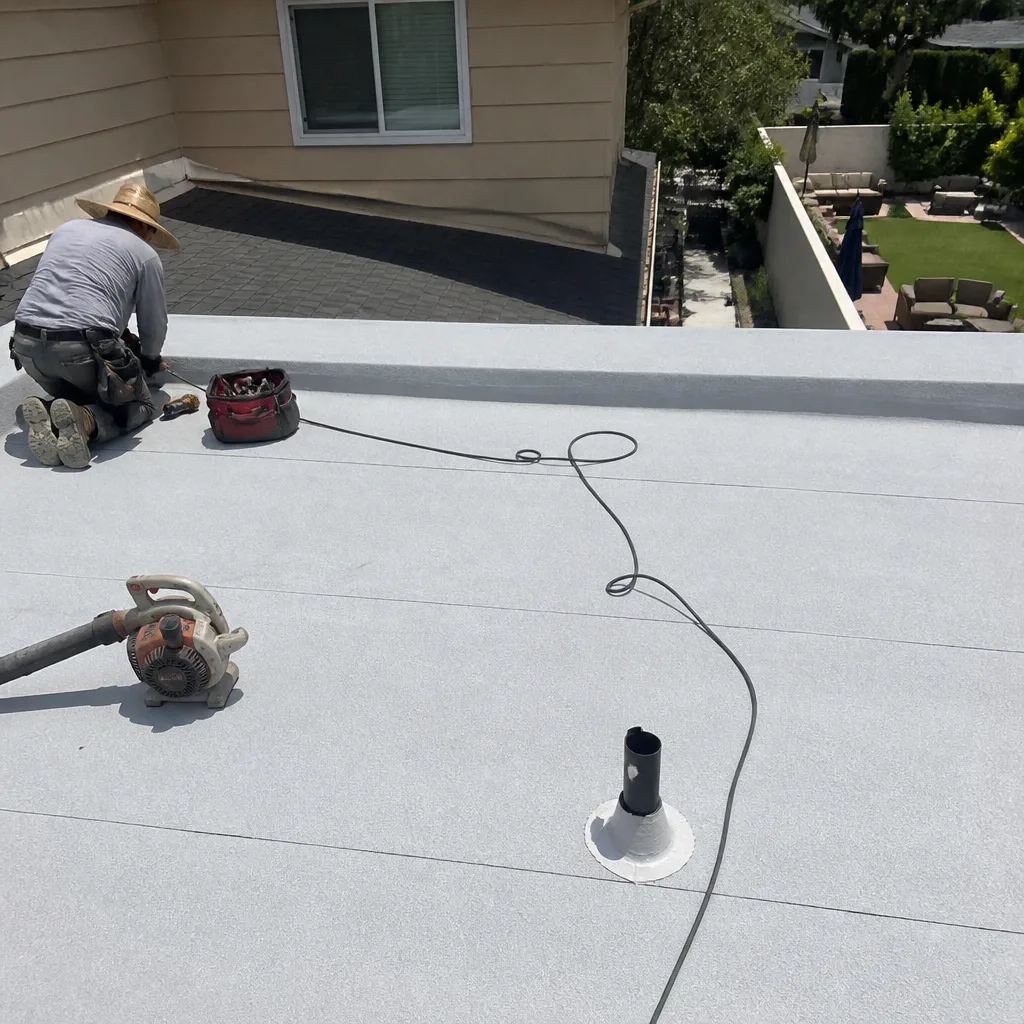 After
After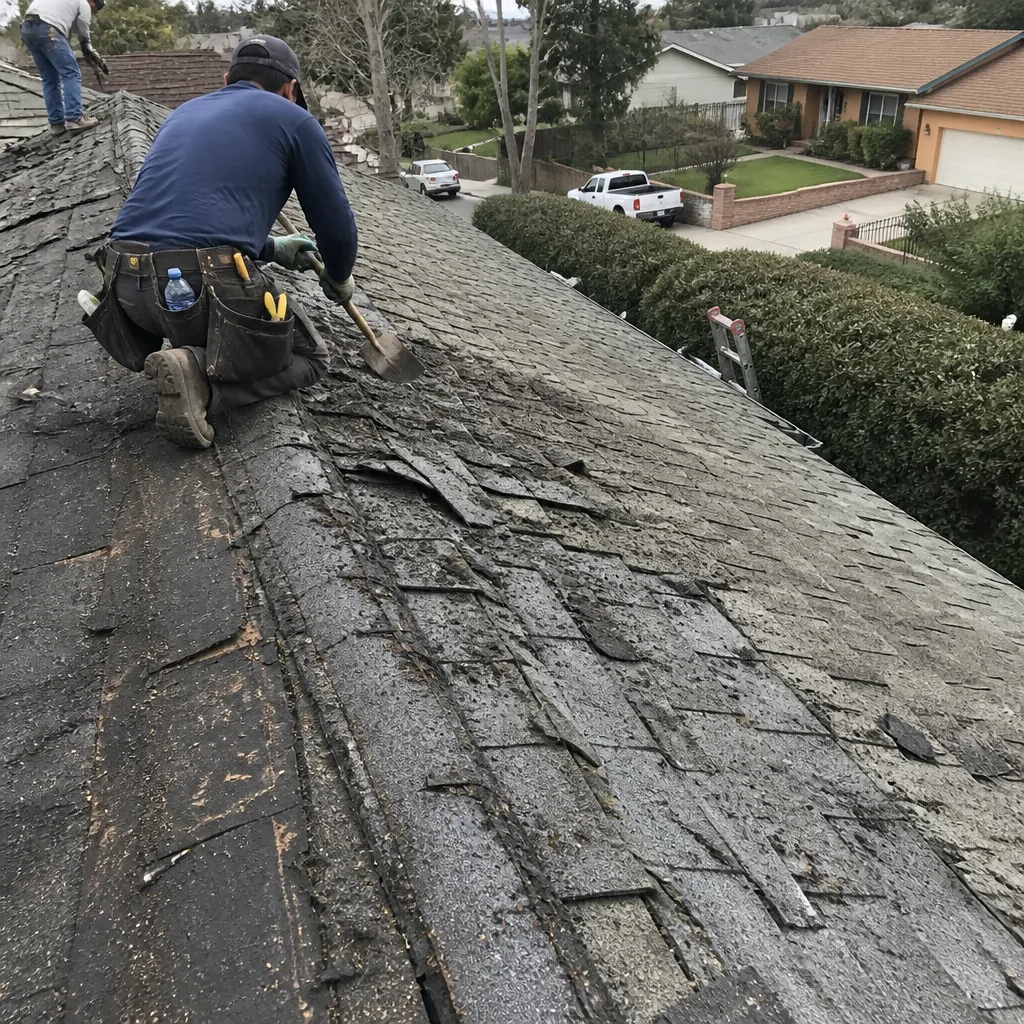 Before
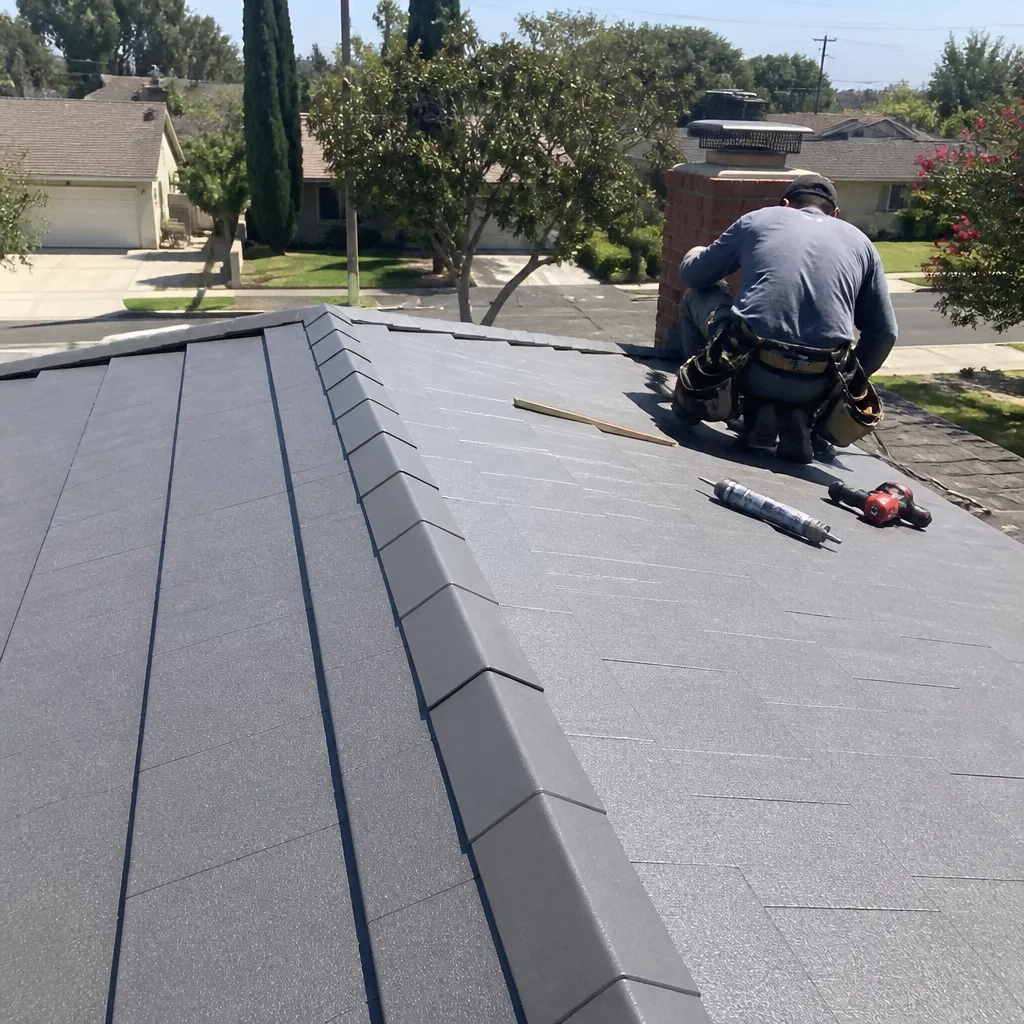 After
After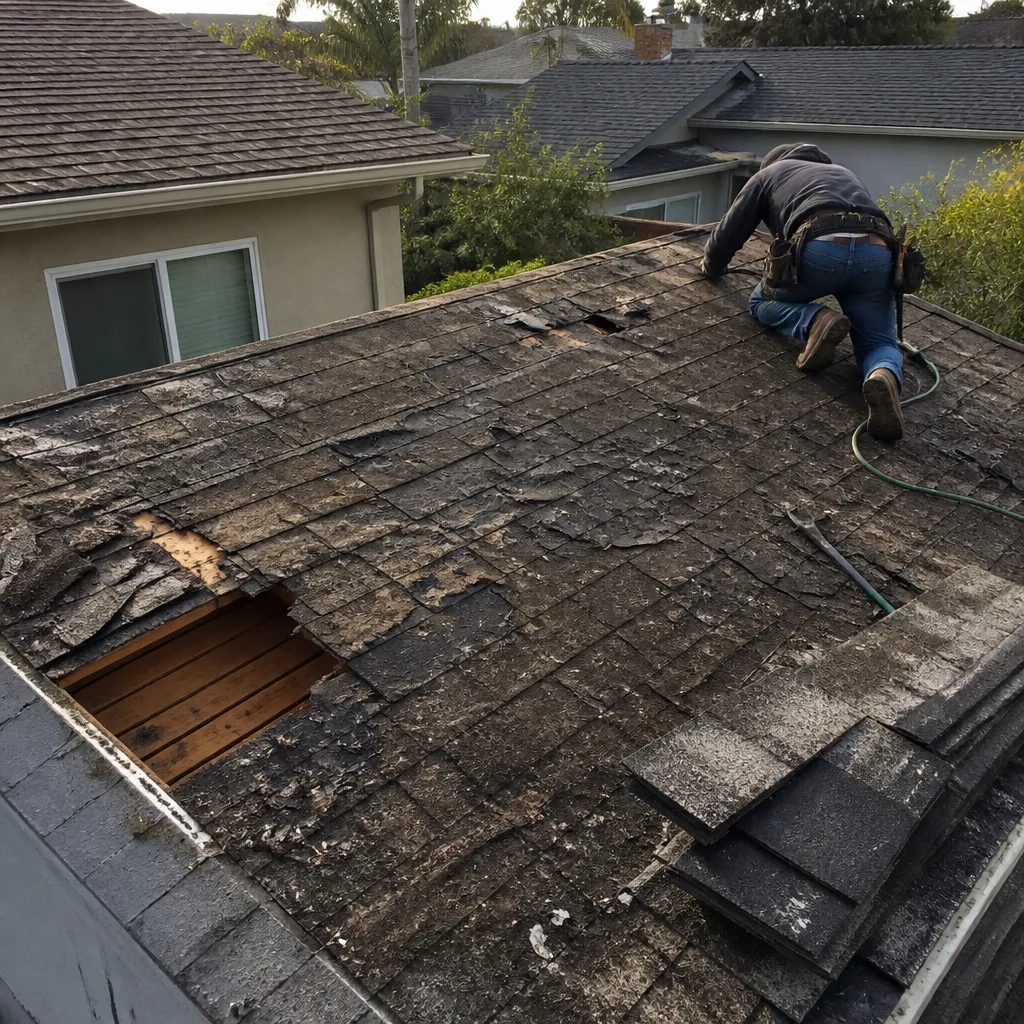 Before
 After
AfterWhat’s Happening
A sagging roof deck almost always means the structural sheathing underneath your shingles has absorbed water, lost its rigidity, or is no longer getting adequate support from the framing below. This is not a cosmetic issue. Get a professional on the roof before it gets worse.
The roof deck is the layer of plywood or OSB (oriented strand board) that sits directly on your rafters and trusses and gives your shingles something solid to nail into. When that deck softens, buckles, or visibly dips, the problem has usually been building for months, sometimes longer. What you’re seeing from the ground or the attic is the end result of a process that started with a leak, a ventilation failure, or a structural load the framing wasn’t built to carry. The repair path depends on which one it is, and the only way to know for certain is to get eyes on the decking and the structure beneath it.
Why It Happens
Long-Term Water Intrusion
This is the most common cause, by a wide margin. A small leak – at a flashing seam, around a pipe boot, or through a cracked shingle – can drip onto the same section of decking for years before the sag becomes visible. OSB in particular has almost no tolerance for repeated wetting and drying; it swells, delaminates, and then goes soft. If you notice the sag is directly below a skylight, a valley, a chimney, or a roof penetration of any kind, water is almost certainly the culprit.
Inadequate Attic Ventilation
Roofs need to breathe. When attic ventilation is blocked or was never correctly installed, heat and moisture build up in the attic cavity and essentially cook the underside of the deck from below. You won’t see a dripping leak, but the decking still absorbs that trapped humidity over time and softens the same way a slow water leak does. If the sag is spread across a broad, flat area rather than concentrated at one point, and your attic feels oppressively hot or shows frost in winter, ventilation is a serious suspect.
Rafter or Truss Damage
The deck can only stay flat if the framing beneath it is straight and intact. Cracked rafters, broken truss members, or rafter ties that have pulled loose will let sections of the deck drop even when the sheathing itself is dry and solid. This kind of sag tends to follow a line rather than a soft spot – you’ll see a dip that runs parallel to the ridge rather than a circular or irregular low point. If you can safely look at your attic framing, a cracked or notched rafter is visible to the naked eye.
Original Installation Problems
Decking that was undersized for the rafter span, panels installed with the grain running the wrong direction, or sheathing that was never properly nailed to the framing can all produce sagging that shows up years after the roof was built. These installations looked fine on day one but never had the rigidity they needed. If your roof was replaced or built within the last decade and is already sagging in sections that show no sign of a leak, ask the inspector to look closely at panel thickness, nailing patterns, and how the panels were oriented during installation.
What to Do Right Now
- Do not walk on the sagging section. Soft decking can give way under a person’s weight. If the sag is visible from inside the attic, stay off that part of the attic floor as well.
- Photograph it from the ground and from inside the attic if you can get there safely. Get wide shots that show the full shape of the dip, and close shots of any discoloration, mold, or visible damage to the decking surface. These photos help a technician show up prepared.
- Put a bucket under any active drip you can trace inside the house. If water is coming through the ceiling or down a wall near the sagging area, contain it to limit interior damage while you wait.
- Move valuables and electronics out from under the affected area. If the deck continues to soften, what’s below it is at risk.
- Do not attempt to patch the deck from above yourself. Working on a roof over compromised sheathing is genuinely dangerous, and a surface patch won’t address the structural or moisture problem underneath. Call your local Mercer Roofing team and let a background-checked, uniformed technician assess it properly from a ladder and from inside the attic.
How We Fix It
When a technician from your local Mercer Roofing team arrives, they’ll inspect the affected area from both sides: the roof surface and the attic below. That two-sided look is how you figure out whether the problem is limited to the sheathing or whether it involves the framing as well.
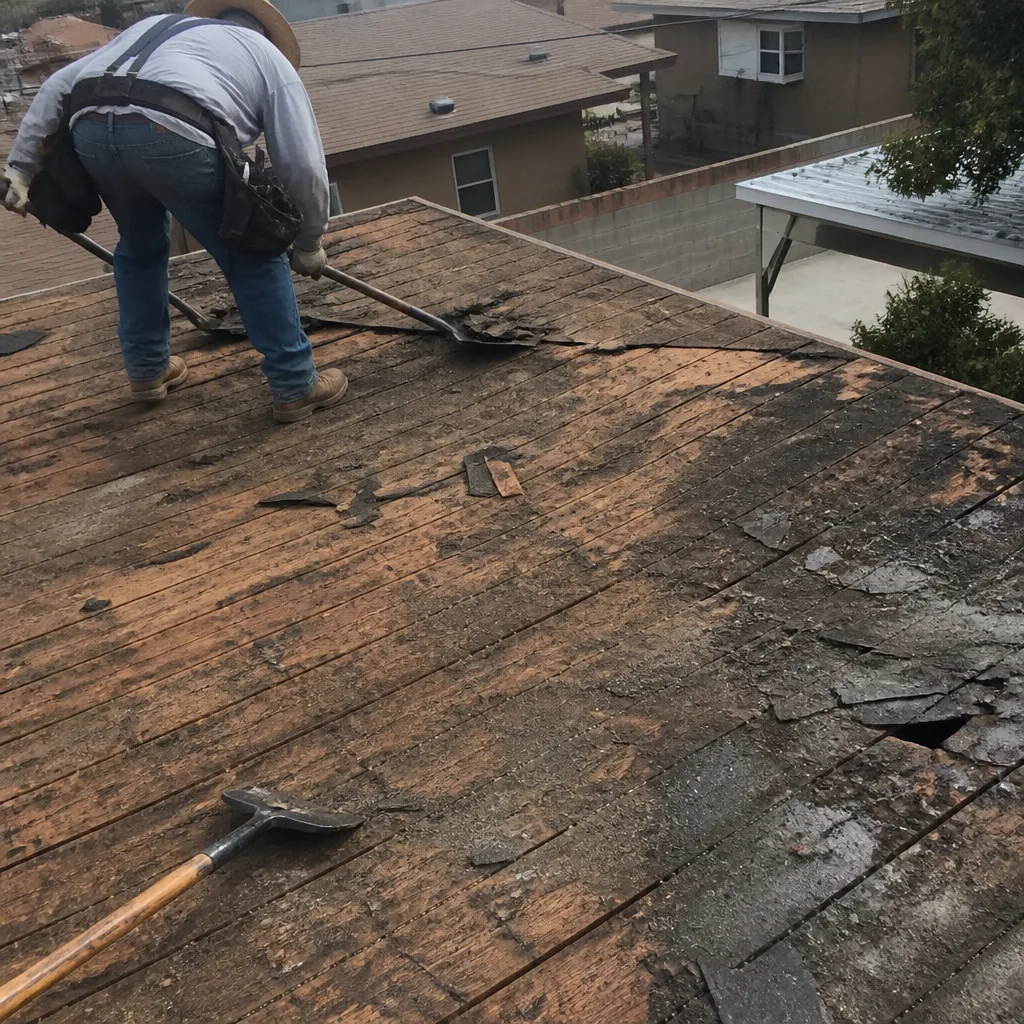
If the decking is soft or delaminated, the damaged panels are removed, the framing underneath is checked for rot or breaks, and new sheathing is cut and fastened to spec. If a rafter is cracked or a truss member is compromised, sistering a new piece of lumber alongside it restores the structural support the deck needs. New shingles – installed using a manufacturer-recognized brand like GAF, CertainTeed, or Owens Corning – go on last.
This falls under our Roof Repair and, depending on the scope, full Roof Installation services. Before any of this starts, you get a written price. That’s not a policy we revisit job by job; it’s how every Mercer job works, every time. The work is also covered by our 365-Day Done Right Promise: if the repair isn’t right within a year, we make it right, and a free second visit is included if a repair fails. The size of the affected area determines how long the job takes; a technician can give you a realistic timeline once they’ve seen it.
Frequently Asked Questions
A sagging roof deck is a structural problem, not a cosmetic one, and it should not wait. The longer a softened or broken deck section goes unaddressed, the larger the damaged area tends to grow, because water continues getting in and framing continues carrying load it can’t properly support. In a worst case, a section of decking can fail under the weight of rain or snow. Call (743) 200-8347 to get someone out to assess it as soon as you can.
Contact your local Mercer Roofing team at (743) 200-8347 to find out what scheduling looks like in your area – a live person answers that phone around the clock, so you won’t hit a voicemail. The sooner someone gets eyes on the deck, the sooner you have a written price and a plan. Don’t let scheduling uncertainty be the reason this sits longer than it has to.
Your written price is given before any work starts, and that’s not a conditional offer. If an inspection reveals something that genuinely changes the scope – say, framing damage that wasn’t visible from below – your technician explains it and you get an updated written price before that additional work begins. Nothing proceeds without your sign-off. Call (743) 200-8347 and ask about getting a free written estimate.
Most sagging deck situations are repaired by replacing the affected sheathing panels and addressing whatever caused the damage, without replacing the entire roof. A full replacement becomes the right answer when the damage is widespread, when the underlying framing has extensive rot, or when the existing shingles are at the end of their serviceable life and it makes more sense to do everything at once. Your local Mercer Roofing technician will tell you which situation you’re in – honestly, with a written price attached – before any work starts.
Get It Fixed
A sagging roof deck doesn’t wait, and neither should you. Call (743) 200-8347 – a real person answers, any time of day or night – or book online to schedule your free written estimate. Your local Mercer Roofing team will assess the damage, explain what they find, and give you a clear price before anything starts.
Written by Grant Whitlock, Owner at Mercer Roofing, part of the Threshold Group family of home-service companies, serving communities across the country since 2000.
What Our Customers Say
"Leak showed up in the hallway ceiling after a big storm. They found the failed pipe flashing in about ten minutes, replaced it, and checked the attic for wet insulation."
- Sophie R."Chimney flashing was the culprit for years of dark stains on the ceiling. Fixed it in one visit and no more stains."
- Ian O."Roofer showed his ID and gave me the crew lead's name before anyone climbed the ladder. Replaced a patch of missing shingles and resealed two vent boots. Written estimate matched the final bill."
- Brian J.