
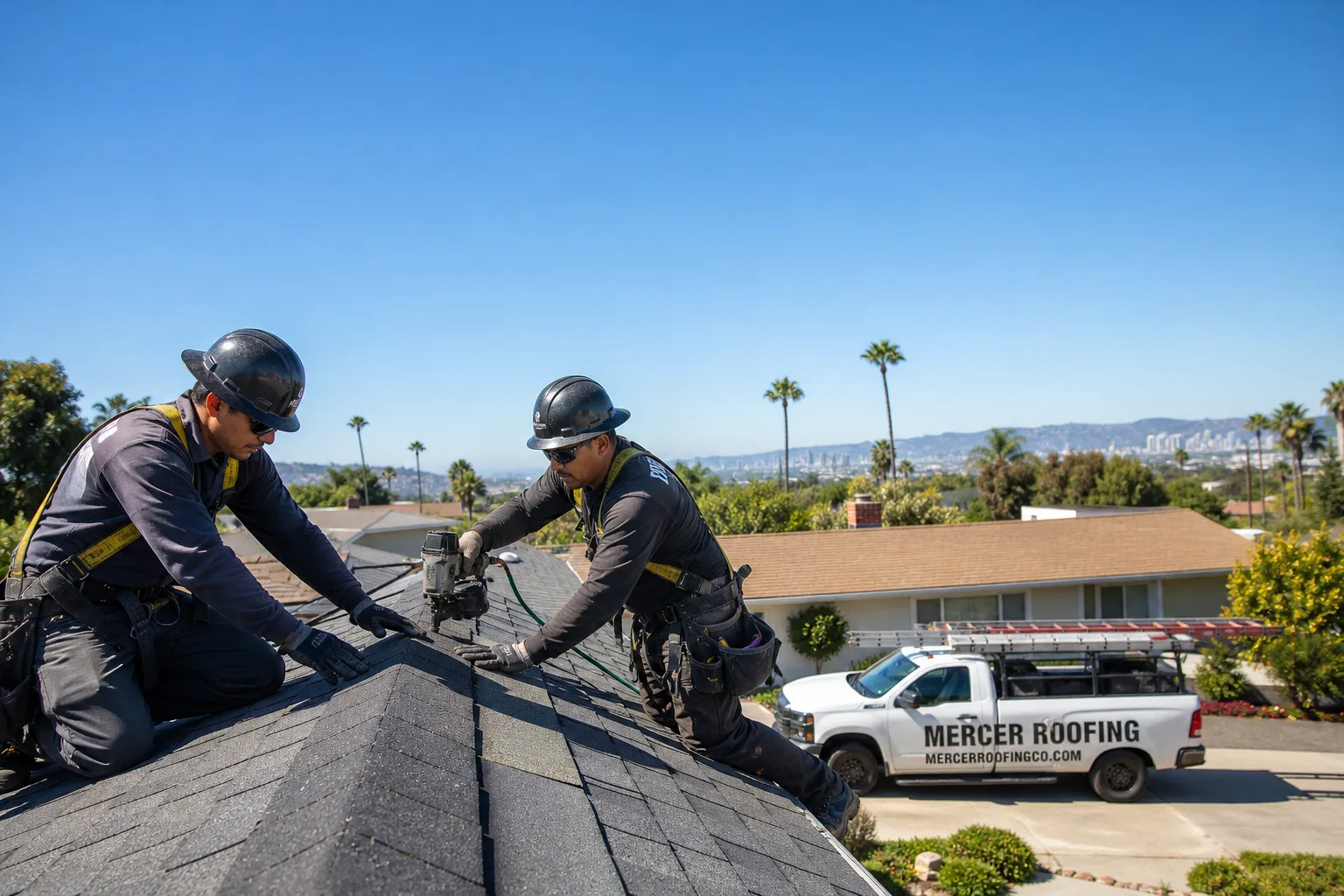
Free roof inspection with deck photos before we talk money - GAF and Owens Corning certified installation
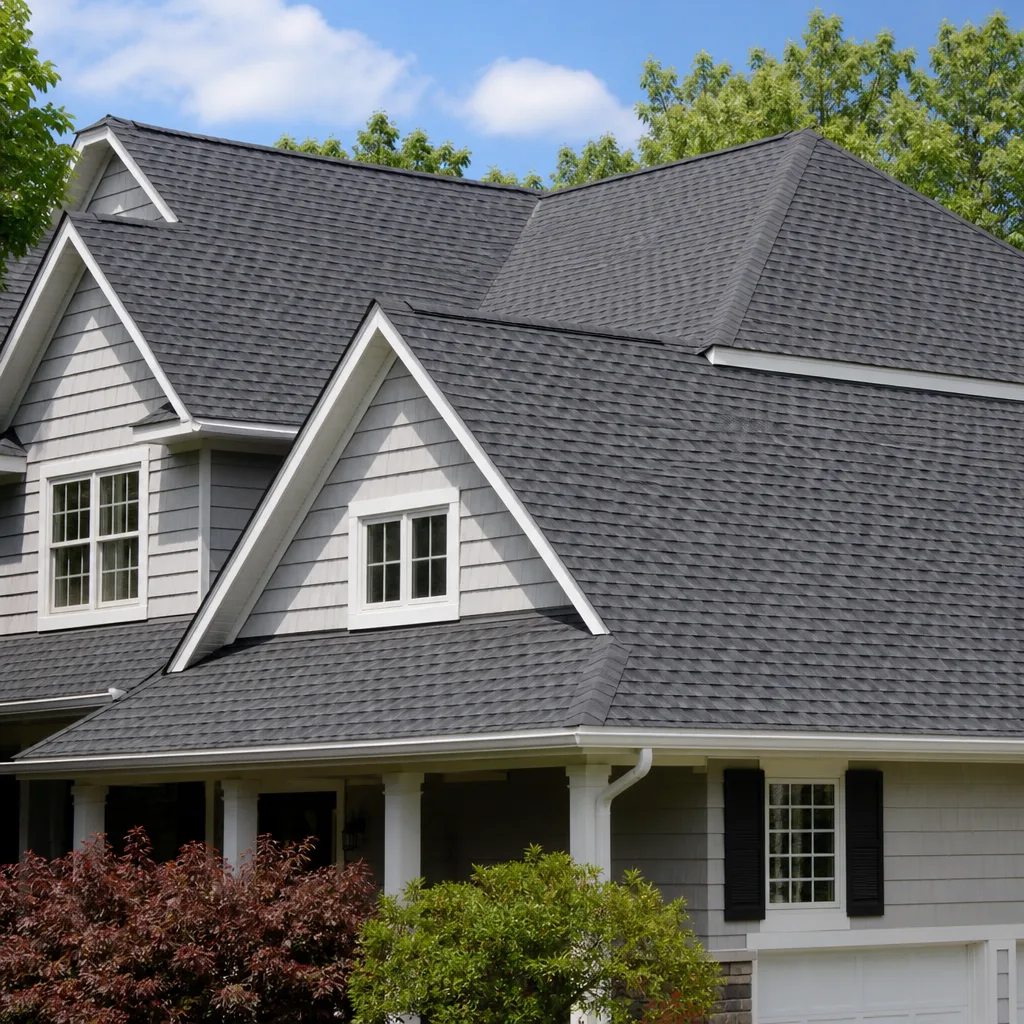
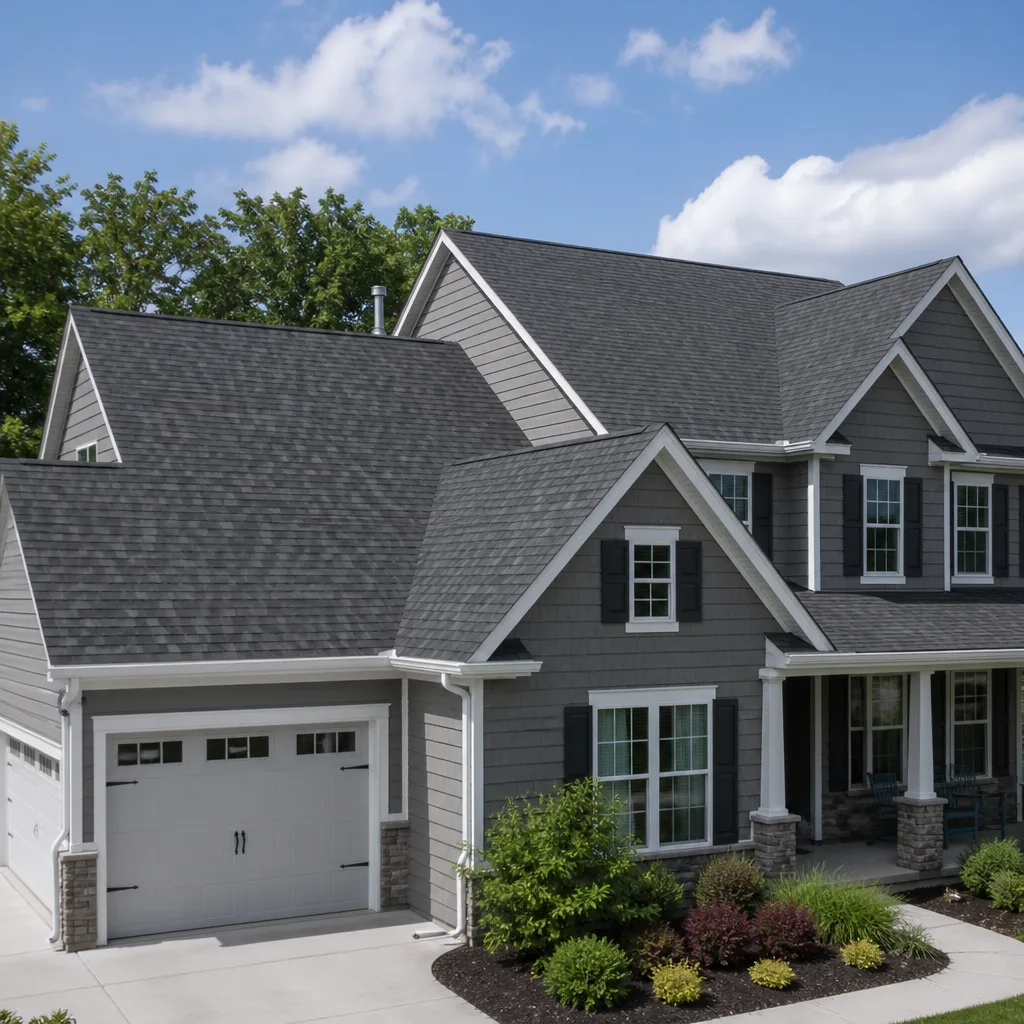
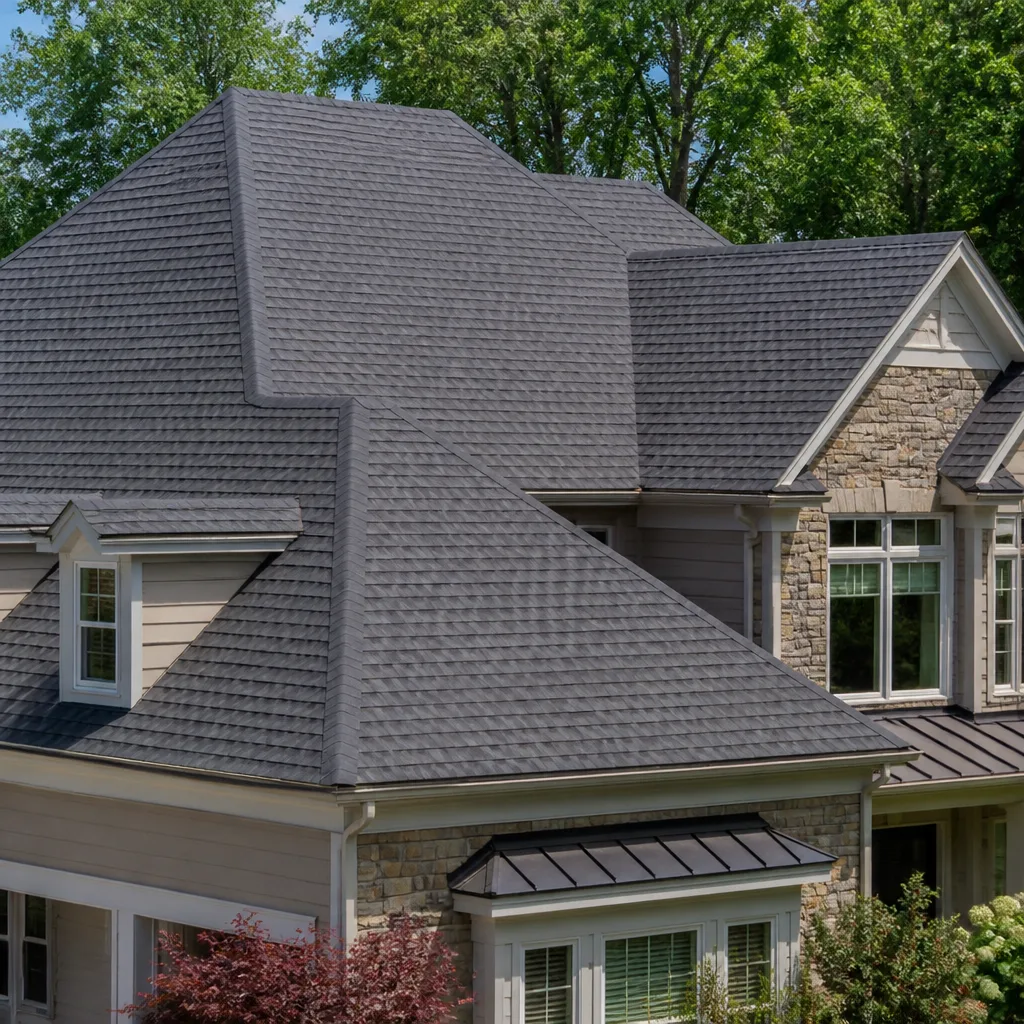
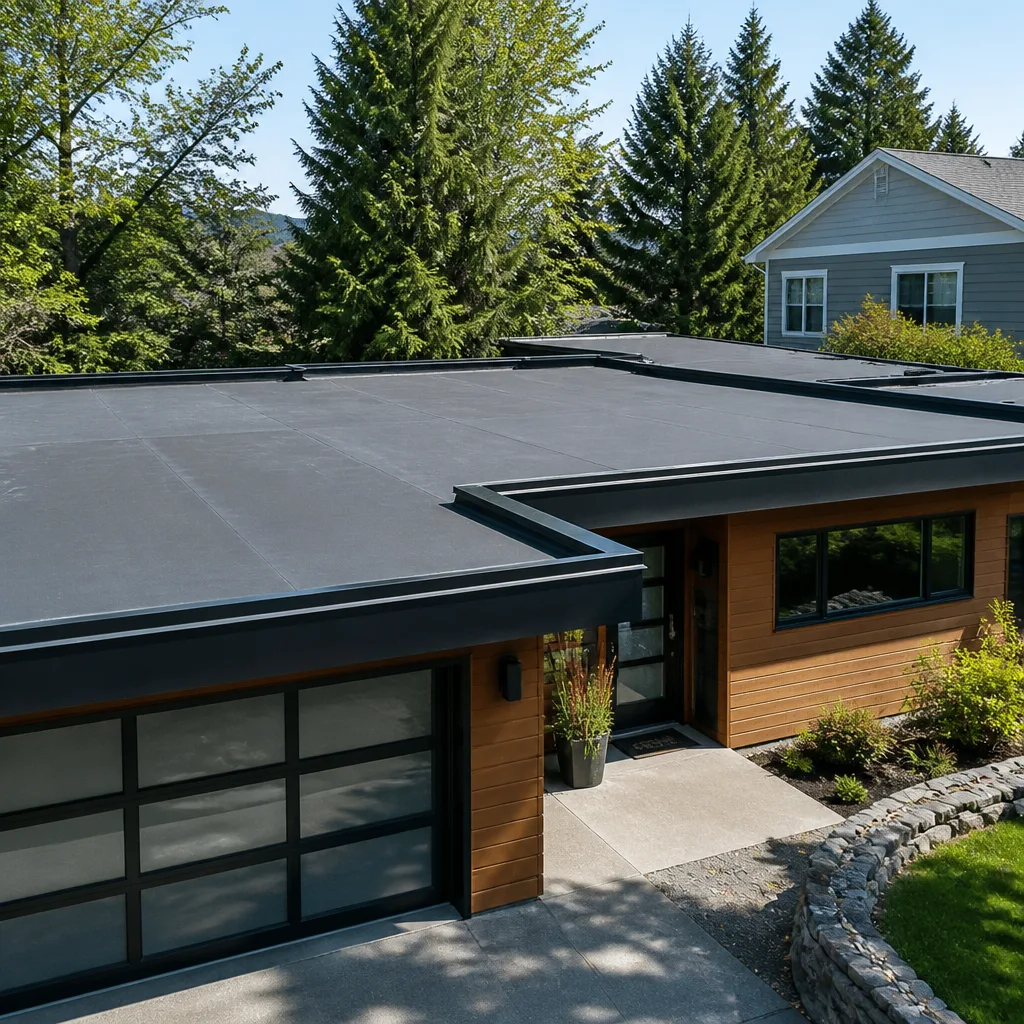
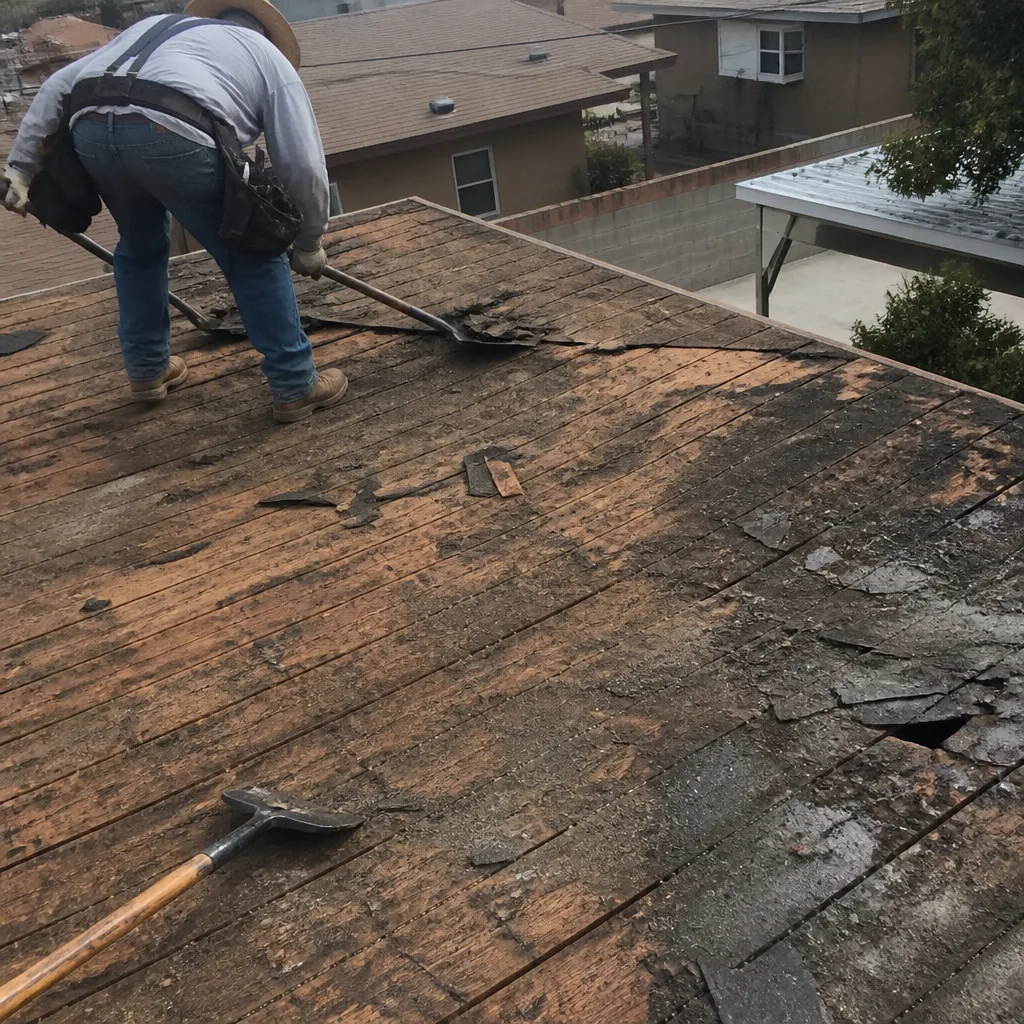 Before
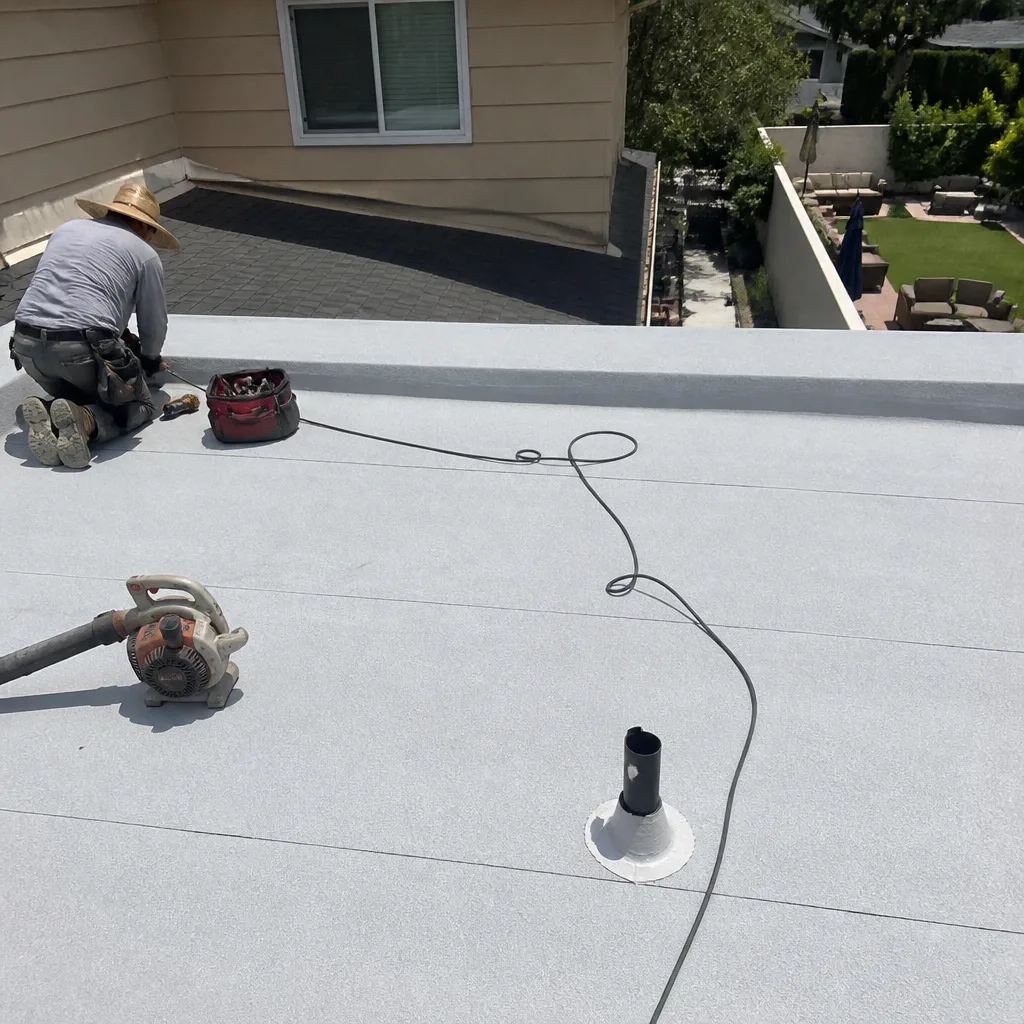 After
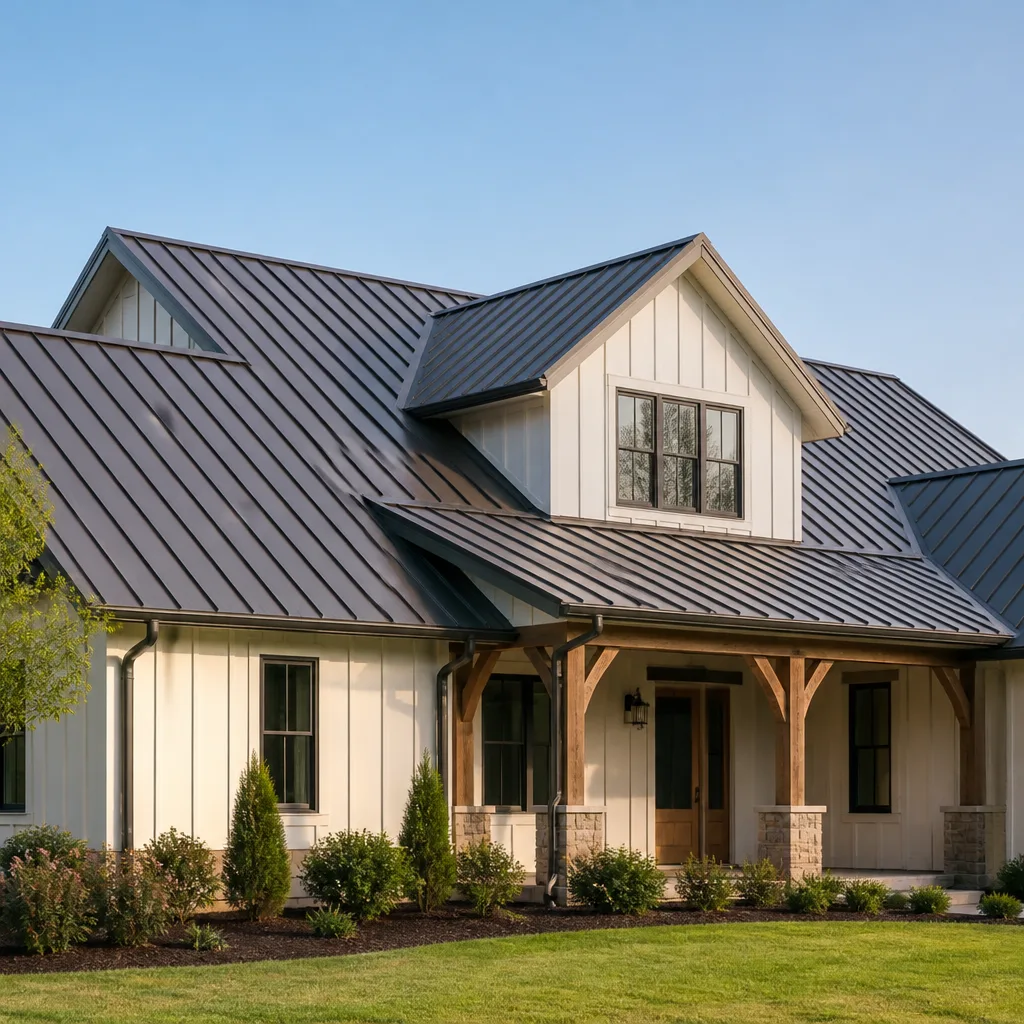
After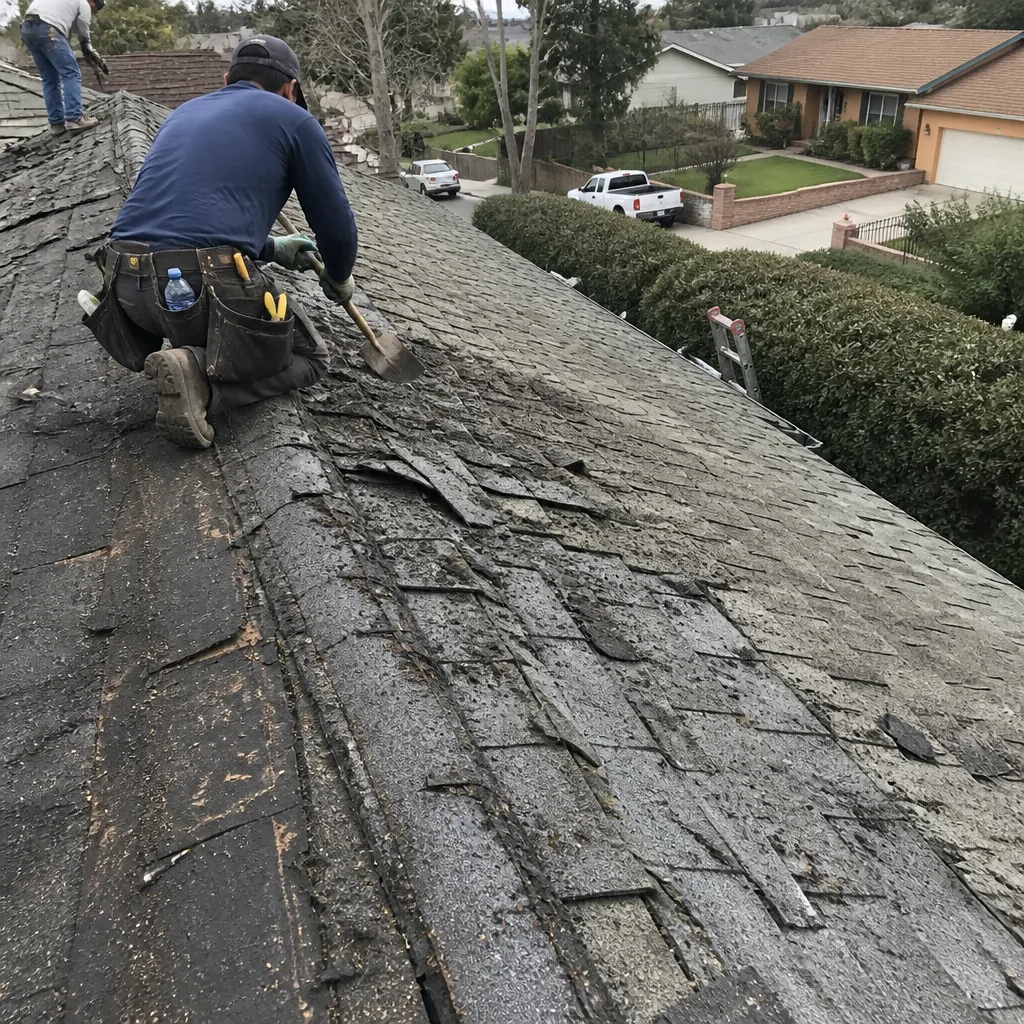 Before
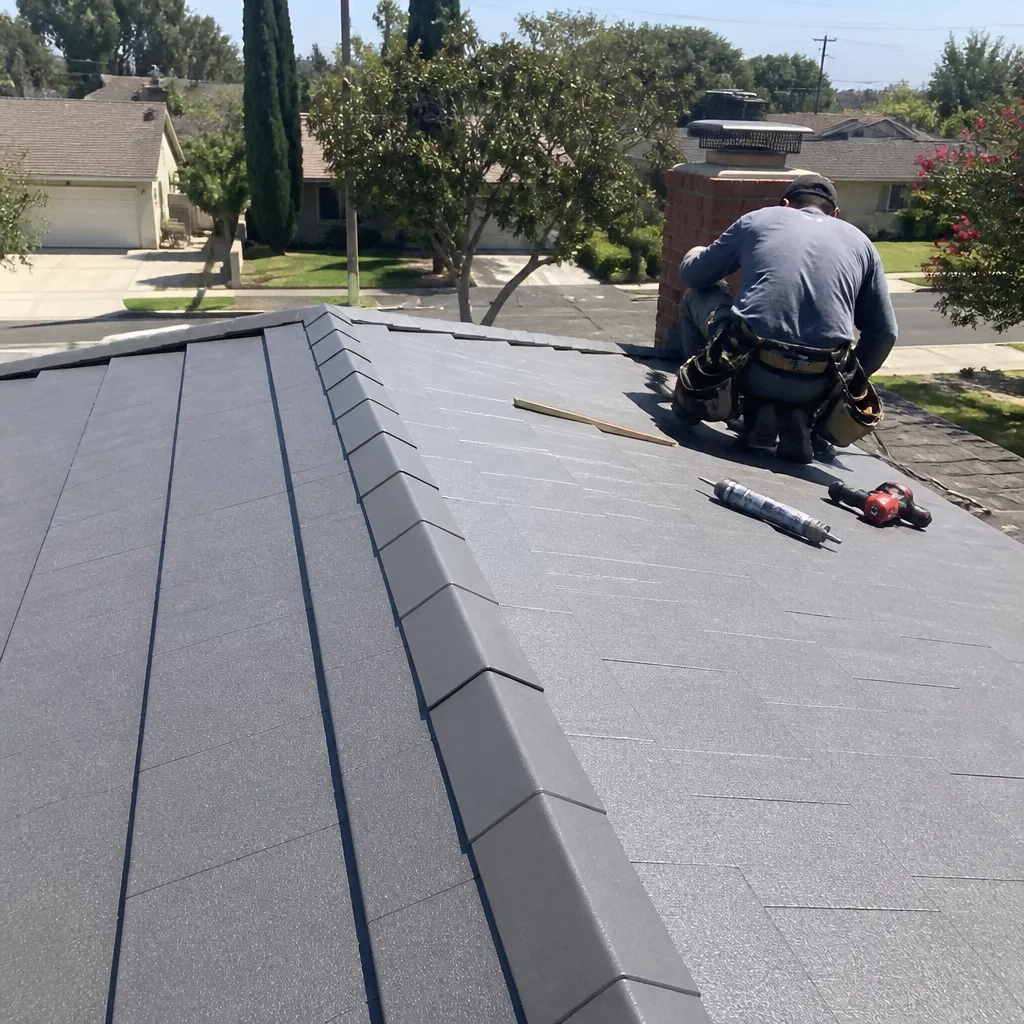 After
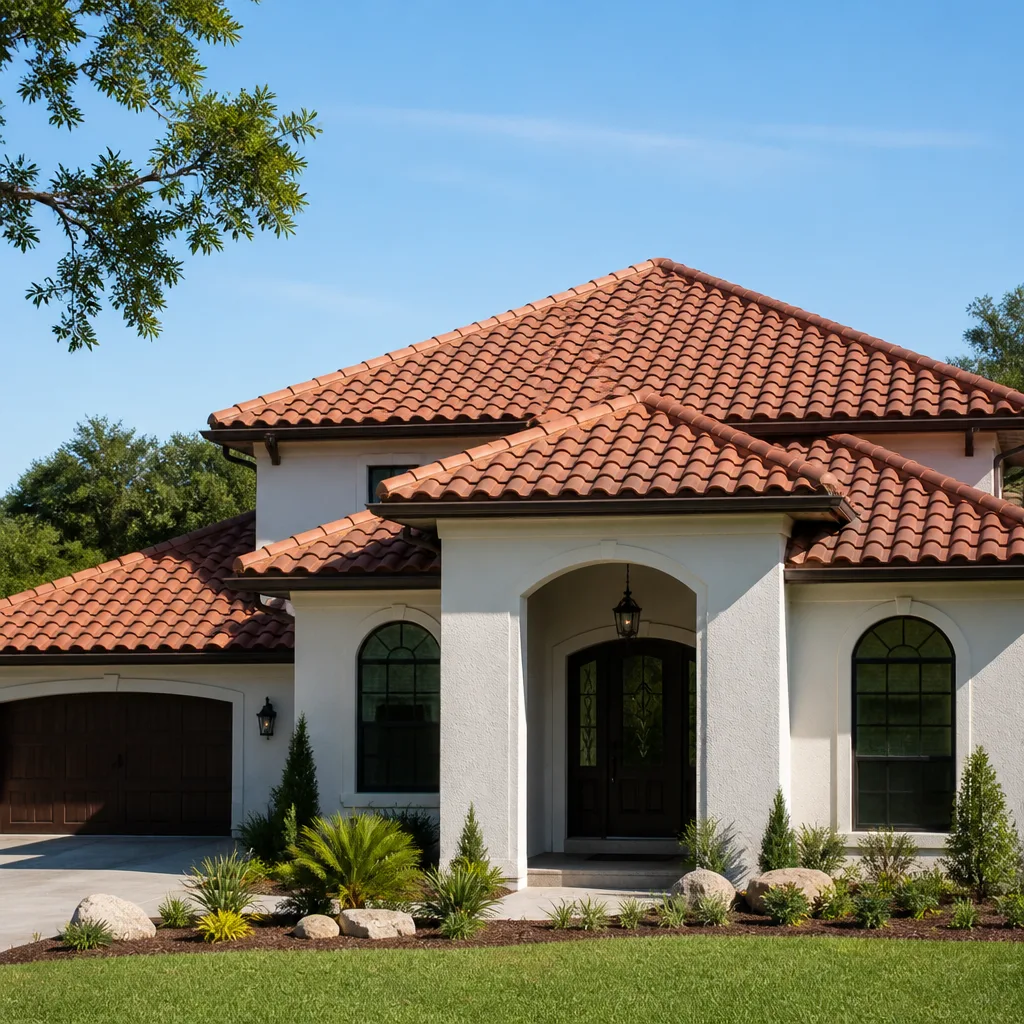
After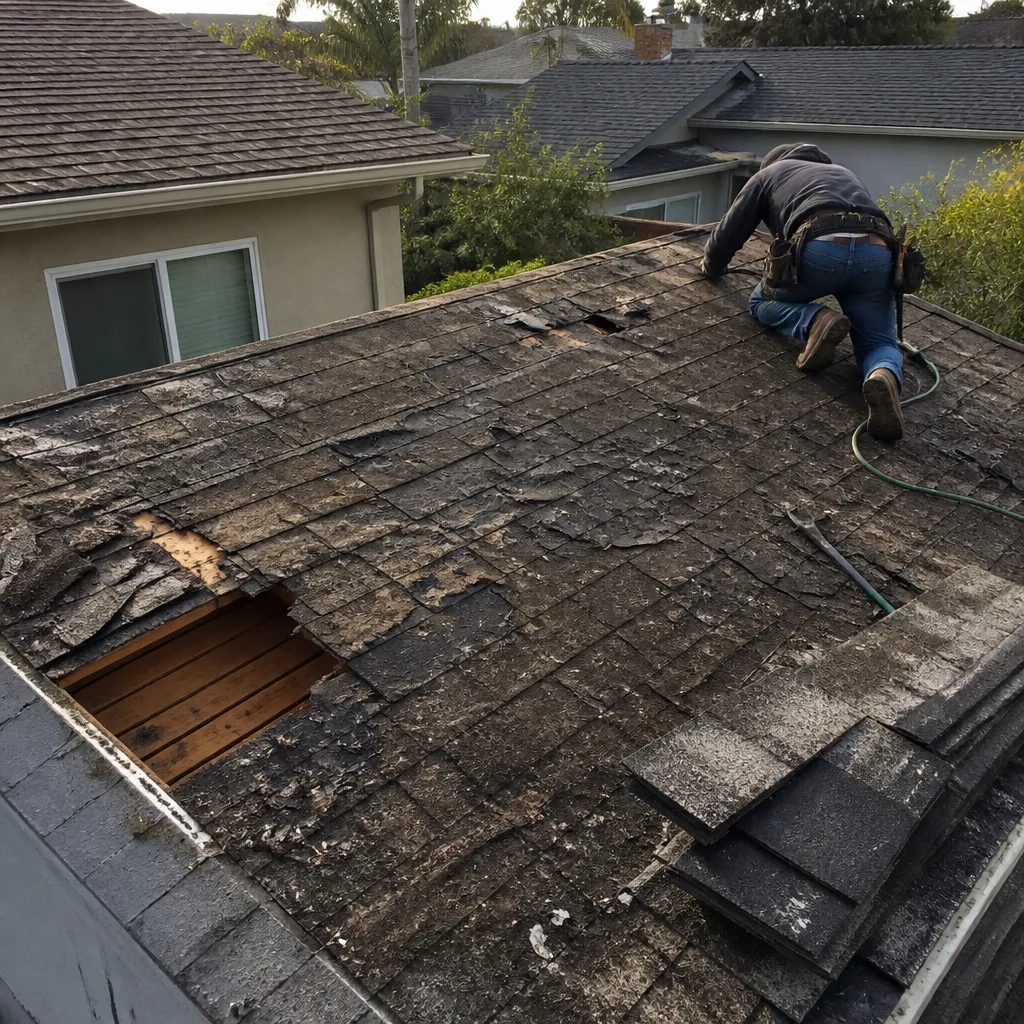 Before
 After
AfterFast, Reliable Roof Installation Across Rolling Hills Estates
A full roof installation in Rolling Hills Estates typically runs $18,000 to $45,000 depending on square footage, pitch, and material choice, and most jobs take 5 to 10 working days once permits clear. We know the permitted re-roof process in this city because we deal with LA County’s Very High Fire Hazard Severity Zone requirements on nearly every project here. The marine layer, the salt air, the land movement under the Peninsula – these are the real factors that decide whether a Rolling Hills Estates roof lasts 15 years or 40. If you’re pricing a new roof, call (743) 200-8347 and we’ll give you a written line-item quote before any work starts.
Why Mercer Roofing Is Rolling Hills Estates’s Preferred Roof Installation Company
Homeowners in Rolling Hills Estates have a specific worry that flatland roofers never have to think about: whether the person at the door is who they say they are. We send every technician’s name and photo to you before the visit, and they badge in with a photo ID at the door. That’s the Threshold Verified standard, and it’s non-negotiable on every job we run in this city. Grant Whitlock set that bar, and every crew member works under it.
We also know what a hillside tile roof is supposed to look like when it’s done right. The homes off Palos Verdes Drive North, along Dapplegray Lane, and up in the neighborhoods around Silver Spur are not tract builds. Steep pitches, irregular rooflines, clay and concrete tile, and decades of coastal air working on the metal. We spec materials for that environment, not for a 1990s subdivision in Torrance. That’s why homeowners here call us back when the next roof issue shows up.
Scheduling a crew for Rolling Hills Estates is straightforward. Dispatch is coordinated from our Los Angeles office, and the crews work these streets regularly, so we’re familiar with the access challenges on sloped lots and gated properties.
Roof Ventilation in Rolling Hills Estates
Roof Ventilation in Rolling Hills Estates has to work harder than it does inland because the marine layer keeps the underside of the roof deck damp for hours longer every morning, and trapped moisture is what rots decking and grows moss under tile. When we install a roof here, ventilation isn’t an add-on – it’s part of the waterproofing system. Ridge vents, soffit vents, or box vents have to move enough air to dry the underside of the deck before the next damp cycle starts. A typical roof ventilation upgrade during a re-roof in Rolling Hills Estates runs $600 to $2,400, depending on the length of ridge and whether the soffits are already set up for intake.
Coastal Moisture and Ventilation Sizing
The vent math that works in Redondo Beach can leave a Peninsula roof damp. Salt air and persistent humidity mean we often add more net free vent area than code minimum, especially on low-pitch ranch homes where the attic space is tight. If moss is already growing between tile courses, that’s a sign the roof has been holding moisture, and ventilation needs a hard look during the re-roof.
When Rolling Hills Estates Homeowners Should Address It
If you’re already stripping to the deck for a new roof, that’s the time to fix ventilation. Adding vents later means cutting into a roof that was just finished, and that’s money spent twice. We include a ventilation assessment with every re-roof estimate, and the written quote tells you exactly what we recommend and what it costs before you sign anything.
Roof Flashing Installation in Rolling Hills Estates
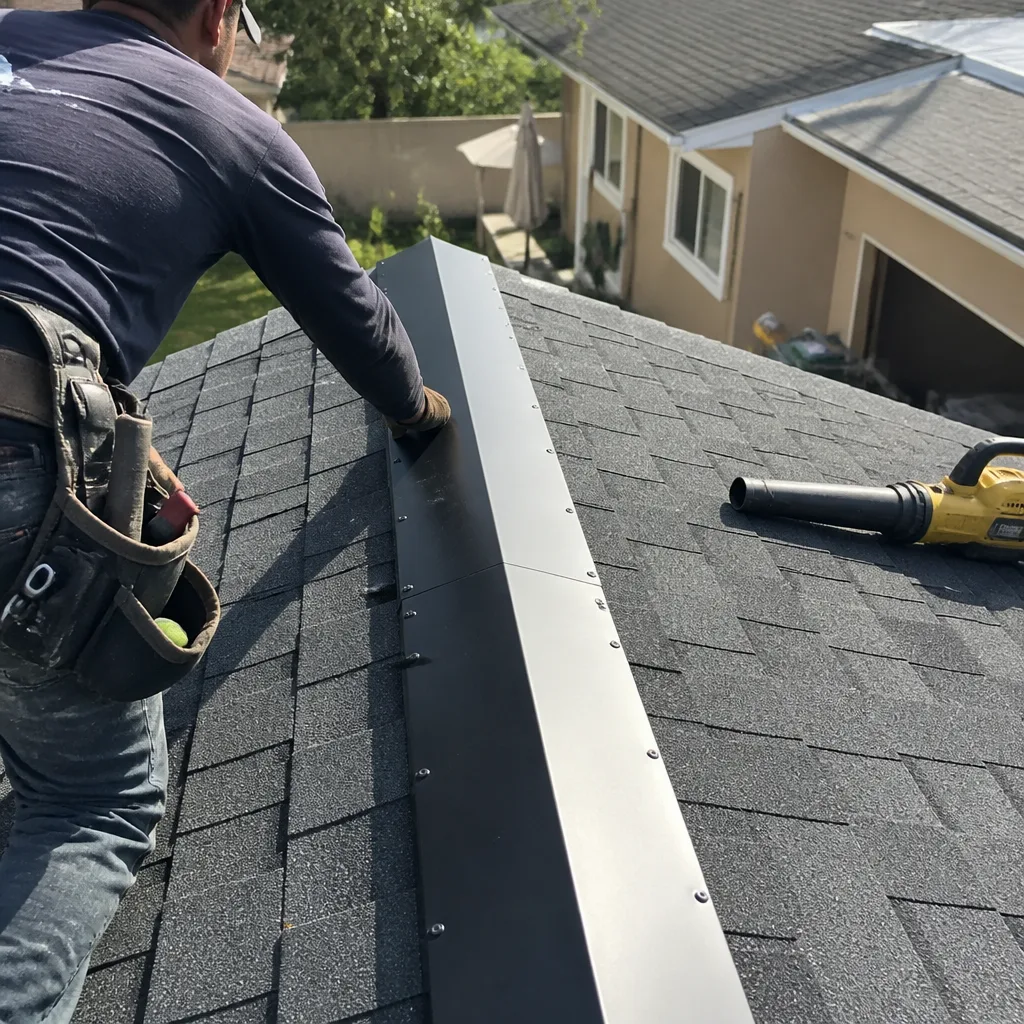
Roof Flashing Installation in Rolling Hills Estates is the part of the job where cheap materials fail first, because salt-laden onshore air eats standard galvanized metal years before the tile or shingle above it shows any wear. Flashing is the metal at every transition – valleys, chimneys, skylights, vent pipes, and the drip edge along the eaves. When that metal corrodes to white rust, water gets under the roof at exactly the points where the tile can’t shed it. Re-flashing a typical Rolling Hills Estates home during a re-roof runs $1,800 to $5,500, depending on how many penetrations the roof has and whether we’re also replacing drip edge.
Hot-Dip Galvanized and Stainless Specs
We spec hot-dip galvanized flashing with a heavier zinc coating than the box-store roll metal, and in the worst exposure zones we move to stainless clips and fasteners. The cost difference between standard and coastal-spec flashing is modest – often under $1,000 on a whole roof – but the lifespan difference is measured in decades, not years. On a 1968 Spanish-tile ranch off Palos Verdes Drive North, we pulled valley flashing that crumbled in our hands while the concrete tile above it still had 20 years left.
What We Look For Before Re-Roofing
Before any re-roof starts, we inspect every flashing point and report what’s salvageable and what isn’t. Some roofers will flash over old corroded metal to save time; we won’t. The written estimate tells you exactly which sections we’re replacing, what material we’re using, and why. No surprises on the invoice because the line items were agreed to before the nail gun came out.
Trusted Brands We Service in Rolling Hills Estates
We install and repair roofs using manufacturer-recognized shingle and tile brands including GAF, CertainTeed, and Owens Corning. For Rolling Hills Estates homeowners, that matters for two reasons. First, the manufacturer’s warranty stays valid because the install meets their spec. Second, when you need a patch or a repair years later, we can match the material instead of slapping a mismatched tile on a visible slope. We keep common coastal-spec fasteners and flashing stock on the trucks that serve this area, so when we diagnose a problem on a Rolling Hills Estates roof, we usually have the fix on board the same day.
Common Roof Installation Problems We See in Rolling Hills Estates Homes
- Corroded flashing and drip edge. Salt air off the Peninsula eats standard galvanized metal within 5 to 10 years, and the failure starts at the valleys and eaves. The tile above still looks fine, but water is getting in at every metal transition.
- Moss and lichen under tile courses. The marine layer keeps roofs damp far longer than inland areas, and moss grows between tiles, lifting them and trapping moisture against the decking. Once moss gets under a clay tile, freeze-thaw and wind lift it further.
- Land movement opening ridge caps and mortar. Rolling Hills Estates sits on the geologically active Palos Verdes Peninsula, and the slow, ongoing land movement there gradually racks roof framing. We see ridge caps that have separated from the mortar bed and cracked hip tiles on homes that have had no seismic event – just decades of drift.
- Non-compliant materials from prior patch jobs. Because much of the city falls in LA County’s Very High Fire Hazard Severity Zone, any permitted re-roof must use Class A fire-rated assemblies. We regularly find patched sections that were never permitted, with materials that would fail a WUI inspection today.
Pricing for Roof Installation in Rolling Hills Estates, CA
A full tear-off and re-roof on a typical 2,000 to 2,800 square foot Rolling Hills Estates home runs $18,000 to $45,000. Smaller partial re-roofs, where we’re replacing a single slope or a failed section, typically run $6,000 to $14,000. The big cost drivers here are pitch – steep hillside roofs are slower and require more safety setup – and material choice, because coastal-spec flashing and stainless fasteners add real money over inland-spec metal. Tile replacement runs higher than comp shingle, and if the existing tile is reusable, that can bring the number down. Every estimate we write is line-itemed and given to you before work begins. Call (743) 200-8347 to schedule a free estimate, and we’ll walk the roof with you if you want to see the condition yourself.
We Also Serve Cities Near Rolling Hills Estates
Our Roof Installation crews serve Rolling Hills Estates and surrounding communities, including Los Angeles, San Diego, San Jose, and San Francisco. The same coastal-spec materials and Threshold Verified technicians go to every job, no matter which city is on the work order.
Serving Rolling Hills Estates, CA - Our Local Coverage Area
We’re based in the Rolling Hills Estates area and know this community well. Use the map below to see our service coverage - if you’re nearby, we can almost certainly help.
FAQs About Roof Installation in Rolling Hills Estates
Rolling Hills Estates re-roofs cost more because the materials and the site conditions are different. Most of this city is in LA County’s Very High Fire Hazard Severity Zone, which requires Class A fire-rated assemblies under California WUI code – a standard that doesn’t apply in the flat beach cities. On top of that, hillside access and steep pitches slow the work, and coastal-spec flashing with stainless fasteners costs more than the galvanized metal used inland. A Torrance quote and a Rolling Hills Estates quote are not apples-to-apples on materials and code compliance. Call (743) 200-8347 and we’ll show you the line items side by side so you can see exactly where the money goes.
The giveaway is usually the ridge line and the hip intersections. Salt corrosion and tile failure look localized – a valley flashing failure, a cracked tile from wind, moss along the north slope. Land movement shows up as a ridge that’s no longer straight, hip tiles that have separated from the mortar evenly along a long run, or stucco cracks that align with roof movement. We see this pattern on Peninsula hillside homes often enough that we check the framing before we strip anything. Call (743) 200-8347 for a free roof assessment.
Yes, if the roof is in the Very High Fire Hazard Severity Zone, any permitted re-roof must use Class A fire-rated assemblies, even for a partial replacement. The WUI code doesn’t grandfather in non-compliant materials for new work. If a contractor quotes you non-Class A material for a patch in Rolling Hills Estates, walk away – that job either gets red-tagged at inspection or fails and you pay twice. Mercer Roofing specs Class A on every VHFHSZ job in this city, no exceptions. Call (743) 200-8347 to confirm what your roof needs.
The biggest mistake we see is reusing the old flashing instead of replacing it. Homeowners spend good money on tile, the tile lasts, and the old galvanized flashing underneath fails five years later. On the Peninsula, where salt air actively corrodes metal, the only right answer is new coastal-spec flashing at every penetration. That’s what we do, and it’s written in the quote before we start. Call (743) 200-8347 for an exact quote.
A coastal-spec roof in Rolling Hills Estates – hot-dip galvanized or stainless flashing, correct ventilation, Class A underlayment and tile – should last 40 to 50 years with normal maintenance. The cheap inland spec, with standard galvanized flashing and minimum ventilation, typically shows flashing failure within 10 years and may need a full re-flash by year 15. So the “savings” on the front end turns into a second job before the mortgage is paid off. Call (743) 200-8347 for a written quote that tells you exactly which spec you’re getting.
Written by Grant Whitlock, Owner at Mercer Roofing, serving Rolling Hills Estates since 2000.