
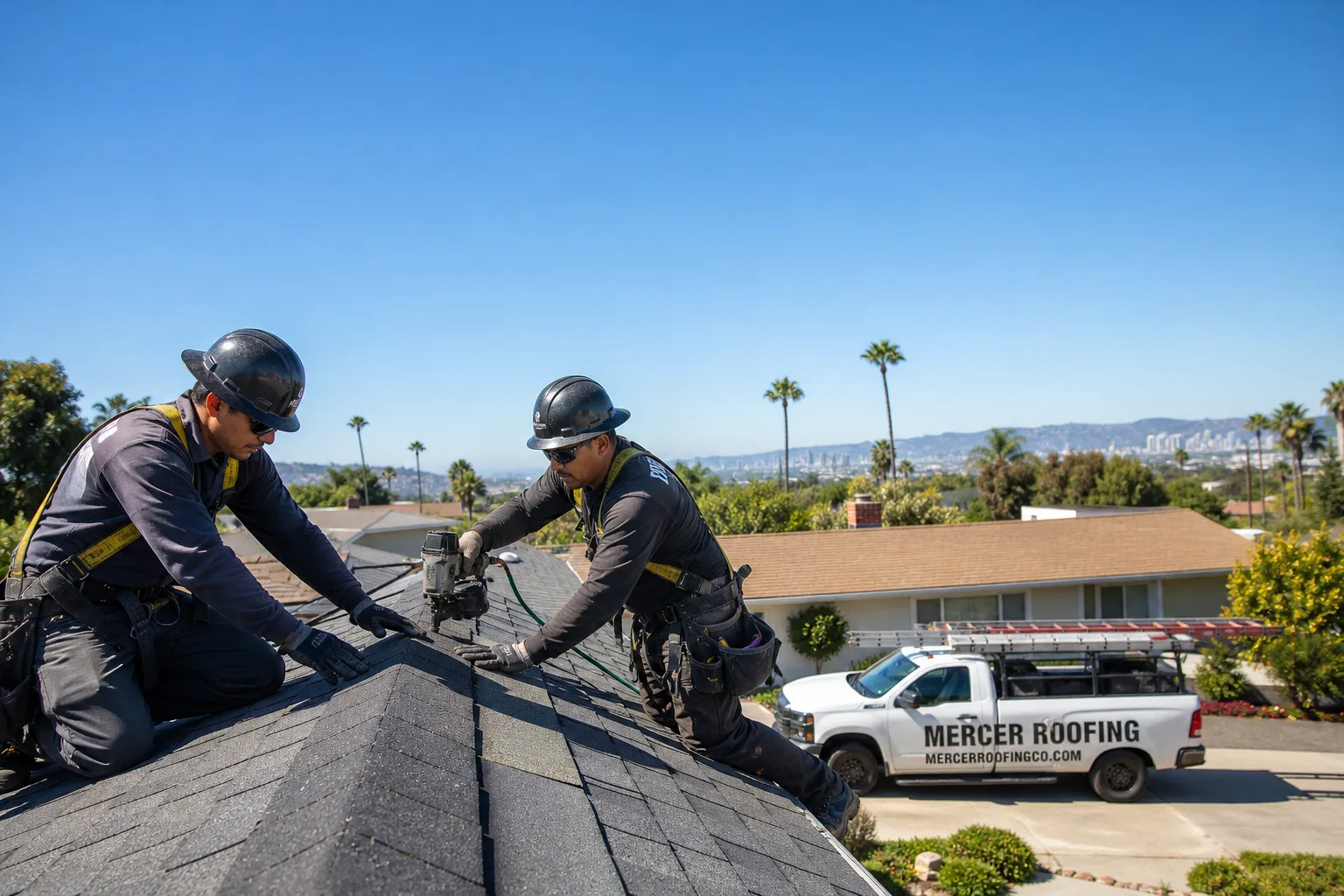
Free roof inspection with deck photos before we talk money - GAF and Owens Corning certified installation
 Before
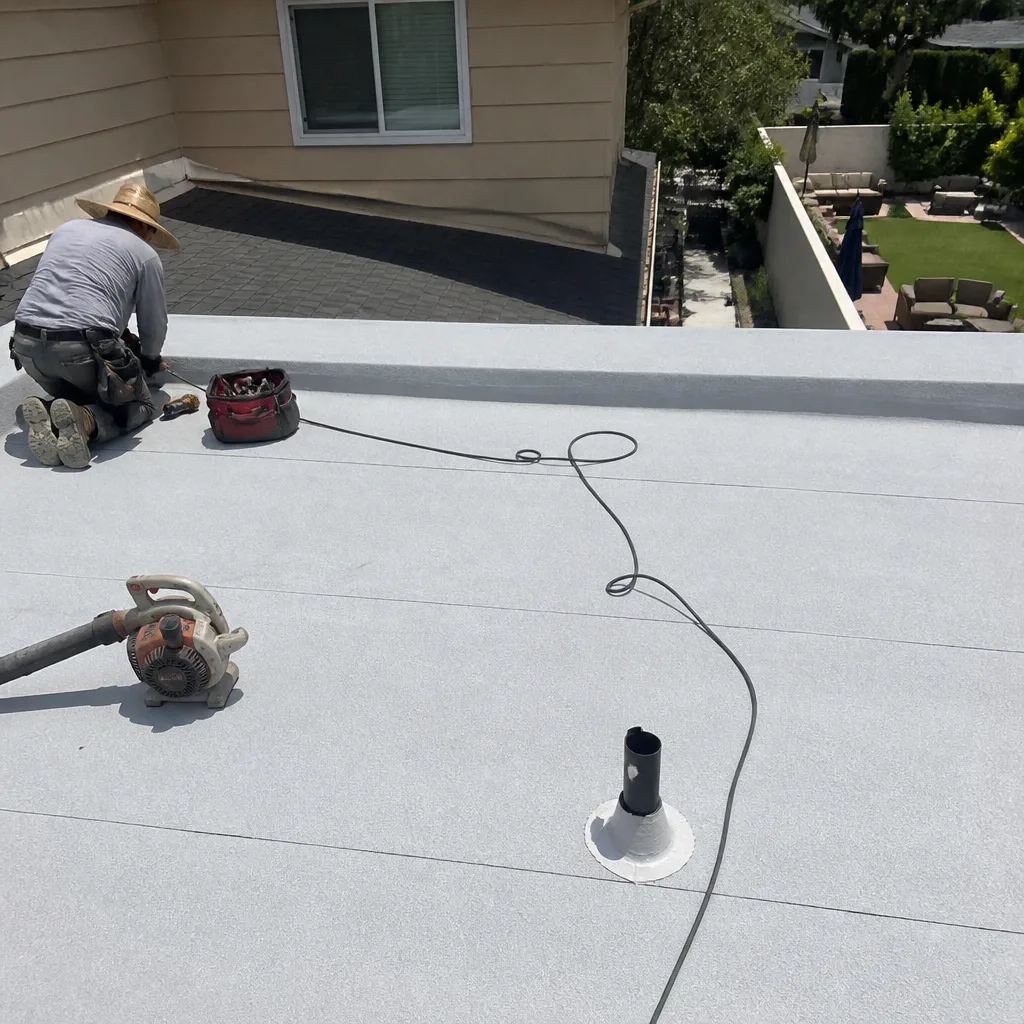 After
After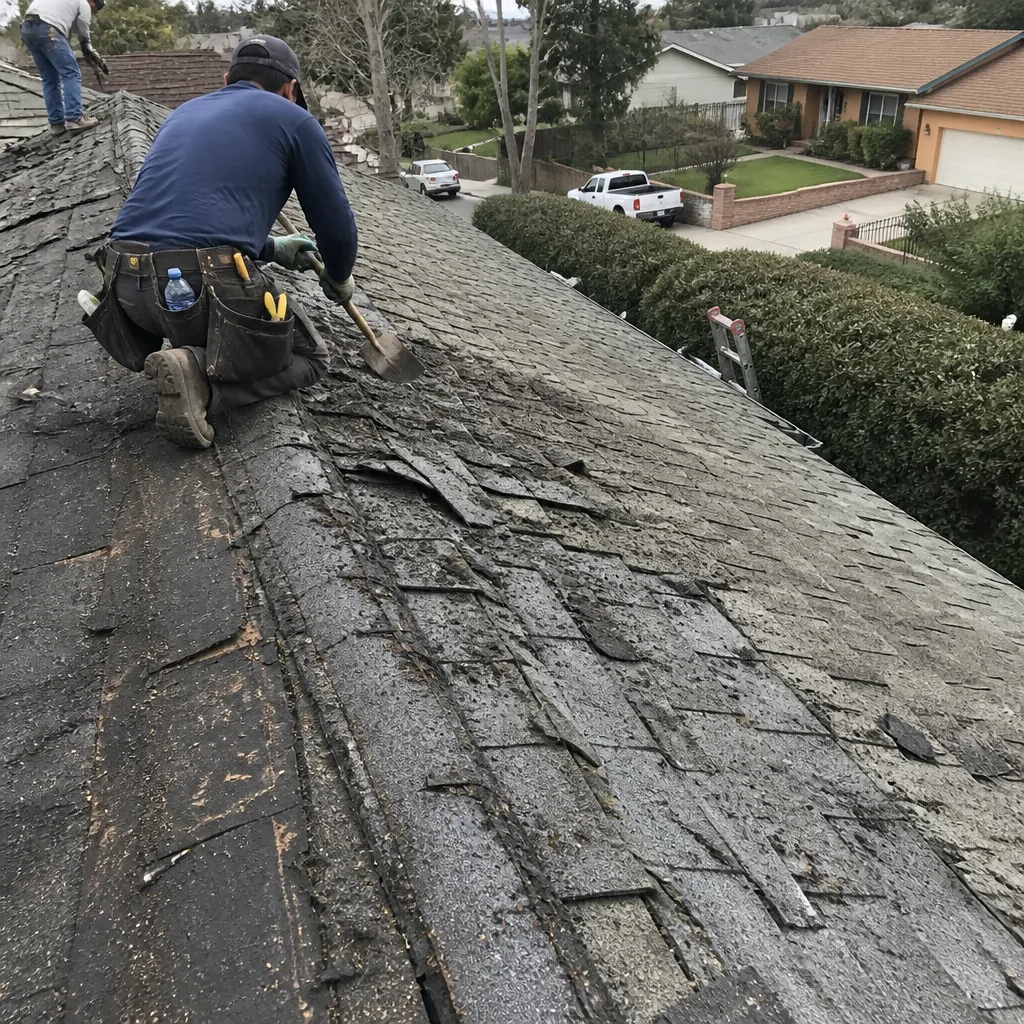 Before
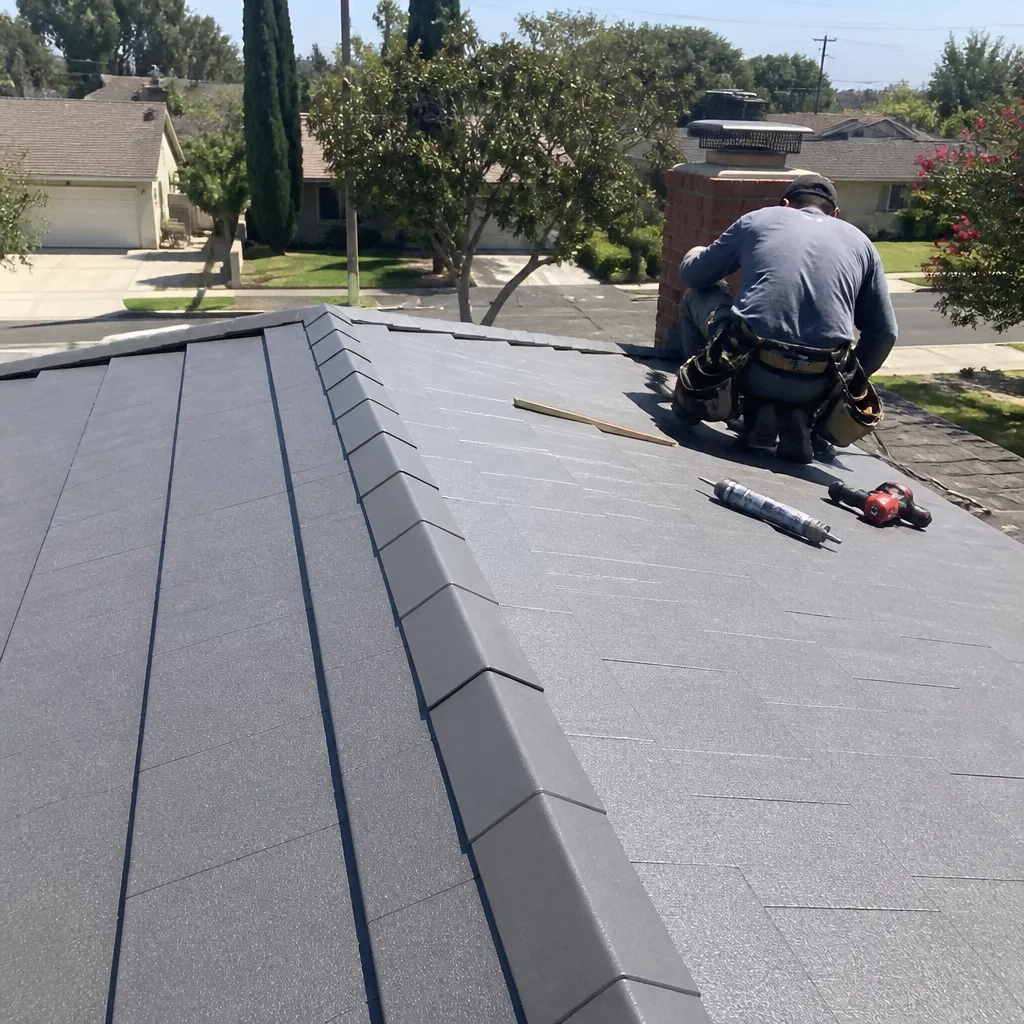 After
After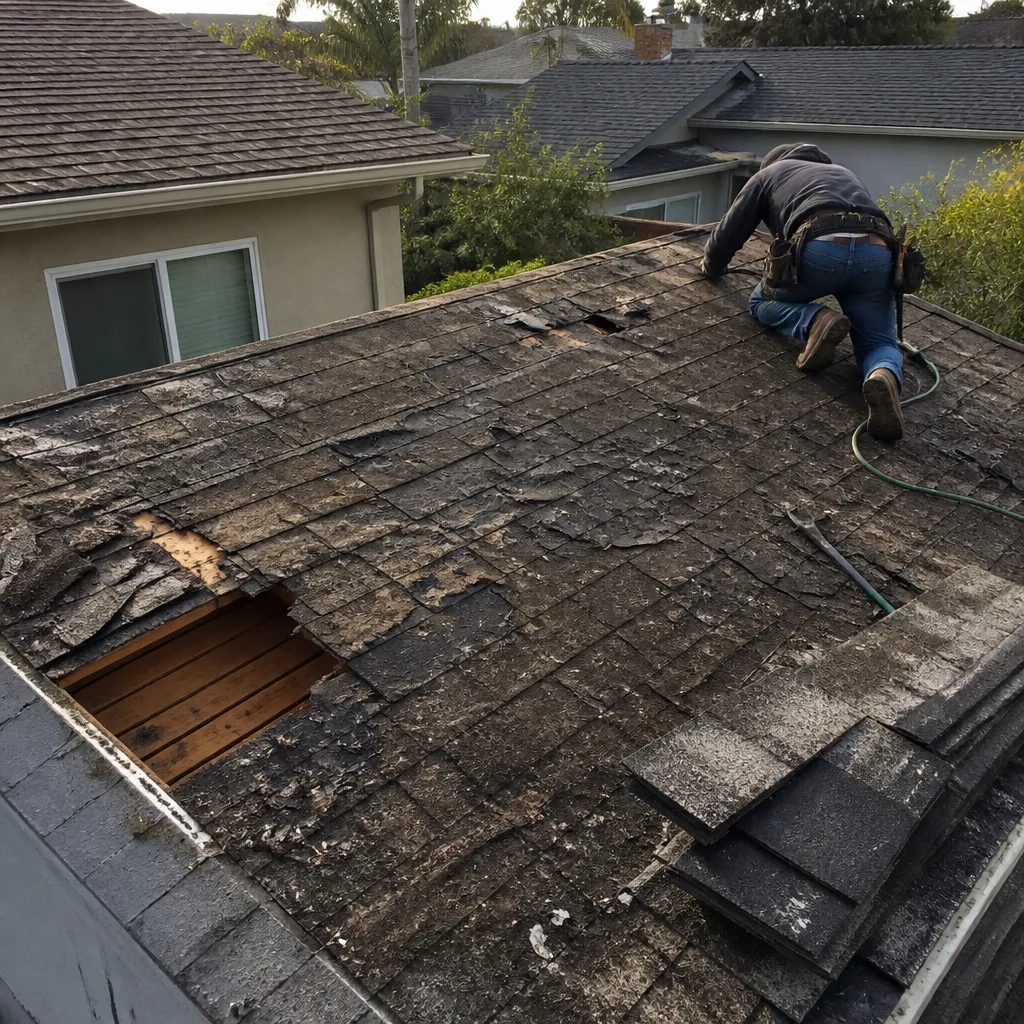 Before
 After
AfterFast, Reliable Roof Repair Across Long Beach
Roof repair in Long Beach runs from roughly $350 for a simple vent boot replacement to $2,800 and up for structural decking repair on a 1930s Spanish Colonial flat section. Most repairs we handle in the city are done in a single visit, and every job starts with a written price before a single nail is driven. If you’re in Wrigley, Bixby Knolls, or West Long Beach watching a brown stain spread across the ceiling, you don’t need a guess, you need a number and a date. Call (743) 200-8347 and a live person answers, day or night.
Long Beach rewards roofers who know the difference between a Long Beach leak and a Lakewood leak. The marine layer, the port fallout, the 85-year-old clay tile, the flat porch roofs that never quite drain right. We know these roofs because we’re on them every week, and we tell you exactly what’s failing and what it costs before you spend a dime.
Why Mercer Roofing Is Long Beach’s Preferred Roof Repair Company
Homeowners here don’t just worry about rain. They worry about who’s walking up the driveway. Most of our Long Beach customers tell us the same thing: they want certainty about the person at the door and the price on the table. So we built the whole company around both.
Every Mercer technician is background-checked and identity-verified under the Threshold Verified standard. Before your visit, you get the technician’s name and photo sent to you. When they arrive, they badged in with a photo ID and a clean uniform. You know exactly who’s at the door before you open it. That’s not a slogan. That’s the rule, on every job, for every customer.
We’ve been doing this since 2000, as part of the Threshold Group family of home-service companies. Each location is independently owned and operated, but held to the same standard: written price before work starts, written guarantee on every repair, and a free second visit if the repair fails within 365 days. That’s the Done Right Promise, and it’s in writing.
Our Roof Repair team services all of Long Beach, from downtown to Los Altos to the Peninsula. Scheduling for crews serving Long Beach is coordinated from the brand’s Los Angeles office, but the crews are local and dispatches happen fast.
Commercial Roof Repair in Long Beach
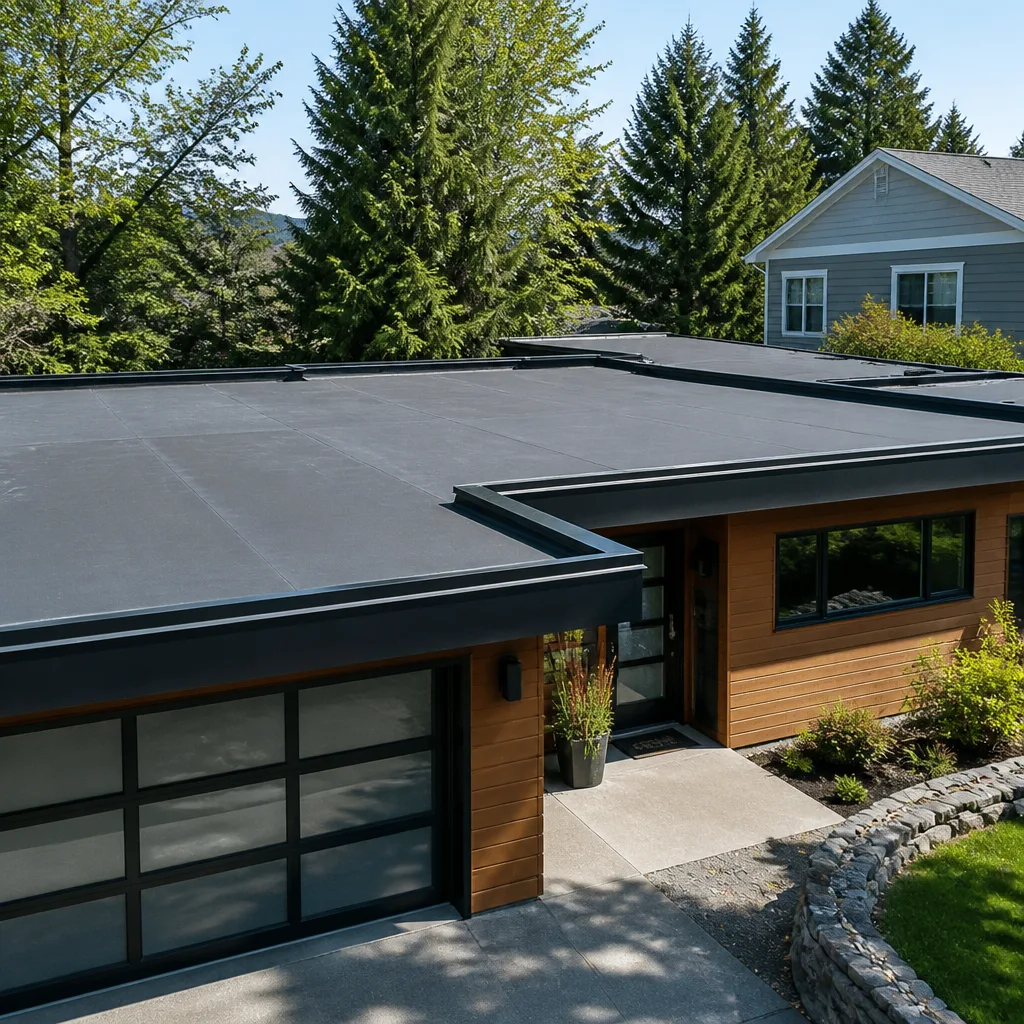
Commercial Roof Repair in Long Beach presents a different animal than most residential work, especially on the flat and low-slope roofs that dominate the commercial corridors along Pacific Coast Highway, Anaheim Street, and the industrial zones near the port. These roofs collect the same black diesel particulate that eats residential asphalt shingles, but they concentrate it in ponding water, at the drains, and on the flashings around HVAC curbs and vent stacks. A failing commercial roof in Long Beach is rarely a sudden hole. It’s usually a slow failure of the membrane at the seams, accelerated by the salt air and port fallout that sits on the roof surface almost daily.
Commercial repair costs in Long Beach vary by membrane type and size, but typical repairs run $900 – $4,500. A small TPO patch around a leaking penetration might land at $900 – $1,500. A larger built-up roof with deteriorated flashing and ponding water can push $3,000 – $4,500, especially if the decking below has begun to rot. We write up a scoped estimate with the exact materials and labor so the building owner or property manager sees every line before approving anything.
Flat and Low-Slope Roof Repairs
The flat sections on commercial buildings fail at the flashings and penetrations first, not in the open field. Around the port and along the 710 corridor, salt-laden air oxidizes metal counter-flashing and drains, and the marine layer keeps things damp long after the sun burns off. We inspect the drains, the seams, and the penetrations in that order.
Leak Investigation and Membrane Patching
Most commercial leaks in Long Beach are misdiagnosed as pipe leaks or HVAC condensation. The black particulate from port diesel stains roofs in patterns that we’ve learned to read like a map. Where the staining runs toward a seam or a penetration, the leak usually follows.
Roof Leak Repair in Long Beach
Roof Leak Repair in Long Beach is the number one call we get, and it’s almost never as simple as a missing shingle. The city’s post-1933 earthquake rebuild left thousands of Spanish Colonial Revival homes with original clay tile and low-slope flat sections, and those transitions between tile and flat roof are persistent leak points. Add the marine layer that keeps roofs west of the 710 damp for hours every morning, and you get decking that rots slowly while the leak stays hidden. A typical leak repair in Long Beach runs $400 – $1,800, with structural decking repair at the higher end.
Flashing and Valley Leak Repairs
We replace rusted galvanized valley metal with hot-dip galvanized steel and marine-grade fasteners, sealed at every lap. The cheap inland-spec metal fails here faster because the salt air doesn’t just sit on the surface; it works into the fastener holes and behind the laps. We’ve pulled valleys in West Long Beach that were installed less than eight years ago and already had pinholes through the metal at the fasteners.
Flat Roof Leak Repairs on 1930s Homes
The flat porch and room-addition roofs on Spanish Colonial homes crack at the perimeter flashing as the building settles and the old underlayment brittles. When we find the decking soft and wet, we cut it out, replace it, and spec a double layer of ice and water shield under the new membrane. That detail matters here more than inland, because the marine layer means the roof stays wet longer and condensation works underneath.
Common Roof Repair Problems We See in Long Beach Homes
- Black particulate staining on shingles, especially north-facing and ridge caps. Port diesel and cargo operations put a gritty black film on roofs in West Long Beach and the Westside. That film accelerates granule loss, and you can watch an architectural shingle go bald far sooner than its 30-year rating would suggest.
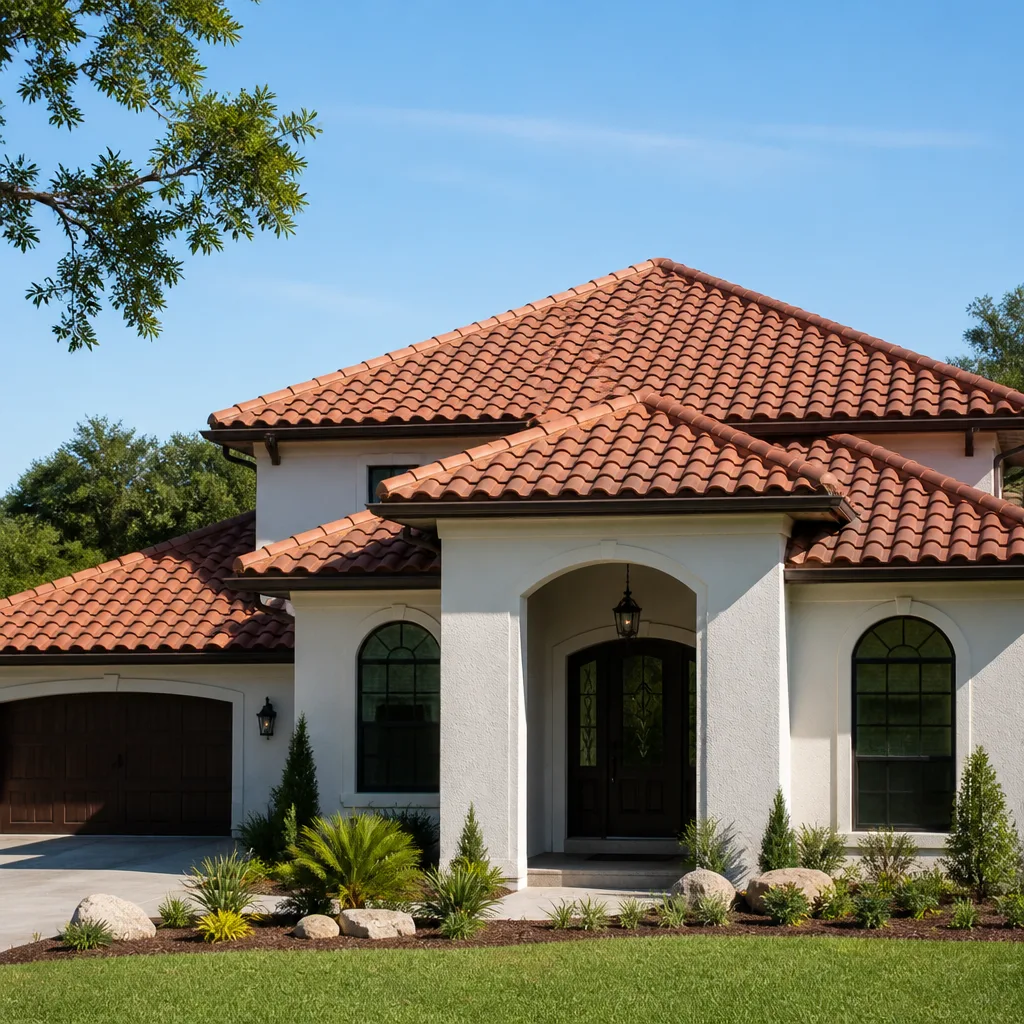
- Cracked clay tile and failed underlayment on prewar Spanish Colonials. The 1933 earthquake rebuild produced a huge wave of tile roofs now 85 – 90 years old. The tile often looks fine from the ground while the underlayment under it is dust, and the flashings at the valleys and penetrations have been leaking for years.
- Rusted drip edge and valley metal from marine air. The marine layer west of the 710 keeps metal components damp, and the salt in the air accelerates oxidation. Galvanized metal that would last 50 years in Riverside might fail in 15 in Long Beach.
- Soft decking at flat-to-slope transitions. On Spanish Colonial and Mediterranean homes, the flat porch roof meets the main slope at a valley or scupper. That junction traps debris, holds water, and drips slowly into the framing, which is why so many porch ceilings in Long Beach have water stains that never quite dry.
Roof Repair in Long Beach and the Salt Air Problem
Roofing in Long Beach is not the same job as roofing in Lakewood or Signal Hill. The city sits at the meeting point of the coastal marine layer and the industrial fallout from one of the world’s busiest container ports. The marine layer rolls in most nights and burns off late. The port runs around the clock. Together, they create a unique failure mode: roofs here corrode chemically while they rot from moisture.
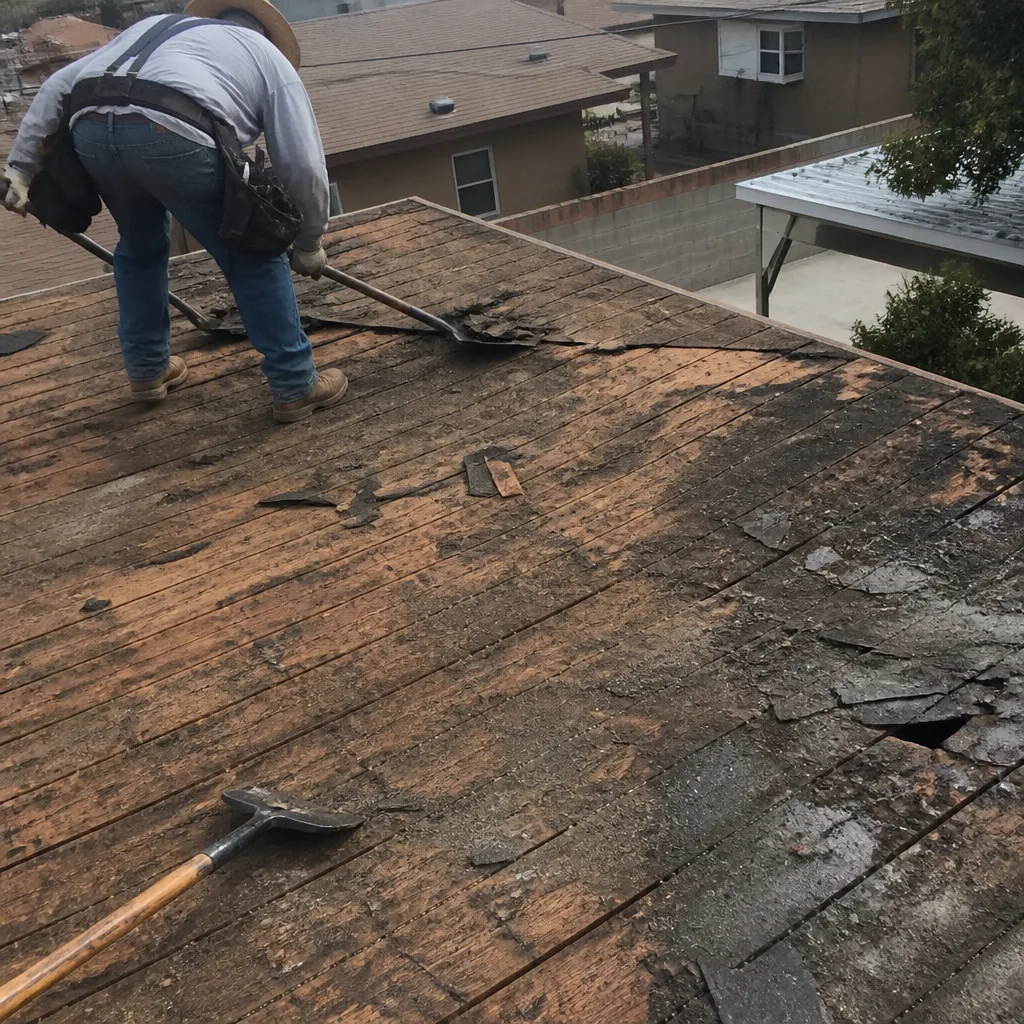
In Wrigley, we tore off a 1937 Spanish Colonial roof with original clay tile and a failing flat section over the front porch. Our crew found the decking soft from decades of marine-layer moisture. We specified a double layer of ice and water shield under new architectural shingles, with stainless-steel drip edge and sealed flashing. We replaced the rusted galvanized valley metal with hot-dip galvanized steel and marine-grade fasteners. The homeowner told us later that the black particulate staining on the north slope disappeared within a week of the new roof going on.
That job is the reason we spec materials the way we do: stainless steel fasteners instead of standard electro-galvanized, hot-dip valley metal instead of light-gauge galvanized, and underlayment that’s rated for prolonged moisture exposure. The price gap between the coastal-spec roof and the inland-spec roof is real, usually $800 – $1,500 on a full replacement. But the cheap spec costs more within a decade, because the fasteners rust, the valleys pinhole, and the decking rots out from under shingles that might have lasted 20 more years.
The black particulate is the tell. Homeowners in Naples or Belmont Shore might never see it, but a roof in West Long Beach, directly downwind of the port, will develop a gritty gray-black film on the north-facing slopes within a couple of years of installation. That stuff is diesel soot and cargo dust. It holds moisture against the shingle surface and accelerates granule loss. You can’t wash it off with a garden hose; you need a roof cleaning or, more often, a material choice that resists it to begin with.
Trusted Brands We Service in Long Beach
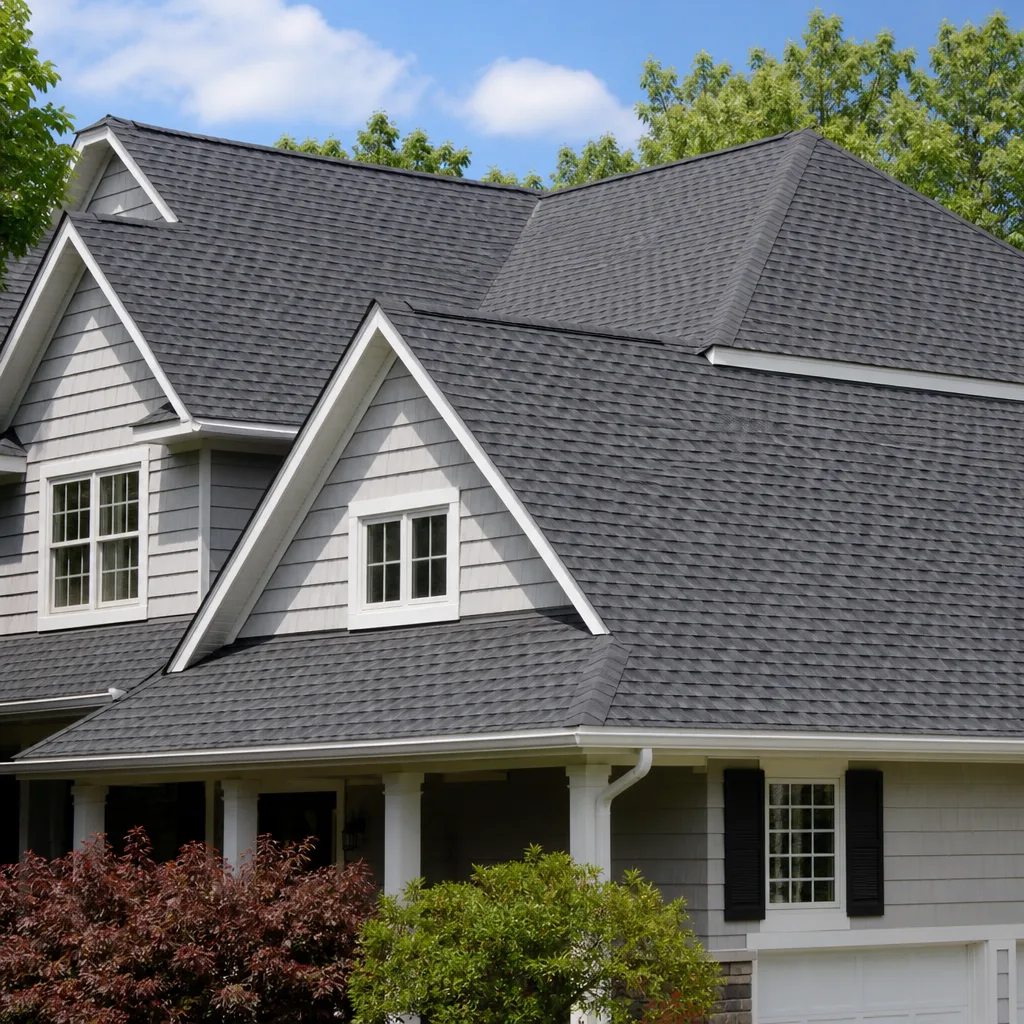
We install and repair shingle roofs using manufacturer-recognized brands including GAF, Tamko, and Owens Corning. We stock the most common colors and profiles for Long Beach homes so we’re not waiting on a special order when your repair can’t wait. Whether it’s a GAF Timberline architectural shingle to match an existing roof, a Tamko Heritage line, or an Owens Corning Duration product, we write the brand and product name into the estimate so you know exactly what’s going on your roof. For tile and Spanish Colonial homes, we match replacement clay tile and source compatible underlayment that meets today’s code, not the 1930s spec.
Pricing for Roof Repair in Long Beach, CA
Here’s what Long Beach homeowners can typically expect to pay. A vent boot replacement runs $350 – $600. A flashing repair around a chimney or skylight sits at $500 – $900. A valley metal replacement with marine-grade materials lands between $800 and $1,600. A flat roof patch on a porch section runs $500 – $1,100, while a full flat-section overlay with new membrane and underlayment is $1,800 – $3,200. The biggest variable is decking: if the plywood or tongue-and-groove sheathing is rotted, you’re adding material and labor at $70 – $110 per sheet replaced.
Every job starts with a free written estimate, and the price we quote is the price you pay. No change orders unless we find something structural you need to see with your own eyes, and we’ll walk you through it before we do anything. Call (743) 200-8347 and we’ll schedule the inspection.
We Also Serve Cities Near Long Beach
Our crews regularly cover Long Beach and the surrounding communities, including Signal Hill, Carson, Seal Beach, and Lakewood. If you’re on the border of any of these cities, you still get the same Threshold Verified technician, the same written guarantee, and the same local dispatch.
Serving Long Beach, CA - Our Local Coverage Area
We’re based in the Long Beach area and know this community well. Use the map below to see our service coverage - if you’re nearby, we can almost certainly help.
FAQs About Roof Repair in Long Beach
Your friend’s roof isn’t downwind of the port. Long Beach sits directly under the drift of diesel exhaust and cargo dust from the container terminals, and the particulate lands as a gritty black film on roofs, especially in West Long Beach and on north-facing slopes. That film traps moisture and accelerates granule loss on asphalt shingles. The fix isn’t just cleaning; it’s choosing materials and fasteners that resist the corrosive fallout. Call (743) 200-8347 and we’ll inspect what’s actually on your roof.
We specify stainless-steel fasteners, hot-dip galvanized valley and drip edge metal, and high-grade synthetic underlayment rated for prolonged moisture exposure. Standard electro-galvanized hardware rusts quickly here, and the cheap metal fails at the fastener holes within a decade. The coastal spec costs $800 – $1,500 more on a full replacement, but the inland spec costs more when you replace it twice in the same window. Your estimate shows exactly which materials are specified, so you can compare line by line.
The flat section gets the same treatment every time: we remove the old membrane, inspect the decking, replace rotted wood, install a double layer of ice and water shield, and re-flash the transition where the flat roof meets the tile slope. The tile itself is often still serviceable; the underlayment under it usually isn’t. We’ll tell you the truth about whether the tile can stay or needs to go. Call (743) 200-8347 for a free estimate.
After the marine layer. The rain gets blamed, but the marine layer is what keeps roofs wet for hours each morning, works moisture into the decking, and rusts the fasteners and flashing through condensation and salt. By the time a heavy rain arrives, the roof has often been failing slowly for months. We find leaks in homes that haven’t seen rain in weeks.
Compare the materials line by line, not just the bottom line. Ask what fasteners they’re using, what valley metal, what underlayment. Ask if the price is written before work starts and whether the guarantee is in writing. If a quote is $1,200 cheaper and the other company is using standard galvanized hardware in a salt-air zone, it’s not a bargain, it’s a re-roof in eight years. We write everything down so you can compare apples to apples. Call (743) 200-8347 and we’ll give you the numbers in writing.
Written by Grant Whitlock, Owner at Mercer Roofing, serving Long Beach and the surrounding communities since 2000.