
Last updated October 9, 2026
Free roof inspection with deck photos before we talk money - GAF and Owens Corning certified installation


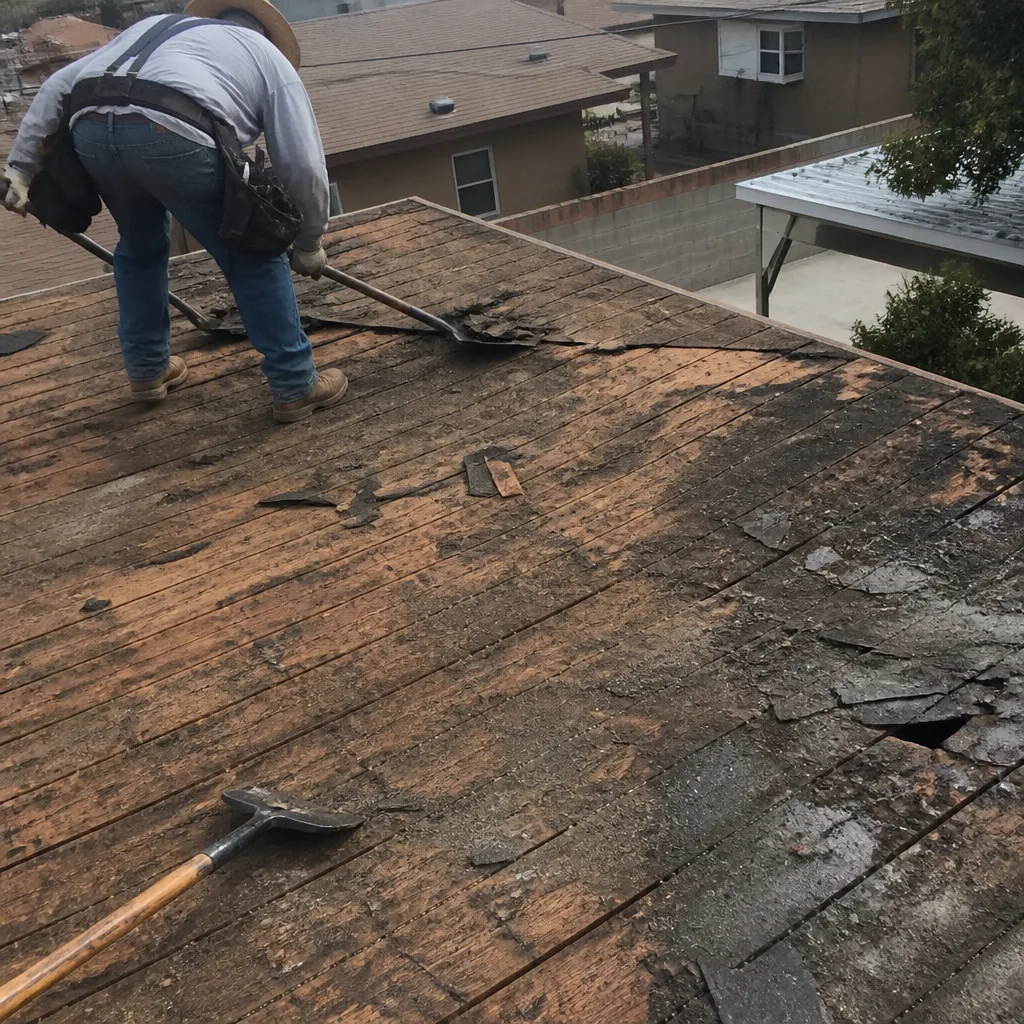 Before
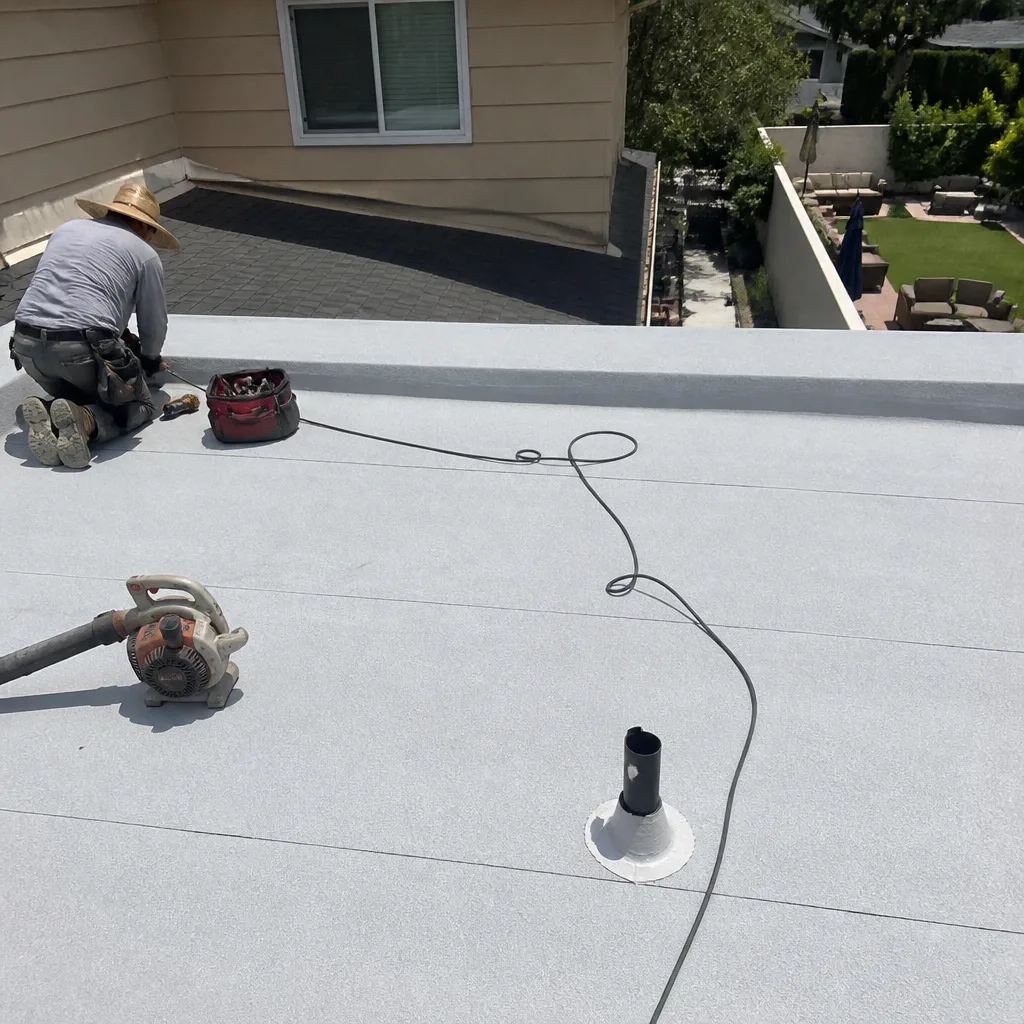 After
After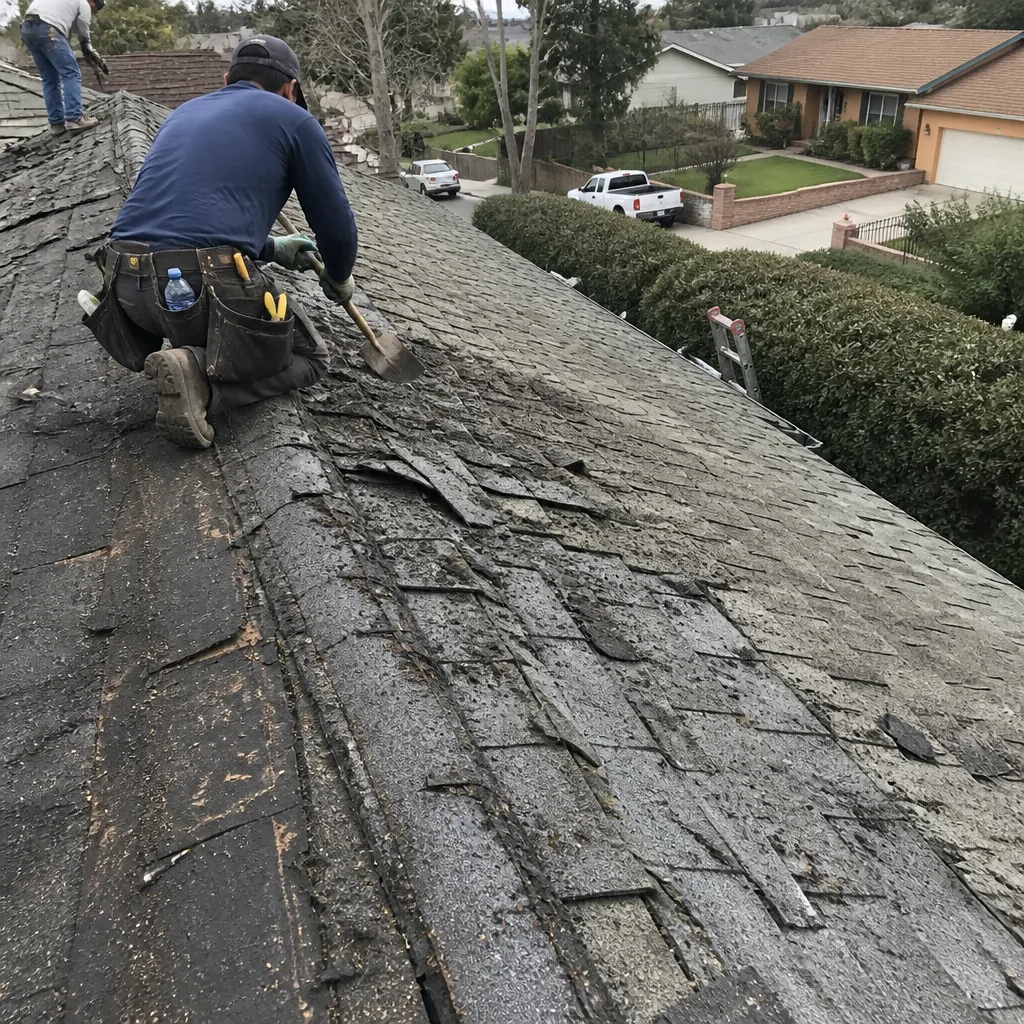 Before
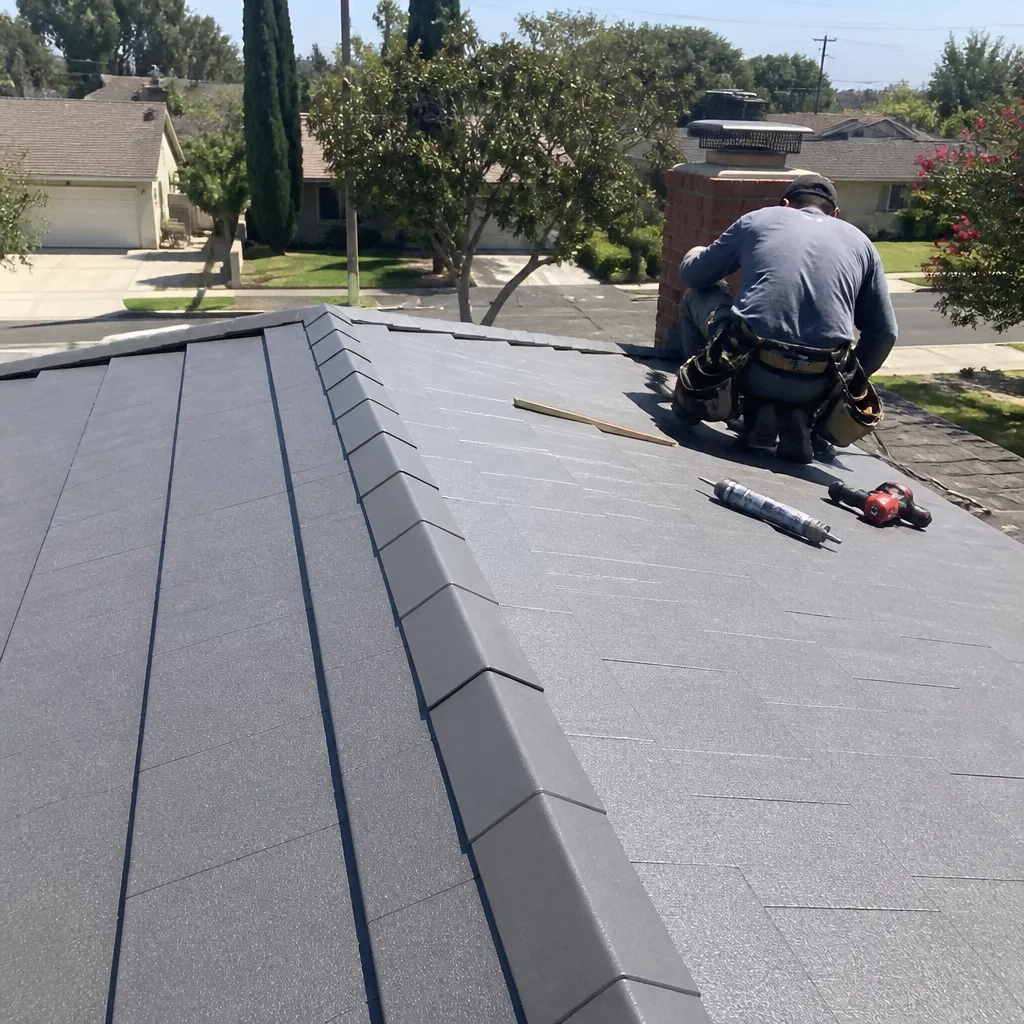 After
After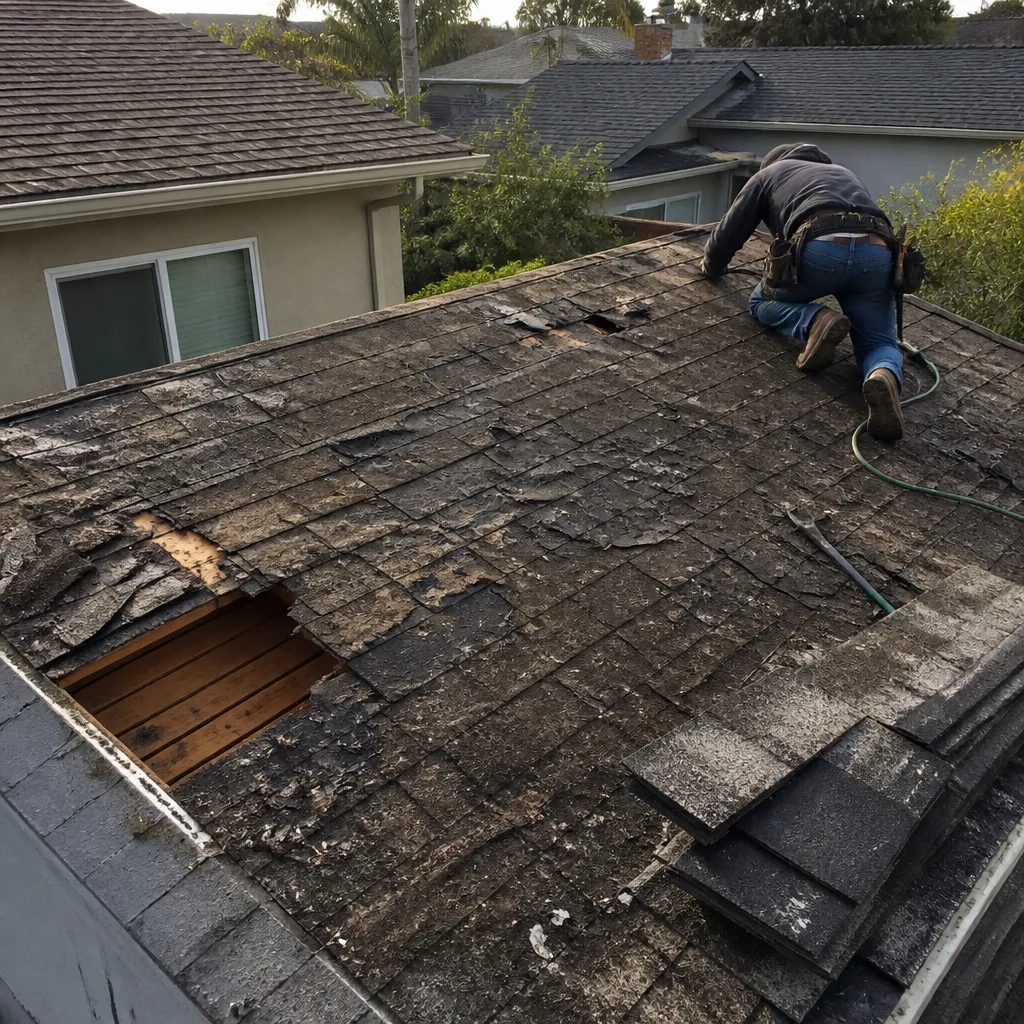 Before
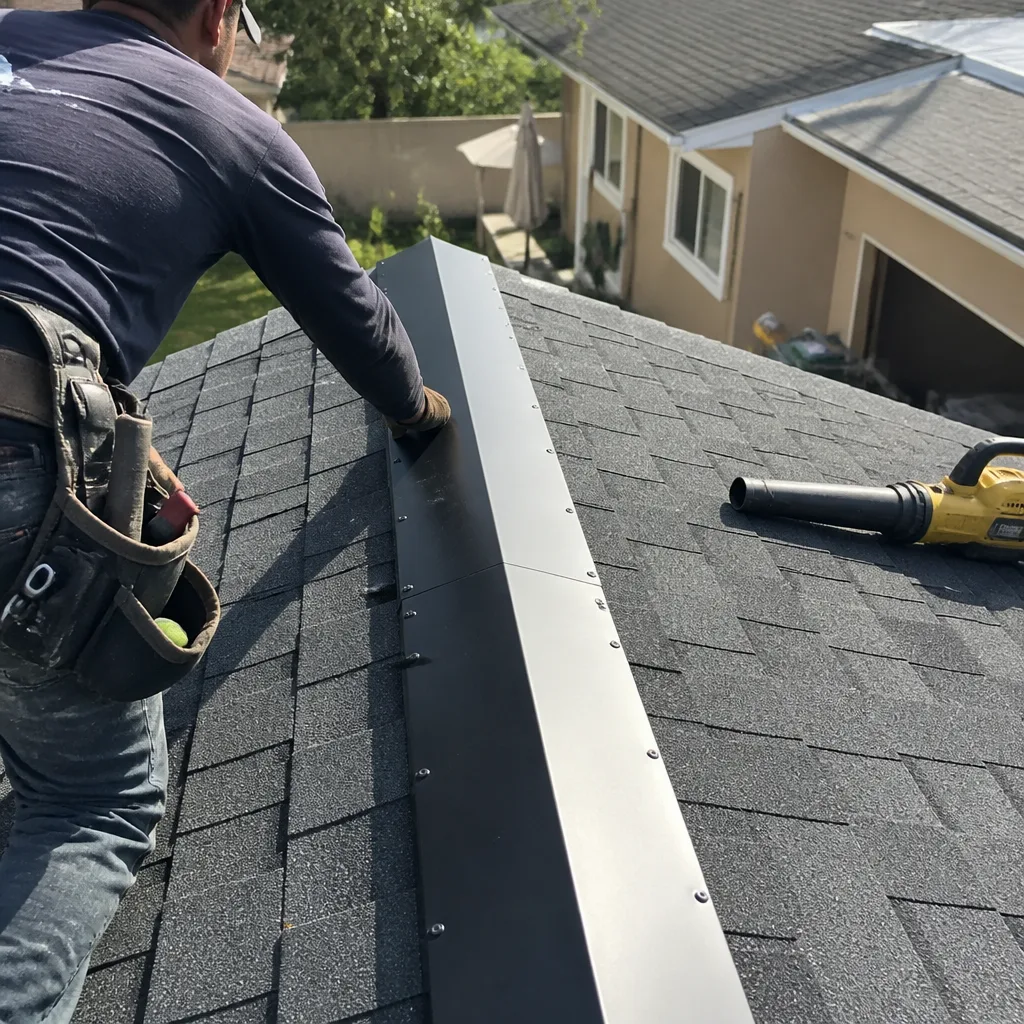 After
AfterRoof Repair Maintenance Checklist for Los Angeles Homeowners
The single most damaging day for Los Angeles roofs isn’t a rainy one. It’s the October windstorm that lifts flashings and cracks tiles a full month before the first rain reveals the damage. Homeowners who wait until the first downpour to think about their roof are already weeks too late. This checklist is built around Los Angeles’ actual weather rhythm: Santa Ana winds, the marine layer, and the December-through-March Pacific storm track. We’ve put together what we’ve learned from thousands of LA roofs so you know exactly what to check, when to check it, and what to leave to a trained professional.
Quick Answer
A proper roof maintenance checklist for Los Angeles homeowners means inspecting your roof twice a year: once in October after Santa Ana wind season peaks, and once in March when winter rains end. Focus on flashings, roof-to-wall transitions, tile or shingle displacement, and debris in valleys and scuppers. Document everything with dated photos, keep a written maintenance log, and call a professional for anything that requires stepping foot on the roof itself. For a detailed timeline, see our Roof Repair Maintenance Schedule: What to Do and When.
Table of Contents
- The LA Weather Calendar Most Checklists Get Wrong
- Your Twice-Yearly Ground Inspection (Binoculars Only)
- The Five Maintenance Tasks LA’s Older Homes Need Annually
- How to Document Your Inspection for Insurance and Resale
- What a Written Maintenance Record Does for You in California
- When to Call a Professional
- Common Mistakes to Avoid
- Frequently Asked Questions
The LA Weather Calendar Most Checklists Get Wrong
Most roof maintenance guides you’ll find online were written for places like Seattle or Boston, where the roof’s biggest enemy is standing water and freeze-thaw cycles. Los Angeles has its own destructive pattern, and it looks nothing like that. Here, the roof gets baked by ultraviolet light for eight months, then battered by dry wind gusts that can hit 70 miles per hour in the passes, then suddenly soaked by weeks of atmospheric river storms. The materials expand. Contract. Crack. And the fasteners that once held everything tight begin to work loose.
Here’s the Los Angeles roof calendar, month by month, built around the actual conditions we see on roofs across the city:
October: Post-Santa Ana Wind Inspection
Santa Ana winds typically start in September and peak in October and November. These winds come from the northeast, which is the opposite direction of the normal onshore flow. That means they hit your roof from an angle it doesn’t usually face. Flashings get pried upward. Ridge caps shift. Loose tiles get lifted and dropped, cracking on impact. We’ve seen October windstorms strip an entire tile roof in Bel Air while the house next door, which had just been inspected, lost nothing at all. The difference is usually a few loose tiles that acted like a zipper once the wind caught them.
Walk your property line with binoculars after the first strong Santa Ana event. Look for:
- Shifted or missing tiles, especially along ridges and hips
- Flashing that’s lifted or bent at the roofline
- Debris packed into valleys and around chimneys
- Loose shingles with curled or lifted edges
- Granule accumulation in gutters (a sign of shingle wear)
November: Prep for the Storm Track
The Pacific storm track arrives in late November most years. The window between the last big Santa Ana and the first significant rain is often less than three weeks. That’s the narrow window when our Roof Repair services are most critical. If you found lifted flashings in October, November is the time to get them resealed. Once the rain starts, the damage multiplies: water gets under the flashing, soaks the decking, and a $300 repair becomes a $3,000 deck replacement.
December through March: The Rainy Season Watch
During winter rains, you’re looking for interior signs of trouble. Water stains on ceilings. Damp spots in the attic after heavy rain. Paint bubbling on exterior walls near the roofline. The marine layer that lingers some mornings during this season also contributes to algae and moss growth on shaded roof sections, especially in canyon areas like Laurel Canyon and the Hollywood Hills where tree cover blocks the sun. If you see dark streaks on a north-facing slope, that’s biological growth trapping moisture against the roof surface.
April through September: The Dry Season
Dry season is when the sun does its slow work. Shingles lose oils and become brittle. Tile underlayment bakes and degrades. The good news is this is the safest time for roof work in Los Angeles, and the best time for a thorough professional inspection. Wait until the roof is bone-dry, then schedule someone to look at the whole system: shingles or tiles, underlayment, flashings, vents, and decking.
Your Twice-Yearly Ground Inspection (Binoculars Only)
You do not need to climb onto your Los Angeles roof to conduct a meaningful inspection. In fact, we’d rather you didn’t. Walking on a roof puts weight on materials that may already be compromised, and a fall from even a single-story roof can be life-changing. A good pair of binoculars from the ground gives you 90% of what a visual inspection can tell you without the risk.
Here’s what a homeowner can safely check from the ground, and what should be left to a professional:
What You Can Safely Inspect From the Ground
- Tile and shingle displacement: Walk around the entire perimeter. Look for tiles that are slid out of alignment, cracked, or missing. On shingle roofs, look for curled edges, missing tabs, or areas where the granule layer has worn through to the asphalt.
- Flashing condition: Focus on roof-to-wall transitions, chimney bases, and vent pipes. Flashing should lie flat against the surface it’s sealing. If it’s bent up, pulled away, or missing sections, water will find it.
- Valley cleanliness: Valleys are the V-shaped channels where two roof planes meet. They concentrate water flow during rain. If they’re filled with leaves, pine needles, or other debris, water backs up and can get under the roofing material.
- Scupper and downspout clarity: Most flat-roof sections in Los Angeles drain through scuppers – rectangular openings in the parapet wall. Blocked scuppers mean ponding water, and ponding water means premature roof failure.
- Parapet and cricket condition: Flat roofs need crickets, the small triangular diverters that channel water around chimneys and vents. If a cricket has cracked or separated, water flows straight into the seam instead of around it.
- Evidence of previous patchwork: Look for visible caulk, tar, or sealant lines on the roof surface. Heavy patchwork is a sign of repeated problems and often means the underlying issue was never properly fixed.
What Requires a Professional on the Roof
- Lifting tiles to check the underlayment beneath
- Testing flashings by hand to verify they’re still adhered
- Checking decking for soft spots or dry rot
- Verifying vent boots and pipe collars are intact
- Clearing valleys and scuppers with physical access to the roof surface
If you spot anything during your ground inspection that concerns you, or if you simply can’t see parts of your roof clearly, that’s the moment to call a roof repair professional in Los Angeles. A proper inspection includes boots on the roof, and that’s work for someone with training and safety equipment.
The Five Maintenance Tasks LA’s Older Homes Need Annually
Los Angeles has an enormous stock of mid-century homes. The building boom of the 1950s through the 1970s created tens of thousands of houses in neighborhoods like the San Fernando Valley, Westchester, Mar Vista, and the hills of Sherman Oaks and Studio City. Those homes are now 50 to 75 years old. Many still have their original flashings. If you own one of these homes, here are the five maintenance items that newer construction largely avoids but that your roof absolutely needs, every single year:
- Flashing inspection and reseal. Galvanized steel flashing has a service life of roughly 40 to 50 years. If your home was built before 1980, your original flashings are past due. In our experience, the majority of roof leaks on mid-century Los Angeles homes trace back to a flashing that’s rusted, lifted, or separated at the seam. An annual check catches these before the winter rains test them.
- Mortar crown repair on chimney caps. Older chimneys often have masonry crowns that crack over time. Water enters the cracks, freezes (yes, it occasionally dips below freezing in the Valley overnight), and widens them. A cracked crown lets water run down the flue inside the chimney structure, and from there it fans out into the attic. Repointing and sealing is a small annual or biennial cost that prevents major water damage.
- Gutter and scupper clearing – twice a year. In older neighborhoods with large mature trees (think Pasadena, Eagle Rock, or parts of the Westside), gutters fill with leaf litter every autumn. Blocked gutters overflow, sending water down the fascia and into the soffit. In flat-roof sections, blocked scuppers create the same problem in reverse, backing water up onto the roof surface.
- Tile re-bedding and repointing at hips and ridges. Los Angeles tile roofs, popular on Spanish-style homes from the 1920s through the 1960s, use mortar to bed ridge tiles and hip tiles. That mortar cracks and washes out over time. When a Santa Ana wind hits a ridge with loose bedding, the tiles lift and take flight. We see this every October in neighborhoods like Encino and Tarzana.
- Underlayment condition checks at eaves. On older tile roofs, the underlayment is the actual waterproofing layer – tiles are just the wear surface and UV shield. At the eaves, where water drains off, underlayment degrades first. A professional can inspect the eave line from the roof surface and tell you whether your underlayment is approaching the end of its life, which is information you want years before you actually need a full re-roof.
If your home was built after 2000, these items are less urgent, but not irrelevant. Modern building codes in Los Angeles require better flashing materials and underlayment specs. However, any home with a tile roof, regardless of age, benefits from an annual ridge and hip check. The materials are the same, and the wind doesn’t discriminate.
How to Document Your Inspection for Insurance and Resale
There’s a phrase in the insurance world: “If it isn’t documented, it didn’t happen.” When you file a claim for wind damage or water intrusion, your insurer is going to ask a specific question: “When did the damage occur?” If you can’t answer that, the claim gets harder, and sometimes gets denied. A dated photo trail is the single best tool you have to establish the timeline.
Here’s a simple documentation routine that takes less than 15 minutes twice a year:
- Use your phone, but turn on the date stamp. Both iPhone and Android allow you to enable a date and time stamp that’s embedded in the photo metadata. Most phones do this automatically. Confirm it’s on.
- Photograph the same points every time. Pick eight to ten standard positions around your home: each roof plane from the ground, each chimney, each valley if you can see it, the gutters, and the scuppers. Standing in the same spots every inspection gives you comparison shots that make changes obvious.
- Take close-ups of anything questionable. A small crack in flashing, a single lifted tile, a dark streak. Photograph it now, then photograph it again at the next inspection. The comparison tells you whether it’s progressing and how fast.
- Save photos to a dedicated folder with the date in the name. “Roof-2025-10-15” is enough. Keep them in the cloud or on an external drive, not just on your phone. Phones get lost and replaced.
- Write two sentences about what you saw. “No changes from April inspection. Noted minor granule loss at rear gutter line.” That’s a written record, dated, that backs up the photos.
This photo-and-notes log becomes powerful evidence in two scenarios. First, an insurance claim: you can show the roof was in good condition on October 15 and damaged after the windstorm on October 28. Second, your California resale disclosure: when you sell your Los Angeles home, you’re required to disclose known material defects. A maintenance log shows the buyer exactly what’s been maintained, what’s been repaired, and when. It’s one of the few things in a real estate transaction that removes uncertainty for the buyer.
What a Written Maintenance Record Does for You in California
California has some of the most detailed homeowner disclosure requirements in the country. The California Civil Code Section 1102 governs the Transfer Disclosure Statement (TDS), which asks sellers to list known defects, past repairs, and ongoing maintenance items. A roof that’s been inspected, maintained, and documented makes your disclosure process straightforward. A roof with an unknown history creates hesitation, and hesitation in a sale costs you money, either through a lower offer or a repair credit demanded during escrow.
Beyond resale, your insurance standing also benefits. California insurers have gotten stricter about roof condition in recent years, particularly in wildfire-prone areas of Los Angeles County. Some carriers now require documentation that a roof is in acceptable condition before they’ll write a new policy or renew an existing one. If you have a written maintenance log, you have the documentation they’re asking for. If you don’t, you may be required to pay for a professional inspection before the policy is approved, or face a non-renewal notice that forces you into the much more expensive FAIR Plan market.
What belongs in the maintenance log:
- Date of each inspection (yours and any professional’s)
- What was found, in plain language
- What was repaired, with the date of repair
- Who performed the repair (and their contact information)
- Photos of all of the above
- Manufacturer documentation for any new materials installed
At Mercer Roofing, every repair we complete in Los Angeles comes with written documentation: what was found, what we did, what materials we used (including brand, such as GAF, CertainTeed, or Boral), and a written guarantee for 365 days on the work. That’s the kind of record that holds up under scrutiny.
Common Mistakes to Avoid
- Checking the roof only when it leaks. By the time water shows up on your ceiling, the roof has been failing silently for weeks or months. A leak is the last symptom, not the first. Twice-yearly inspections catch the condition before it produces an interior stain.
- Ignoring the October wind. Many Los Angeles homeowners treat rain as the only roof threat. Santa Ana winds do more direct structural damage to LA roofs than rain does in most years. The wind creates the openings, and the rain exploits them.
- Clearing gutters once a year regardless of the season. If you clear them in April and let them sit all summer and autumn, they’ll be full again by the time the December rains arrive. Clear them in November, after leaf drop, and then again in February. For flat roofs, check scuppers before every significant rain event.
- Skipping the attic check during rain. Your attic tells you the truth about your roof. Go up there after a heavy rain and look for damp spots, water staining on the underside of the decking, and any daylight visible through the roof. Those are all fixable problems if caught early.
- Ignoring cosmetic tile cracks. A crack in a tile looks small, but it’s the opening where water enters. And in a Santa Ana wind, a cracked tile is the one that breaks loose and takes its neighbors with it. Repair or replace cracked tiles before wind season.
- Patching repeatedly instead of fixing the cause. We see roofs in Los Angeles with six layers of caulk around one vent pipe. The issue was never the caulk, it was that the original vent collar had failed. Repeated patching masks the problem while water continues to enter through a different gap.
When to Call a Professional
Some roof conditions are clearly visible from the ground, and the right response is to get a professional evaluation before the next rain. If you see daylight through your roof decking from inside the attic, that’s an immediate call. Water stains on your ceiling, especially after rain, indicate an active leak. If your roof is more than 20 years old and has never had a formal inspection, especially on a mid-century home with original flashings, schedule one. And if a major Santa Ana event has just passed and you saw tiles on the ground or debris on the roof, you want a professional assessment before the storm track arrives. Mercer Roofing offers free estimates in Los Angeles. Call (743) 200-8347 and we’ll come out, inspect what’s happening, and put a written price in front of you before any work begins.
Frequently Asked Questions
Inspect your Los Angeles roof twice a year, once in October after Santa Ana winds and once in March when winter rains end. These two inspections align with the city’s actual weather threats: wind damage in autumn and water damage in winter. If your home is older or surrounded by trees, consider a third check in late summer. Call (743) 200-8347 for a professional inspection if anything looks off.
Minor repairs in Los Angeles, like resealing a vent flashing or replacing a few cracked tiles, typically run $250 to $600. Moderate work like replacing a section of flashing or repairing valley metal usually falls between $600 and $1,500. Larger repairs involving decking replacement or underlayment work can reach $2,500 to $5,000. Every Mercer Roofing job includes a written price before work starts, so there are no surprises.
Yes, you can perform a meaningful inspection from the ground using binoculars. Walk the perimeter, check for displaced tiles or shingles, examine visible flashings, and look for debris in valleys and scuppers. Do not climb onto the roof. Walking on a roof requires training, proper footwear, and an awareness of load distribution, and falls from single-story roofs cause serious injuries every year.
Santa Ana winds hit your roof from the northeast, the opposite direction of the normal onshore breeze. This reverse loading lifts flashings, dislodges ridge tiles, and stresses the fasteners that hold roofing materials in place. Wind gusts through the passes and canyons can hit 60 to 70 miles per hour. Once flashing is lifted, the first winter rain has a direct path under the roof surface.
For a single-story home with safe ladder access, most homeowners can clear their own gutters. If your home is two stories, built on a slope, or has a flat roof where scupper access requires walking the roof surface, call a professional. Blocked scuppers on a flat roof can cause water to pool and find its way into the building. A roofing company in Los Angeles can clear and inspect your drainage as part of a maintenance visit.
Most minor repairs, like flashing reseal or tile replacement, are completed in a single visit of two to four hours. Moderate repairs that involve removing and replacing a roof section usually take a full day. Larger jobs involving decking replacement may span two to three days. We’ll give you a time estimate in writing as part of your quote. To discuss your specific repair, call (743) 200-8347.
The Bottom Line
Los Angeles roofs fail on a schedule that matches the city’s own weather, not the generic spring-and-fall calendar that most guides recommend. The October Santa Ana winds create the openings, and the December rains exploit them. A twice-yearly inspection schedule, built around those two events, catches most problems when they’re still minor and inexpensive. Document your inspections with dated photos, keep a written maintenance log, and don’t climb onto the roof yourself. If you see something that concerns you, a professional inspection is the fastest way to know what you’re actually dealing with. Mercer Roofing has been serving Los Angeles since 2000 as part of the Threshold Group family, and every job begins with a written price. For your next roof repair or roof installation in Los Angeles, call (743) 200-8347 and our team will send a background-checked technician with a photo ID badge to your door, with their name and photo sent to you before they arrive.
Written by Grant Whitlock, Owner at Mercer Roofing, serving Los Angeles since 2000. For more guides & resources, visit our blog.