
Last updated October 9, 2026
Free roof inspection with deck photos before we talk money - GAF and Owens Corning certified installation
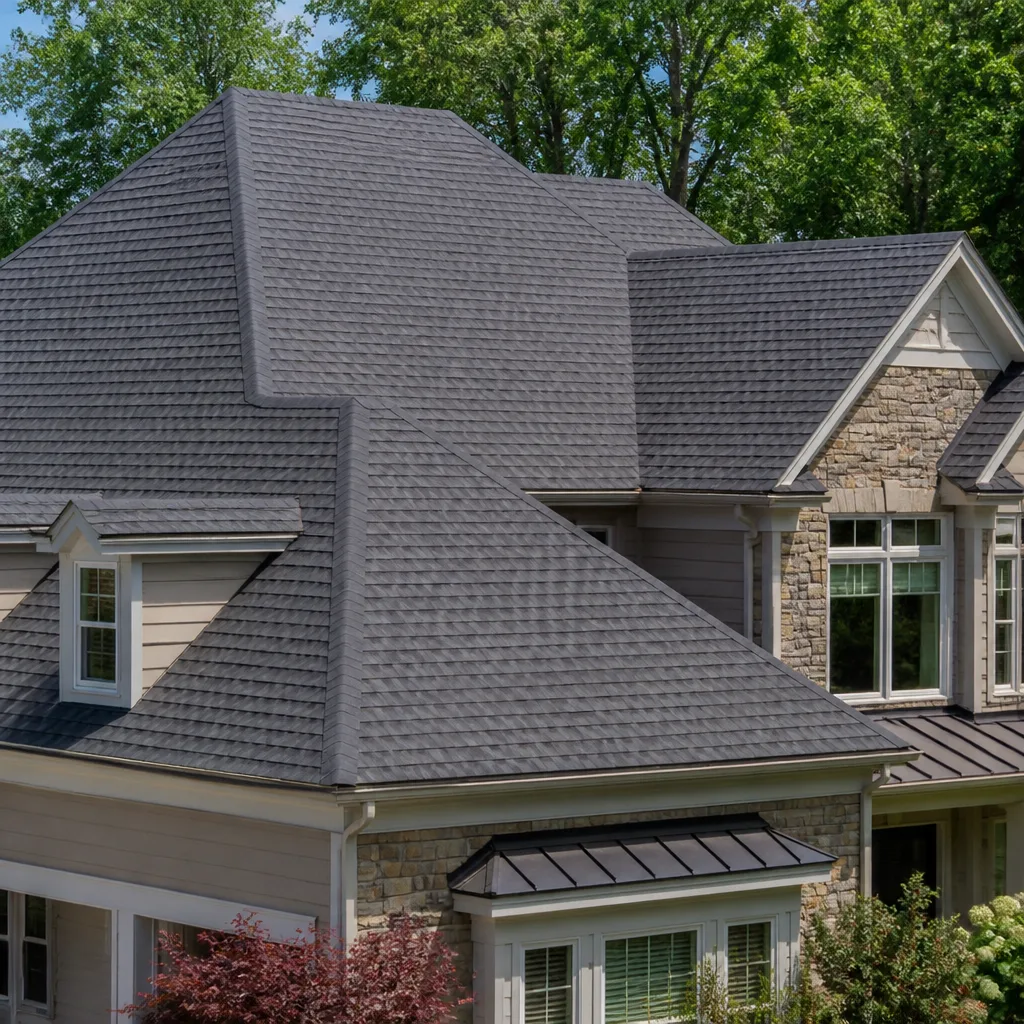
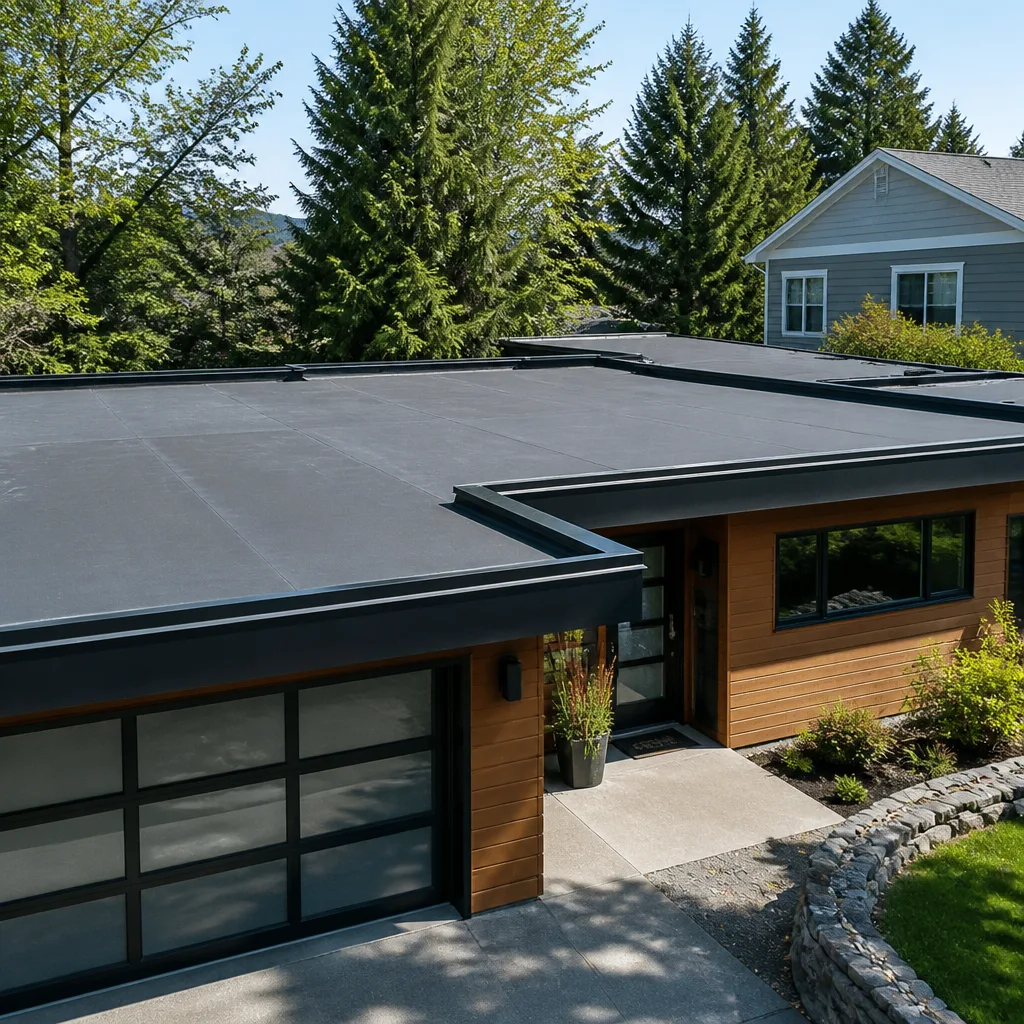
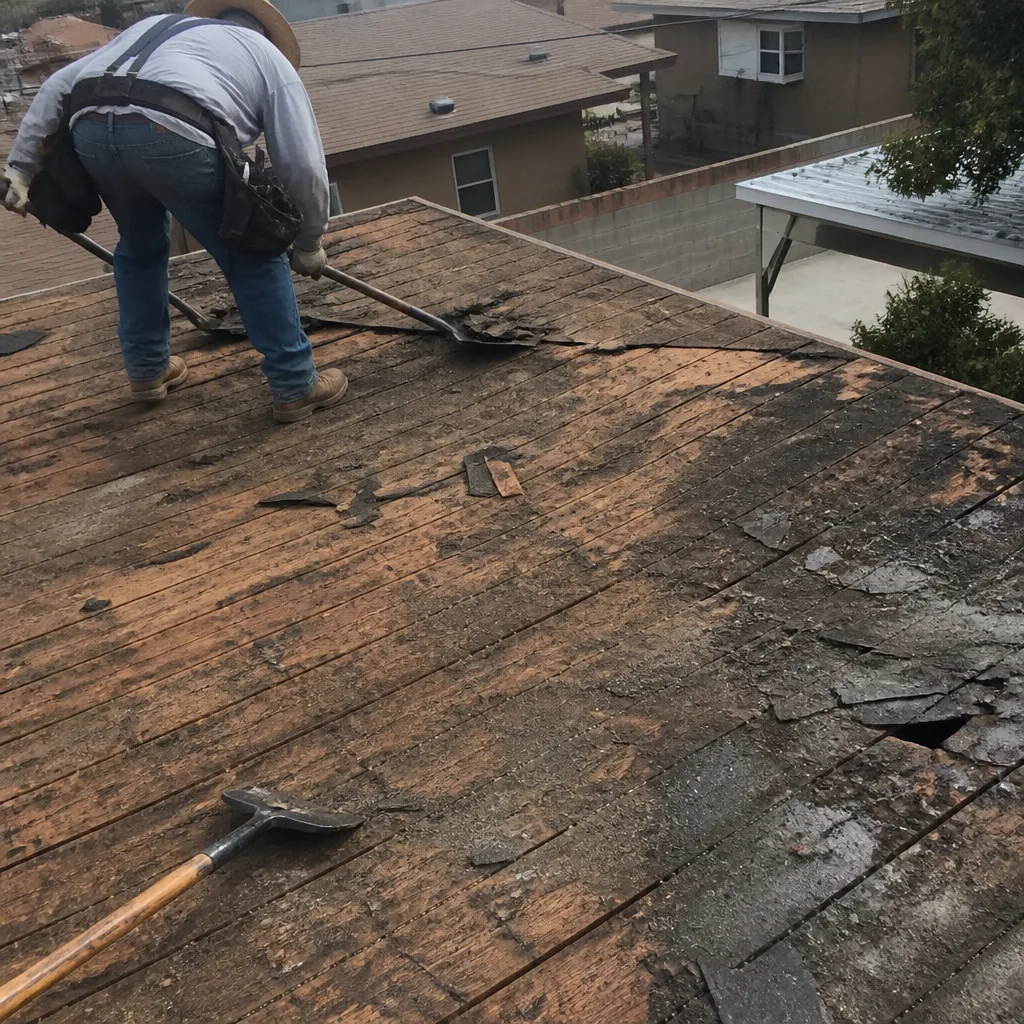 Before
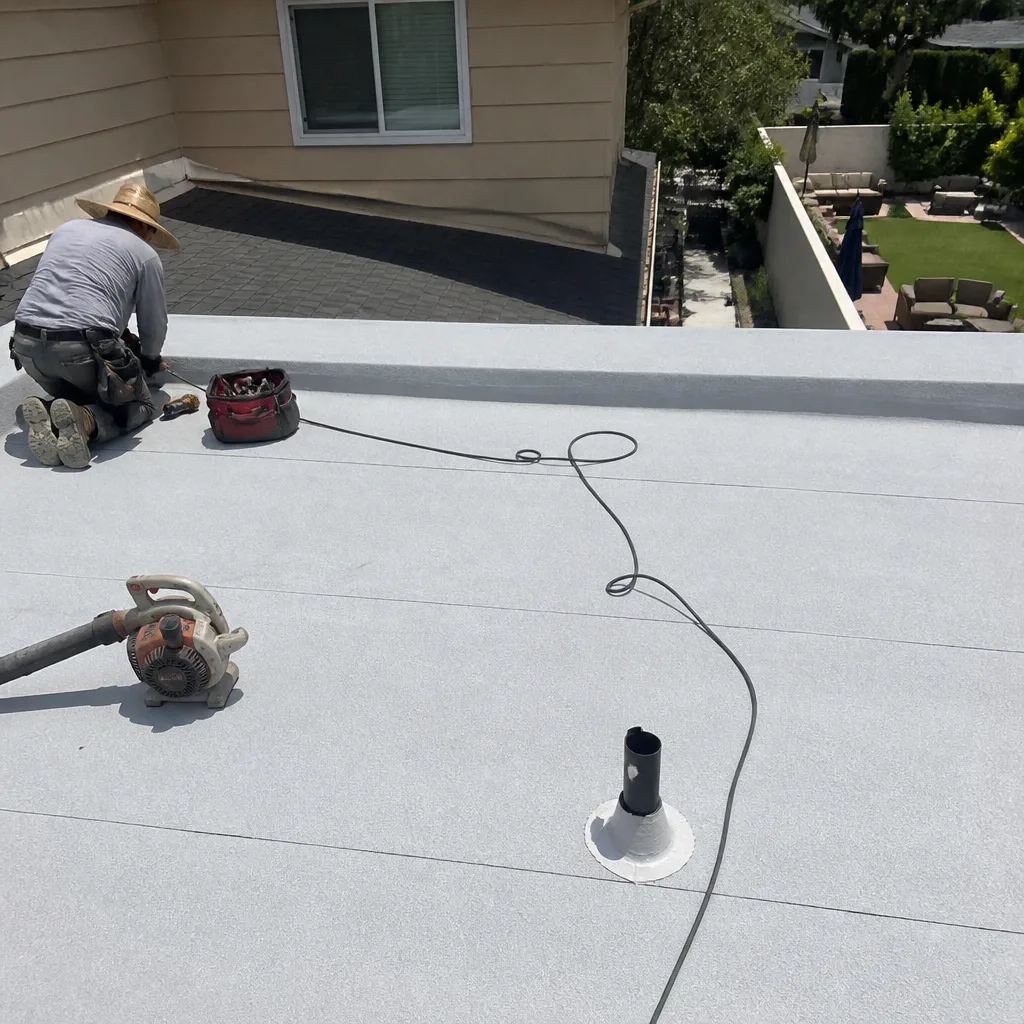 After
After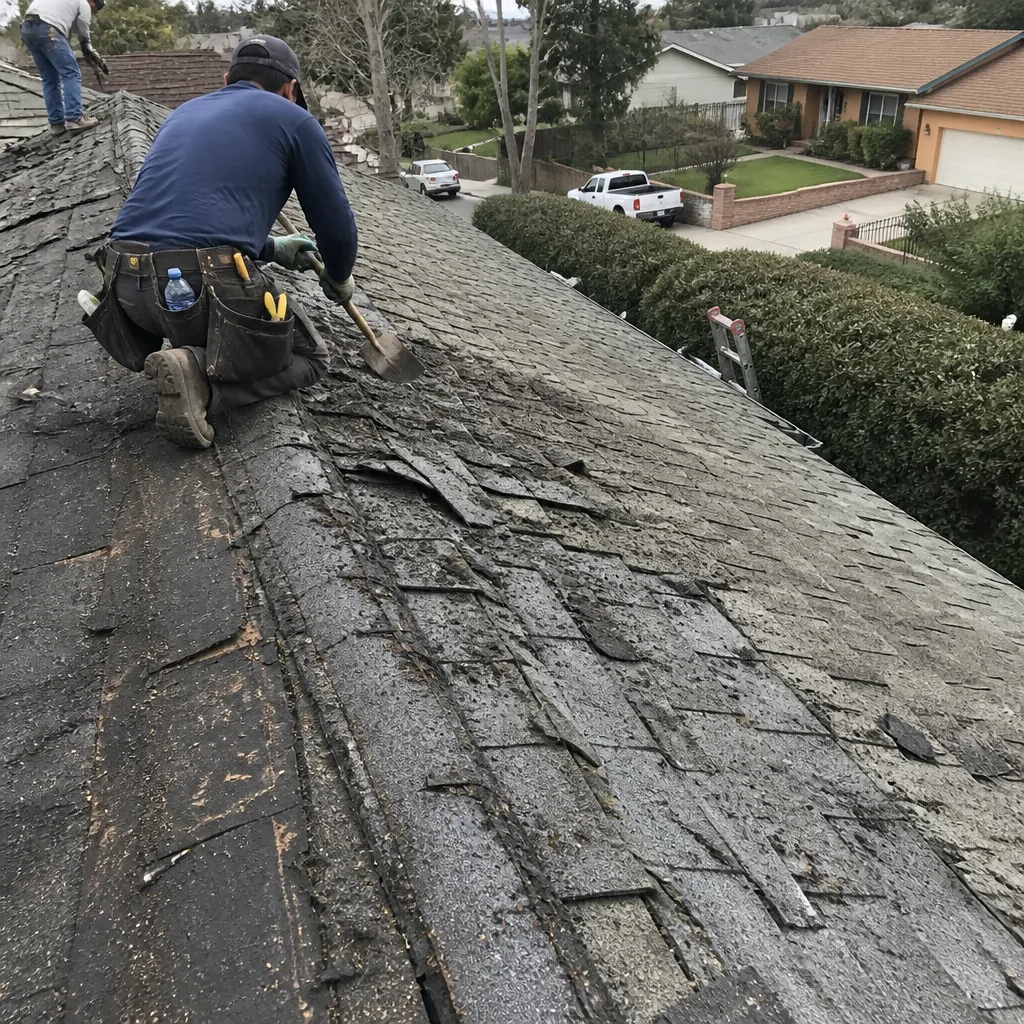 Before
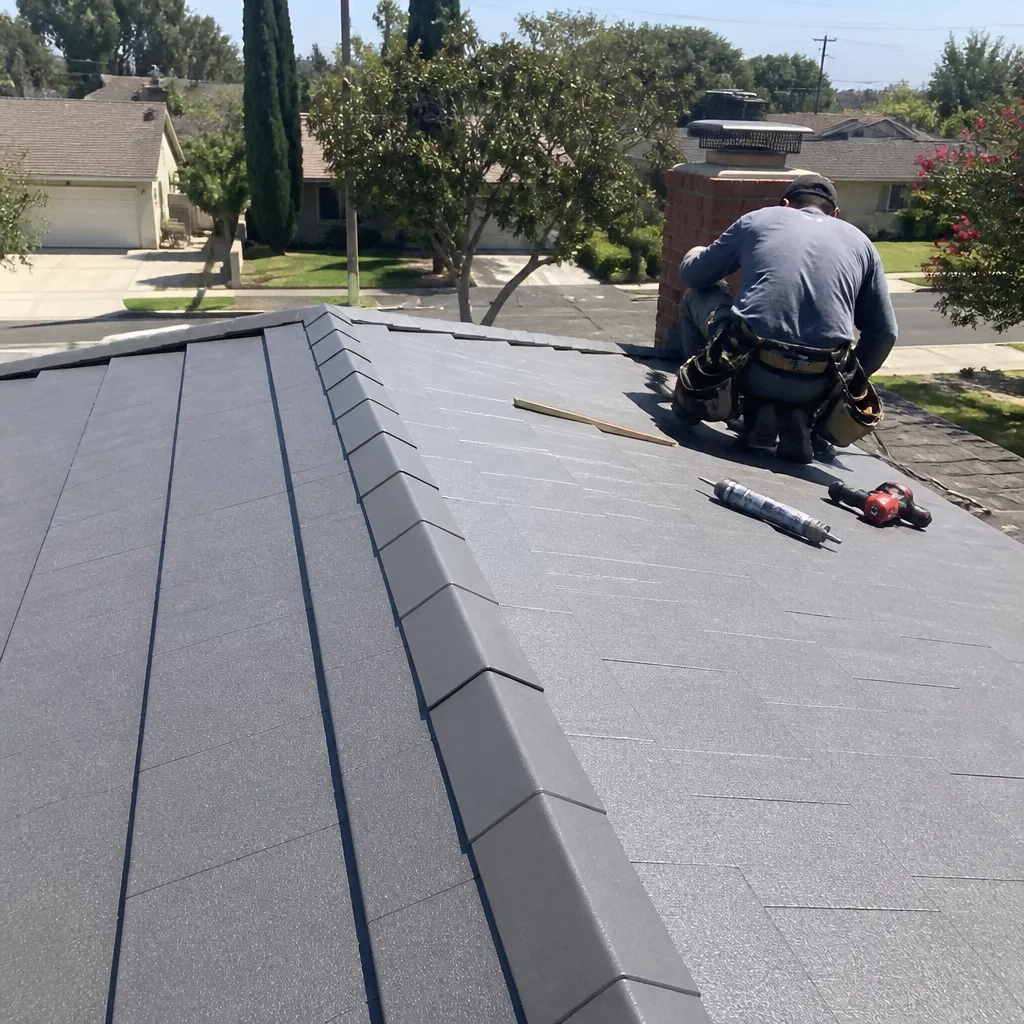 After
After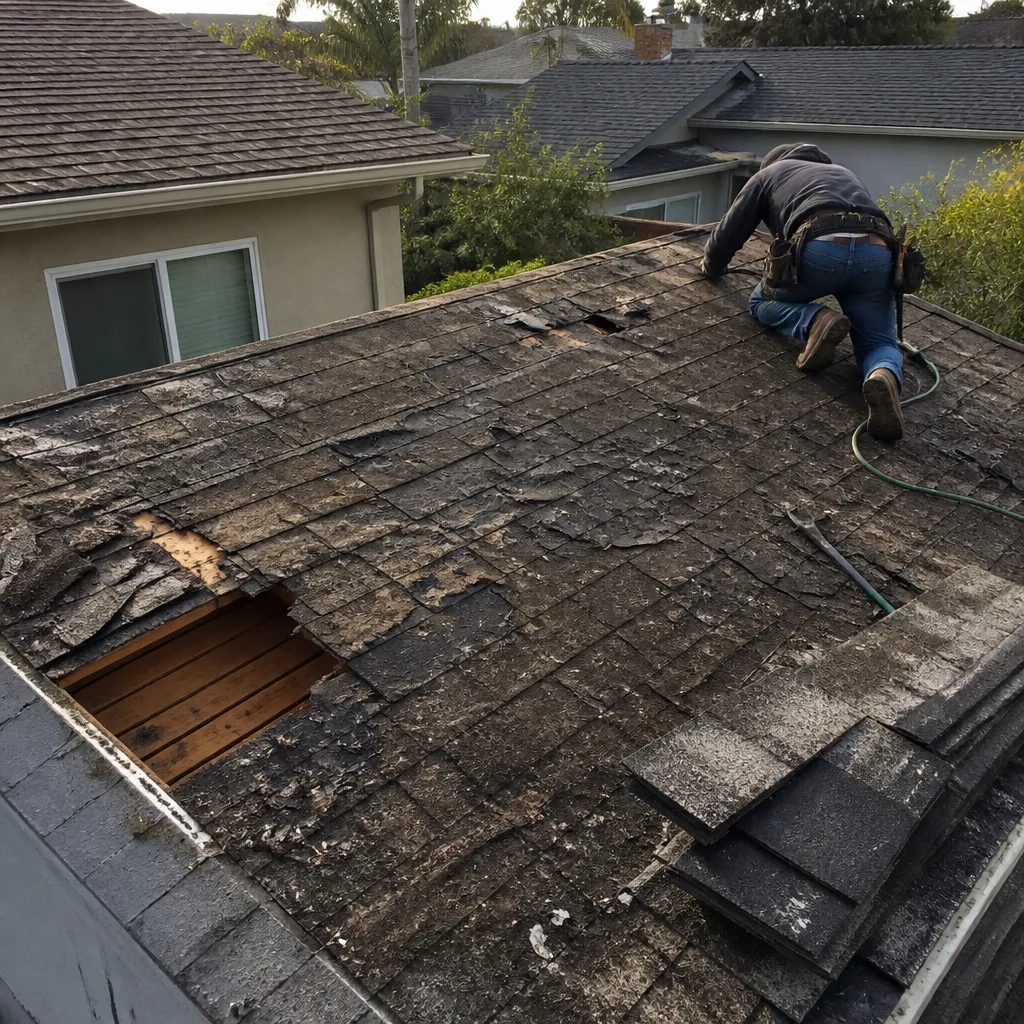 Before
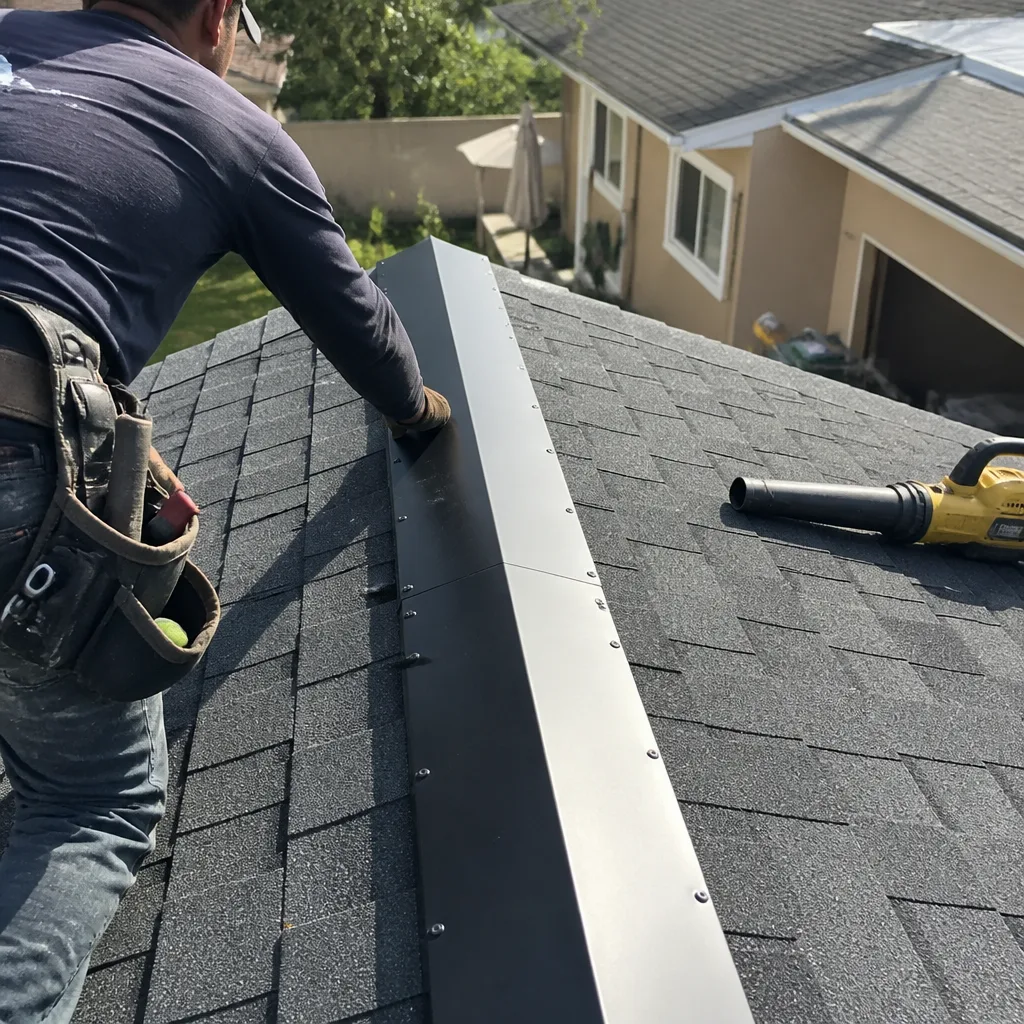 After
AfterDIY vs Professional Roofing: The Los Angeles Homeowner’s Decision Guide
Here’s a number most DIY roofing guides won’t tell you: a homeowner in Los Angeles who re-roofs their own house without pulling a permit can lose their fire insurance coverage, and they may not find out until the claim is denied. This isn’t hypothetical. California’s building code, the LAFD’s fire-zone material rules, and standard homeowner’s policy language combine to create a set of legal and financial traps that make Los Angeles one of the riskiest places in the country to treat a roof as a weekend project. This guide maps exactly where the lines fall: what you can legally do yourself, what the state requires a licensed contractor for, what your insurance policy says about both, and what the real cost difference is once you factor in liability, warranty, and the market value of your home. For more guides & resources, see our blog. By the end, you’ll know which tasks are genuinely okay for a careful homeowner in Los Angeles, and which ones put your coverage, your safety, and your resale value on the line.
Quick Answer
For most Los Angeles homeowners, professional roofing is the only legally and financially sound choice for any repair or installation beyond the most minor surface work, like resealing a small section of flashing or replacing one or two broken clay tiles. California owner-builder law technically allows you to pull your own permit and act as your own contractor on a home you live in, but doing so transfers full liability for code compliance, worker safety, and any future insurance claim onto you, and most homeowner’s policies contain exclusions for water or fire damage tied to self-performed, unpermitted work. The DIY savings, which typically range from $4,000 to $9,000 on a full re-roof in Los Angeles, rarely survive contact with reality: one denied claim or one failed inspection erases the savings entirely, and you carry that risk for years.
Table of Contents
- The Legal Landscape: What California Actually Allows You to Roof Yourself
- The Insurance Trap: How DIY Roofing Voided Coverage in Los Angeles
- What’s Actually DIY-Appropriate on a Los Angeles Roof
- The Point Where DIY Becomes a Liability
- The Real Cost Comparison: Dollars, Risk, and What a Contractor’s Paperwork Replaces
- Why Los Angeles Is Harder on Roofs Than Most US Markets
- Permits, Inspections, and the Paper Trail That Protects You
The Legal Landscape: What California Actually Allows You to Roof Yourself
California has a specific legal category for homeowners who want to act as their own contractor: the owner-builder exemption. Under California Business and Professions Code Section 7044, a homeowner who lives in the residence may pull a building permit and perform work themselves without holding a contractor’s license. That sounds permissive until you read the fine print, which most DIY guides skip. The exemption is not a blank check. It applies only to work on your own primary residence, not a rental property, not a flip, not a second home. And it does not exempt you from code compliance, fire-zone material requirements, or the obligation to pull permits and schedule inspections. Fail any of those obligations and the California Contractors State License Board (CSLB) can impose penalties, and your insurance carrier can treat the work as unauthorized construction. In Los Angeles, the Department of Building and Safety (LADBS) enforces additional layers: reroofing in many areas of Los Angeles requires a permit when the work exceeds a repair of 10% of the roof area in a 12-month period, and homes in the Very High Fire Hazard Severity Zone (VHFHSZ), which covers significant portions of the hillside neighborhoods from Pacific Palisades to La Cañada Flintridge, must meet specific Class A material standards that a DIY owner-builder must source, verify, and document themselves.
What the CSLB enforces in practice: unlicensed contracting. If you hire a handyman or a “roofing guy” who lacks a California C-39 roofing license to do work valued over $500 including labor and materials, that person is operating illegally, and you, the homeowner, are exposed. The CSLB actively pursues unlicensed roofing operations in Los Angeles because of the volume of complaints, and if an unlicensed worker is injured on your roof, your homeowner’s liability opens up in ways most people never consider until the lawsuit arrives. The owner-builder exemption is for work you do with your own hands. The moment you pay an unlicensed person, you have moved outside the exemption and into a liability gray zone. The threshold question for Los Angeles homeowners is not “Can I do this?” but “Can I do this, pull the permit, meet fire-zone code, pass inspection, and carry the liability for the next decade?” For work beyond very minor surface repair, the honest answer is usually no.
The Insurance Trap: How DIY Roofing Voided Coverage in Los Angeles
Most homeowners in Los Angeles carry a standard HO-3 insurance policy, and most never read the exclusions section. Buried in nearly every standard policy is language that excludes or limits coverage for damage caused by “faulty, inadequate, or defective workmanship” performed by the homeowner, particularly when work was done without permits or outside code. This is not a minor clause. In practice, it means that if you re-roof your own home, skip the permit, and then your roof leaks during an atmospheric river event, your insurer can deny the water damage claim on the grounds that the leak originated from unpermitted, self-performed work. The denial does not happen at the moment you do the work. It happens months or years later, when you file the claim, and that is precisely when you discover you have been carrying a policy that will not pay out on the largest asset you own.
The fire-zone element makes this worse in Los Angeles. Hillside communities in the Santa Monica Mountains, the Verdugos, and the eastern San Gabriels sit inside designated Very High Fire Hazard Severity Zones where insurers increasingly require Class A roofing materials and documented permit history before issuing or renewing a policy. Several major carriers writing policies in Los Angeles now ask directly whether the roof was permitted and professionally installed, and they will non-renew a home with a self-performed, unpermitted roof. The nightmare scenario: a homeowner re-roofs their own hillside home to save $7,000, their insurer non-renews the policy at renewal time, the homeowner shifts to a high-cost FAIR Plan policy, and they remain personally liable for any code deficiency on the roof for as long as they own the home. This is not a scare tactic. It is the mechanism of how insurance underwriting works in fire-prone Los Angeles, and it is the single most overlooked cost in every DIY roofing calculation.
What’s Actually DIY-Appropriate on a Los Angeles Roof
We want to be fair to the genuinely capable homeowner, because there is a real set of tasks that are reasonable to do yourself in Los Angeles if you are careful, physically able, and willing to learn the right materials. These are surface-level, low-risk tasks that do not require permits, do not touch the underlayment or decking, and do not expose you to the insurance issues described above. Here is an honest list, with the caveat that every roof in Los Angeles is different because the city spans coastal marine-layer zones in Playa del Rey, dry heat in Woodland Hills, and mountain wind in Tujunga, and each microclimate wears a roof differently.
- Replacing individual broken clay or concrete tiles: Los Angeles has a high proportion of clay tile roofs, especially in older neighborhoods like Hancock Park, Los Feliz, and the San Fernando Valley ranch tracts. Tiles break when walked on incorrectly or when debris falls, and replacing one or two is a reasonable DIY task if you can match the tile profile and color. The key is foot placement: never step on the tile crown, only the valley, and use a foam pad.
- Resealing small flashing joints: The metal flashing around chimneys, skylights, and vent pipes is the most common leak point in Los Angeles roofs. A small, visible crack in a flashing joint can be cleaned and resealed with high-quality roofing sealant. This is a maintenance task, not a repair, and it does not require a permit in Los Angeles.
- Clearing gutters and downspouts: Los Angeles has a short but intense rainy season, and clogged gutters are the leading cause of fascia rot and overflow damage in neighborhoods with mature trees, like Sherman Oaks, Pasadena, and the Palisades. Ladder safety is the main concern here, not roofing skill.
- Removing small debris accumulations: Leaves, palm fronds, and Santa Ana wind deposits collect in roof valleys and behind dormers. Clearing them by hand is fine. Using a pressure washer is not: high-pressure water drives moisture under the tile or shingle and destroys the underlayment.
- Visual inspection from a ladder: You can and should look at your roof from a ladder twice a year. You are looking for cracked tiles, lifted shingles, exposed nail heads, and rusted flashing. Knowing what you are looking at is the skill, and that skill is learnable.
Every task on this list stays on the surface. You are not lifting underlayment, not cutting into decking, not touching structural framing, and not changing the fire rating of the roof assembly. The moment the work goes below the surface layer, the rules change.
The Point Where DIY Becomes a Liability
There is a specific line where a DIY project stops being maintenance and starts being construction, and in Los Angeles that line is drawn by the building code, not by your confidence level. Crossing it without a permit and a licensed contractor is where the financial and legal exposure begins. You do not need to be an expert to recognize the line; you need to know the specific tasks that sit on the wrong side of it.
- Replacing or lifting any section of roof underlayment. In Los Angeles, underlayment is the waterproofing layer between the decking and the tile or shingle. It is also a fire-rated component in most assemblies. Lifting it means the old underlayment is compromised or the decking below is damaged, and repair requires removing the surface layer across a section of roof, replacing the underlayment to code, and reinstalling the surface. This is a re-roof, not a repair. It requires a permit in Los Angeles.
- Replacing more than 10% of the roof area. LADBS draws the repair-vs-reroof line at 10% of total roof area within a 12-month period. Below the line, a repair. Above the line, a reroof requiring permit, inspection, and full code compliance. This applies regardless of whether you do the work yourself or hire someone.
- Replacing roof decking or structural members. Dry rot in the decking is common in older Los Angeles homes, especially in coastal neighborhoods like Venice and Mar Vista where marine moisture sits in the wood. Cutting out and replacing decking is structural work that touches the building envelope, and it is not owner-builder territory for the average homeowner.
- Any work on a roof in a Very High Fire Hazard Severity Zone (VHFHSZ). If your home sits in the hills of Los Angeles, from Bel Air to Sunland, the fire-zone material requirements apply to every layer of the roof assembly, not just the surface. Class A assemblies, specific underlayment types, and ember-resistant venting are mandated. Sourcing and installing these correctly is specialist work, and the insurance consequences of getting it wrong are severe.
- Any work involving roof valleys, crickets, or intersections. Roof valleys concentrate water, and Los Angeles gets most of its rain in a handful of intense storm events. A valley installed wrong will leak slowly for years before the damage shows, and by then the decking, fascia, and insulation are compromised. Valley work requires flashing geometry and underlayment sequencing that goes well beyond handyman skill.
The common thread: once you are below the surface layer, you are rebuilding a waterproofing and fire-safety system, not touching up a tile. At that point, the owner-builder path requires you to pull the permit, meet fire-zone code, schedule inspections, and carry the liability. Most people who price the DIY route discover that their real cost per hour, once they factor in permit fees, material sourcing, tool rental, and the chance of a failed inspection, is not meaningfully below what a licensed Los Angeles contractor charges.
The Real Cost Comparison: Dollars, Risk, and What a Contractor’s Paperwork Replaces
Let’s put real numbers on the table. A full re-roof in Los Angeles on a typical 1,800-square-foot single-story home ranges from $12,000 to $24,000 depending on material, roof complexity, and access. The DIY version of the same job costs $8,000 to $15,000 in materials, permits, disposal, and tool rental. The surface-level savings are $4,000 to $9,000, and that is the number that drives most DIY decisions. But the comparison everyone makes is the wrong one. The right comparison is what a licensed contractor’s price actually includes that the DIY price does not:
- General liability insurance and workers’ compensation. If a roofer falls off your roof, their employer’s workers’ comp covers the injury. If you fall off your own roof, your health insurance covers you and your homeowner’s liability covers nothing. The average cost of a roofing fall injury with surgery and recovery runs $50,000 to $150,000. That is the single largest hidden cost of DIY roofing, and it is rarely mentioned in guide after guide.
- Workmanship warranty in writing. A licensed Los Angeles roofing contractor carries a workmanship warranty on installation, typically 2 to 10 years depending on the company, in addition to the manufacturer’s material warranty. Mercer Roofing includes a written 365-Day Done Right Promise on every job: if the work is not right within a year, we make it right. A DIY roof carries no such backstop. If it leaks, you are the warranty department.
- Manufacturer-recognized installation. Shingle manufacturers like Owens Corning, CertainTeed, and IKO offer superior warranty terms only when the roof is installed by a contractor they have vetted and certified. The standard material warranty collapses when installation is DIY. You do not get full manufacturer protection on a self-installed roof, full stop.
- The permit and inspection record. When a licensed contractor pulls the permit in Los Angeles, the completed job leaves a paper trail at LADBS. That record is what your insurer looks at when you renew, and it is what a buyer’s inspector looks at when you sell. A DIY re-roof without permits is an undisclosed liability that must be disclosed at sale under California’s real estate disclosure laws, which frequently reduces the sale price by more than the original savings.
- Code compliance liability. If a permitted roof installed by a licensed contractor fails inspection, the contractor fixes it at their cost. If your owner-builder roof fails inspection, you fix it at your cost, and you may be charged for re-inspection. In Los Angeles, where fire-zone and seismic requirements layer additional code complexity, the chance of a first-pass inspection failure on a DIY re-roof is high.
The honest math: the $4,000 to $9,000 of surface-level savings is a bet that none of the above risks materializes. The bet usually pays off for the short window between installation and the first heavy rain, first insurance renewal, or first sale. Over a 10-year ownership window, the risk-adjusted value of licensed work almost always exceeds the DIY savings. That is not a marketing claim; it is how risk-adjusted cost works when you weigh a known upfront savings against an unknown but severe tail risk.
Why Los Angeles Is Harder on Roofs Than Most US Markets
Every city has roofs, but Los Angeles combines a particular set of material and climate stresses that make it genuinely harder to roof well than most of the country. A homeowner in Phoenix deals with heat. A homeowner in Seattle deals with rain. A Los Angeles homeowner deals with both, plus fire code, plus seismic movement, plus a roof material that is unusually fragile to walk on. Here is the Los Angeles-specific context that changes the DIY calculus.
Clay tile is the default material in much of Los Angeles, and clay tile breaks underfoot. Tile roofs dominate across the Spanish revival homes of Leimert Park, the Mediterranean styles of Cheviot Hills, and the older estates of Pasadena and San Marino. Clay tile is a superb roofing material for Los Angeles: it handles sun, heat, and the occasional heavy rain. But it is hateful to walk on incorrectly. A single misplaced footstep on the crown of a tile will crack it, and a cracked tile lets water reach the underlayment, which then degrades in the sun before you ever see evidence inside the house. Professional Los Angeles roofers learn tile-walking technique over years of practice, moving on the tile valleys, distributing weight across two or three tiles, using foam walk pads. The DIY homeowner watching a YouTube video learns none of this, and the cost of the lesson is a cracked-tile leak path that may not show itself until the rain comes.
Fire-zone material requirements are real and enforced in Los Angeles. The city of Los Angeles and Los Angeles County map significant portions of the hills into Very High Fire Hazard Severity Zones, and the LAFD enforces brush-clearance and building-hardening standards that include roof assembly requirements. Class A materials, ember-resistant vents, and specific underlayment types are mandated in these zones. Getting this wrong on a DIY roof is not a minor code miss; it is a non-compliant fire-safety assembly on a house in a fire-prone area, and insurers treat it as such. The same standards do not apply to a DIY project in most of the country.
Seismic movement stresses roof connections differently. Los Angeles sits in one of the most seismically active regions in the United States, and roofs here are designed to move with the building during an earthquake. The connections between the roof framing, the decking, and the surface layer are engineered for lateral movement, and a re-roof that does not respect those connections can create stress points that manifest as leaks after a quake, even a moderate one. This is a structural consideration that most DIY guides, written for a national audience, simply do not address.
The dry-rain cycle creates an unusual leak pattern. Los Angeles typically goes months without rain, then receives a season’s worth of water in a few intense storm events. The long dry season bakes the roof surface and can dry out sealants and underlayment. When the rain finally comes, it comes in volume, and any small defect becomes a channel for water under pressure. In a city with consistent year-round rain, small leaks show themselves quickly. In Los Angeles, the defect sits dormant through the dry season and fails catastrophically when the atmospheric river arrives. This means a DIY roof can look fine for nine months and be functionally compromised.
Permits, Inspections, and the Paper Trail That Protects You
Here is the sequence for doing roofing work legally in Los Angeles, whether you hire a contractor or go owner-builder. Understanding this sequence is the difference between a roof that protects you and a roof that quietly exposes you.
- Determine the fire hazard zone. Check your address against the LAFD and Cal Fire hazard zone maps. This determines which roof assembly class your home must meet. Skip this step and you may install a roof that meets code in one neighborhood but fails in another.
- Pull the building permit from LADBS. For work exceeding the 10% repair threshold, a permit is required. A licensed contractor pulls the permit on your behalf. An owner-builder pulls it themselves and signs the declaration that they live in the home and accept responsibility for the work.
- Schedule inspections at the required stages. LADBS requires inspections at specific points: typically after the old roof is stripped and the decking is exposed, after the underlayment and flashing are in place, and at final completion. Each inspection is a pass/fail event, and each failure means rework and a re-inspection fee.
- Close out the permit. After final inspection passes, the permit is signed off and the record is posted to the LADBS property file. This is the paper trail your insurer and a future buyer will look for.
- Keep the records. Every roofing permit, inspection sign-off, contractor warranty, and material warranty should stay in a folder with the house. When you sell, these documents transfer and they are worth money at the negotiating table.
A licensed contractor in Los Angeles walks this path on every job. The permit, the inspections, the fire-zone verification, the closeout: it is not extra work, it is the job. When you hire a licensed roofer, you are not just paying for labor and materials. You are paying for a documented, code-compliant, insurer-recognized installation, and that documentation is the difference between a roof that protects your home and a roof that protects nothing but your temporary savings.
Common Mistakes to Avoid
- Skipping the permit to “save time and hassle.” Los Angeles homeowners occasionally decide the permit is optional and learn the truth at insurance renewal or resale. The permit is the paper trail that proves the work is legal, and its absence is a standing liability on the property record.
- Hiring an unlicensed roofer because the price is lower. An unlicensed roofer in Los Angeles cannot pull a permit, cannot carry workers’ comp, and cannot offer a binding workmanship warranty. The CSLB actively cites these operations, and the homeowner is the one left holding the unfinished or defective work.
- Walking on a clay tile roof like it’s asphalt shingles. Tile roofs break under point loads, and a single cracked tile can start a leak path that does not show for months. The technique is different, and learning it at altitude is a losing game.
- Assuming fire-zone rules don’t apply to your street. The VHFHSZ boundaries in Los Angeles are non-obvious, and some homeowners discover the requirement only after a re-roof has already started. Checking the zone map before any work is a 10-minute task that prevents a 4-figure correction.
- Comparing DIY material cost to a contractor’s installed price without adding the missing line items. Permit fees, disposal, tool rental, inspection trips, and the value of your own time add up fast in Los Angeles, and the true cost gap is often half of what the raw material comparison suggests.
- Waiting until leaks appear to address roof issues. In Los Angeles’s dry-wet cycle, a roof can be failing for eight months before water shows up on the ceiling, by which point the decking and insulation are already compromised. Twice-yearly visual checks catch problems before they become claims.
- Believing a “complete” DIY roofing guide from a national website applies to Los Angeles. Most of that content is written for asphalt shingle roofs in humid climates with consistent rainfall. It addresses neither clay tile, nor fire-zone assemblies, nor the permit and insurance landscape specific to California.
When to Call a Professional
Call a professional when the work goes below the surface layer, when it touches the underlayment or decking, when it sits in a fire hazard zone, when it exceeds the 10% LADBS repair threshold, when you are buying or selling a home and need the permit record clean, or when the roof has leaked and you cannot see the entry point from the surface. These are not edge cases. They are the majority of meaningful roofing work in Los Angeles. A professional consultation costs nothing in Los Angeles: most roofing companies, including ours, provide free estimates, and you will get a written price before any work starts. Mercer Roofing offers free estimates across Los Angeles. Call Mercer Roofing home at (743) 200-8347 to schedule yours, and we will send a background-checked technician, with a photo ID badge and a written price, before a single nail is driven.
Frequently Asked Questions
Yes, if the work exceeds 10% of the roof area in a 12-month period, a permit from LADBS is required, even if you act as an owner-builder under California law. You may pull the permit yourself if you live in the home, but you then carry full responsibility for code compliance, fire-zone material requirements, and inspection passage, and that liability follows the property.
Yes. Insurers writing policies in Los Angeles increasingly ask directly whether the roof was permitted and professionally installed, and a self-performed, unpermitted re-roof can trigger non-renewal, especially in Very High Fire Hazard Severity Zones. Additionally, standard policies exclude water or fire damage claims tied to faulty, self-performed work, which means the coverage can fail precisely when you file the claim. Call (743) 200-8347 to speak with a Los Angeles roofing professional about your specific situation.
Minor surface-level work is DIY-appropriate: replacing one or two broken clay tiles, resealing a small, visible flashing joint, clearing gutters, removing debris from valleys, and doing twice-yearly visual inspections from a ladder. All of these stay above the underlayment and do not require permits. Anything below the surface layer shifts into professional territory.
A full re-roof on a typical 1,800-square-foot Los Angeles home ranges from $12,000 to $24,000, depending on material, roof complexity, access, and fire-zone requirements. The DIY material equivalent runs $8,000 to $15,000, but the comparison excludes liability insurance, workmanship warranty, permit and inspection management, and the long-term insurance and resale consequences. For an exact quote on your roof, call (743) 200-8347; estimates are free, and the written price is provided before any work starts.
Clay tile breaks under point loads, and a single cracked tile can open a leak path that stays hidden through Los Angeles’s long dry season and fails when the heavy rain arrives. Tile-walking technique requires weight distribution across the tile valleys, and the same foot placement that works fine on asphalt shingles will crack clay on a Los Angeles roof.
With a reputable Los Angeles roofing company, no. A written price should be provided before any work begins, and that price should hold unless the scope of work changes due to something discovered under the old roof, like rotten decking or failed underlayment, which is documented and priced in writing before proceeding. Mercer Roofing includes a written price before every job and a written guarantee on every repair. Call (743) 200-8347 for a free estimate and a no-surprises written quote.
The Threshold Standard requires every technician who arrives at your home to be background-checked, identity-verified, and dispatched in a clean, marked uniform with a photo ID badge. For Los Angeles homeowners choosing between roofers, this standard is the difference between opening the door to a stranger and opening the door to a documented, vetted professional.
A standard single-story re-roof in Los Angeles typically takes 2 to 5 working days, depending on the material, roof size, and whether repairs to the decking or underlayment are needed. Clay tile and complex multi-plane roofs run at the longer end of the range. The permit and inspection sequence adds additional days at LADBS scheduling speed, and that time is part of what a licensed contractor manages on your behalf.
The Bottom Line
The DIY roofing decision in Los Angeles is not primarily about skill. It is about legal exposure and insurance coverage. What California permits under the owner-builder exemption is real but narrow, and the moment you go below the surface layer, pull beyond the 10% repair threshold, or work in a fire hazard zone, the liability becomes yours alone. The savings on a full re-roof look meaningful on paper, but the risk-adjusted cost over a decade of ownership almost always favors licensed work. For minor surface maintenance, stay careful and stay above the underlayment. For everything else, hire a licensed Los Angeles roofer who pulls the permit, passes the inspections, and leaves you with the paper trail that protects your insurance and your resale value. That is the only decision that holds up when the winter rains arrive.
Written by Grant Whitlock, Owner at Mercer Roofing, serving Los Angeles since 2000.