
Last updated October 9, 2026
Free roof inspection with deck photos before we talk money - GAF and Owens Corning certified installation
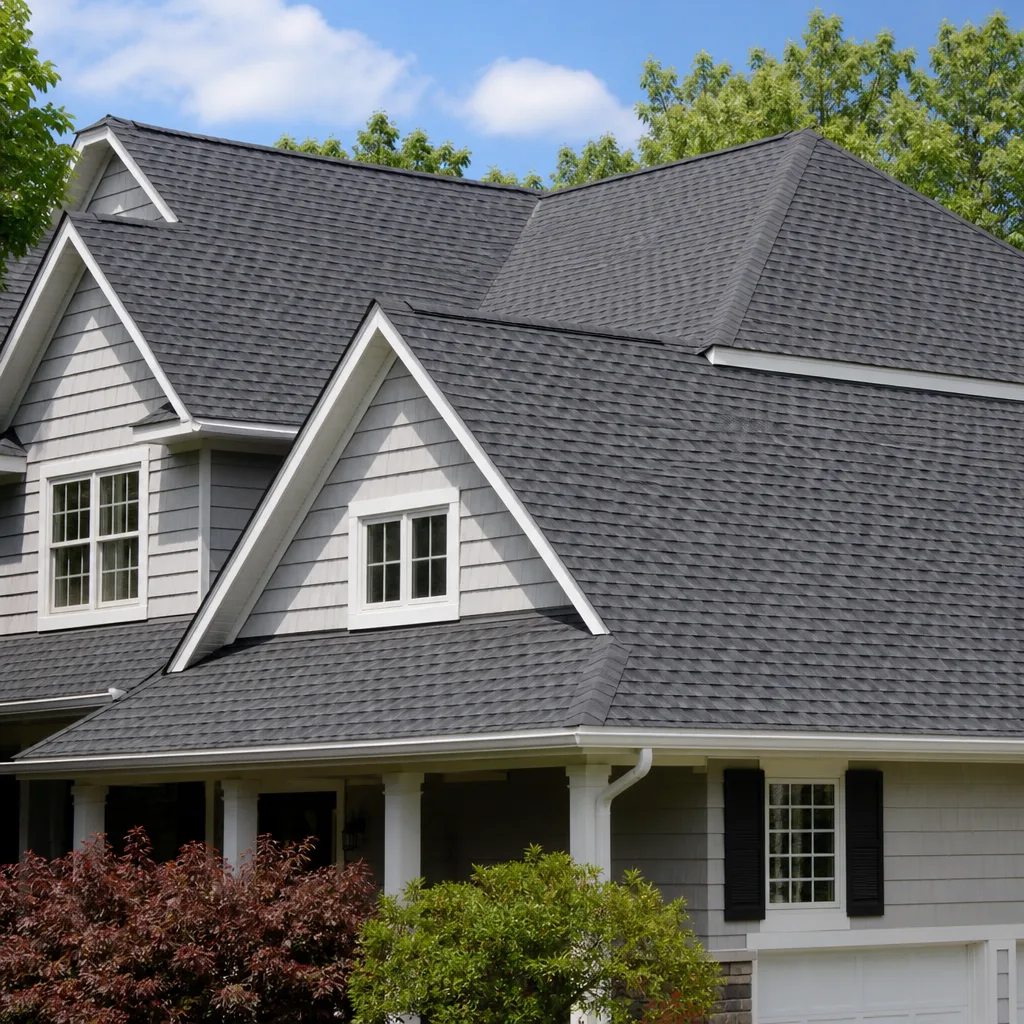
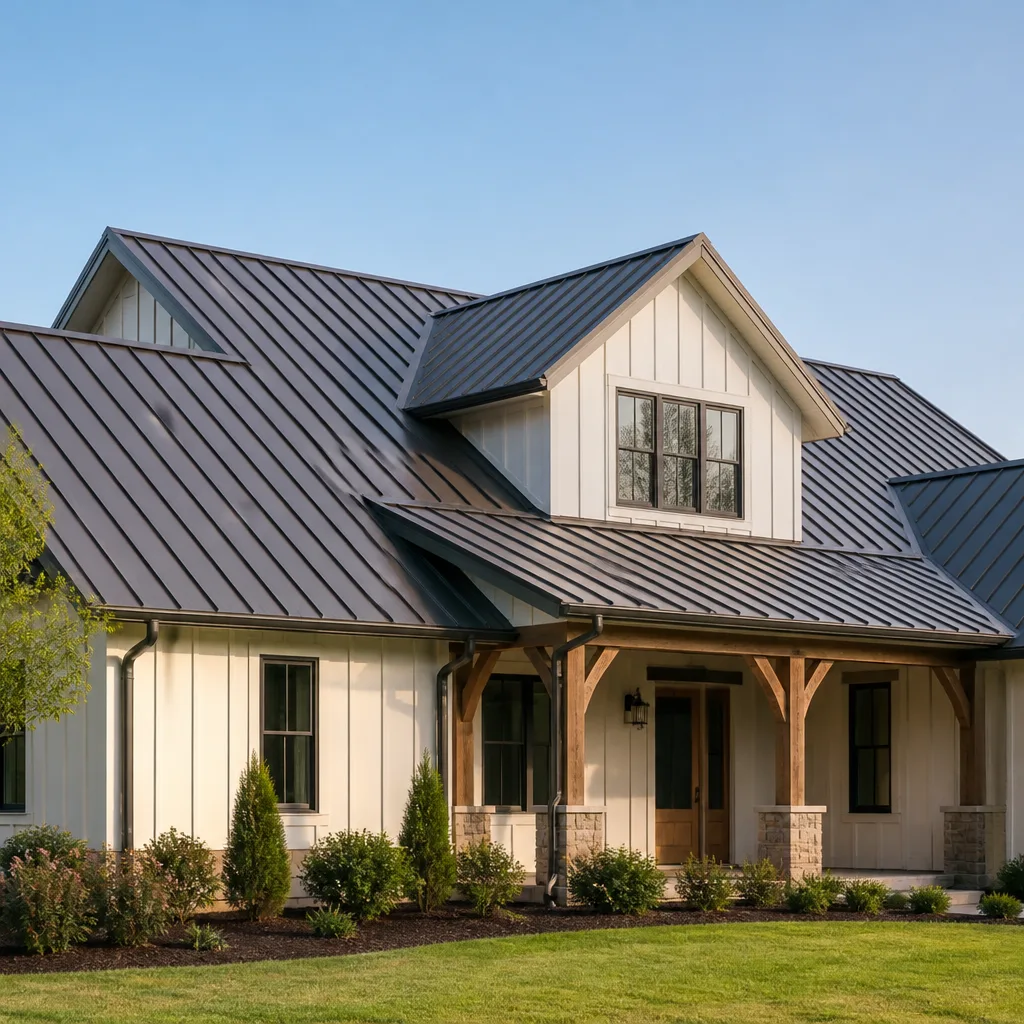
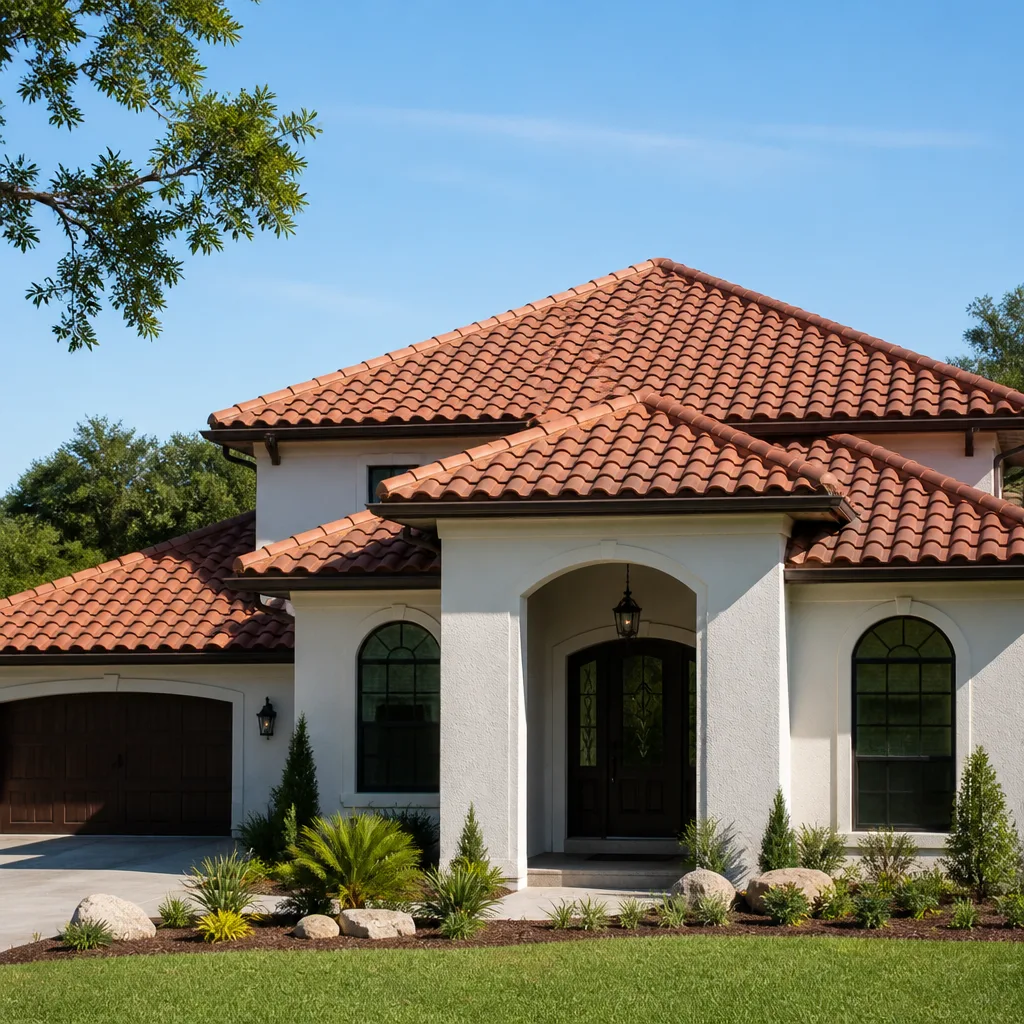
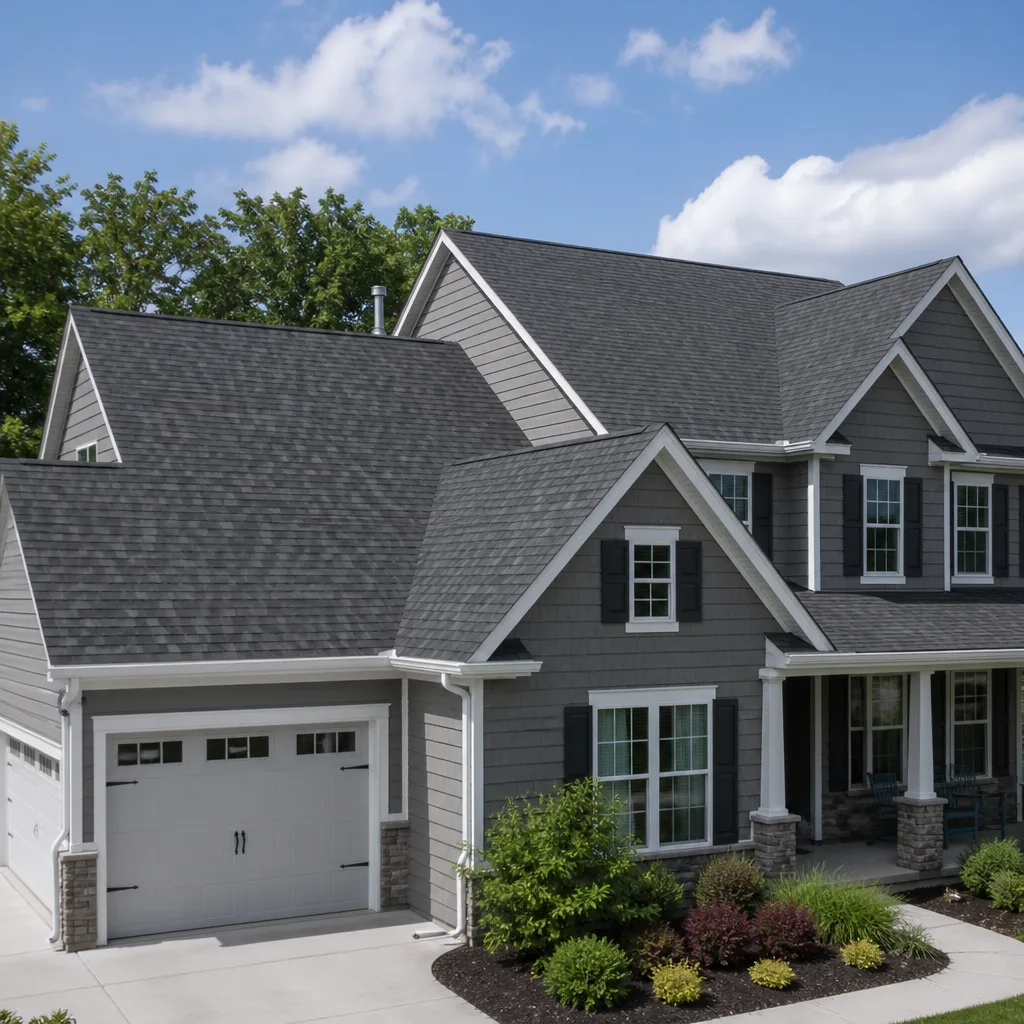
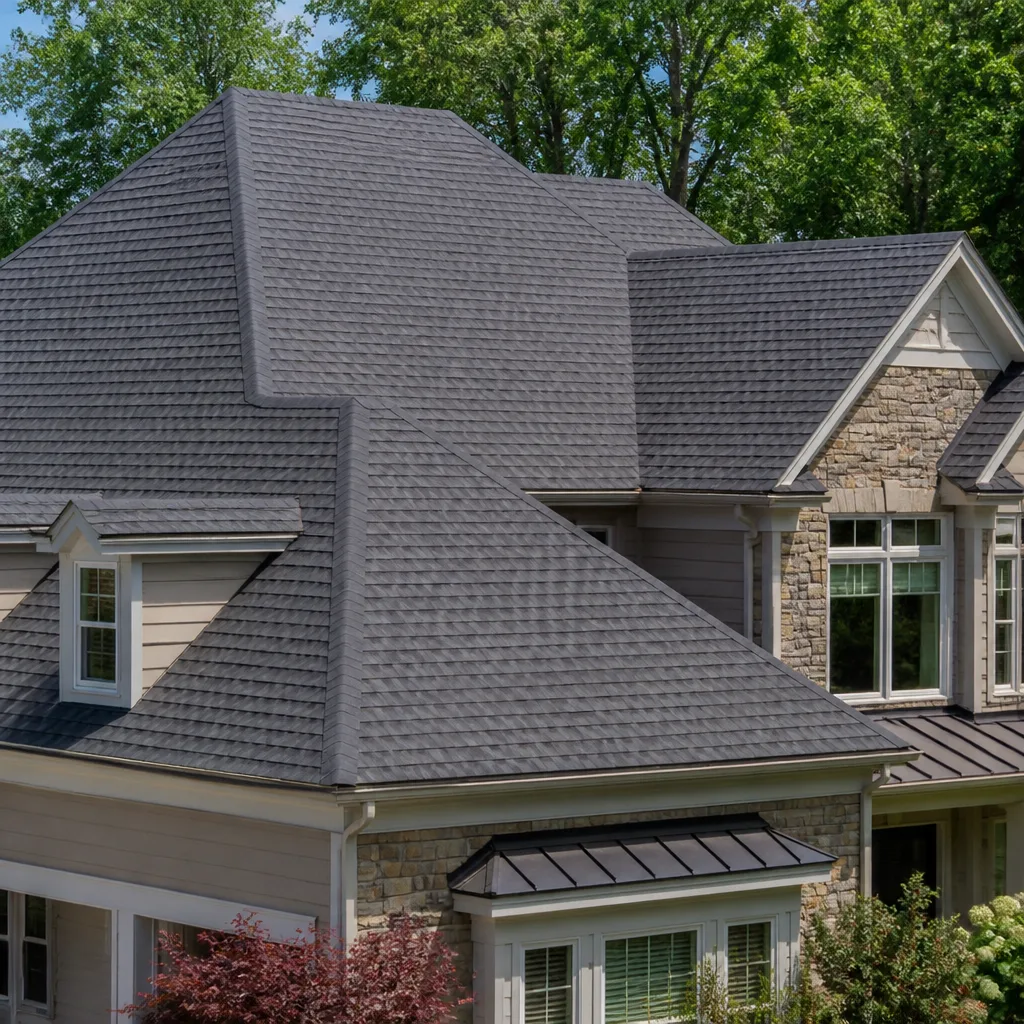
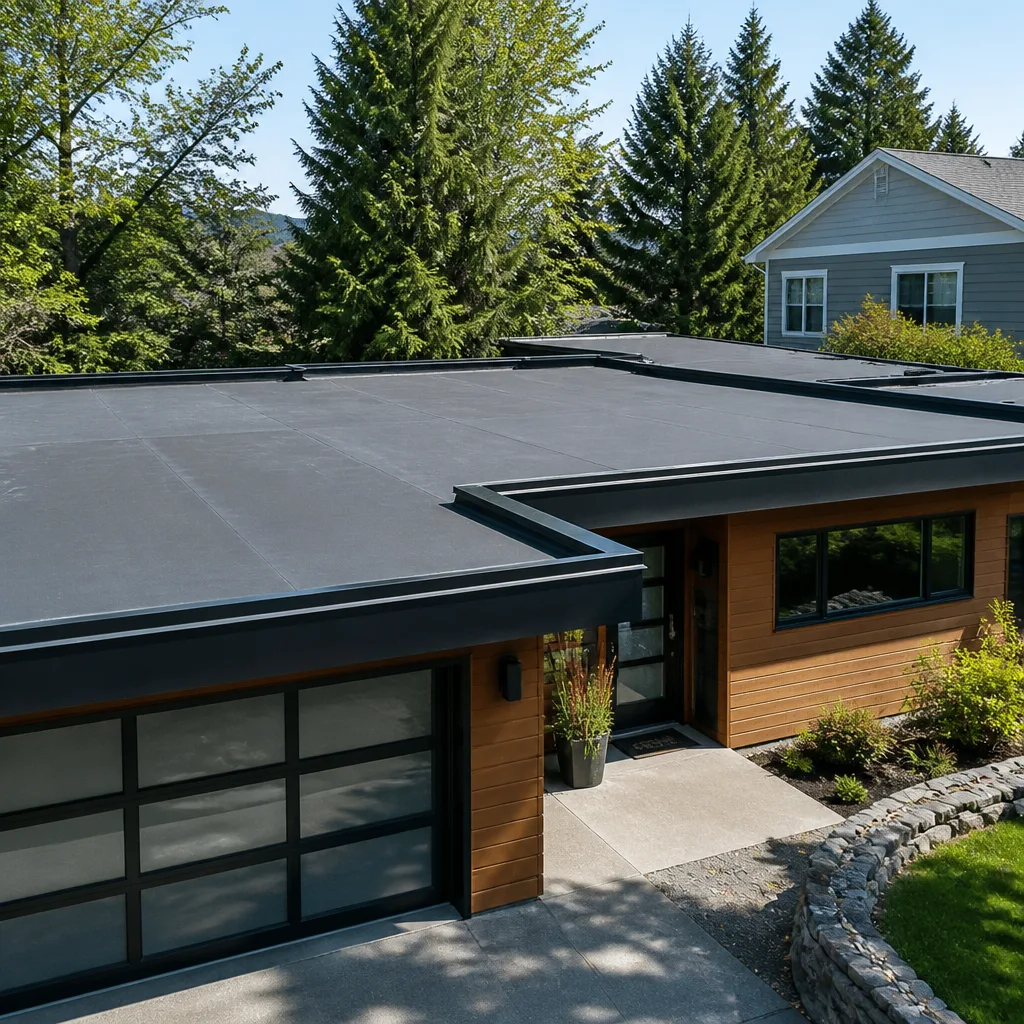
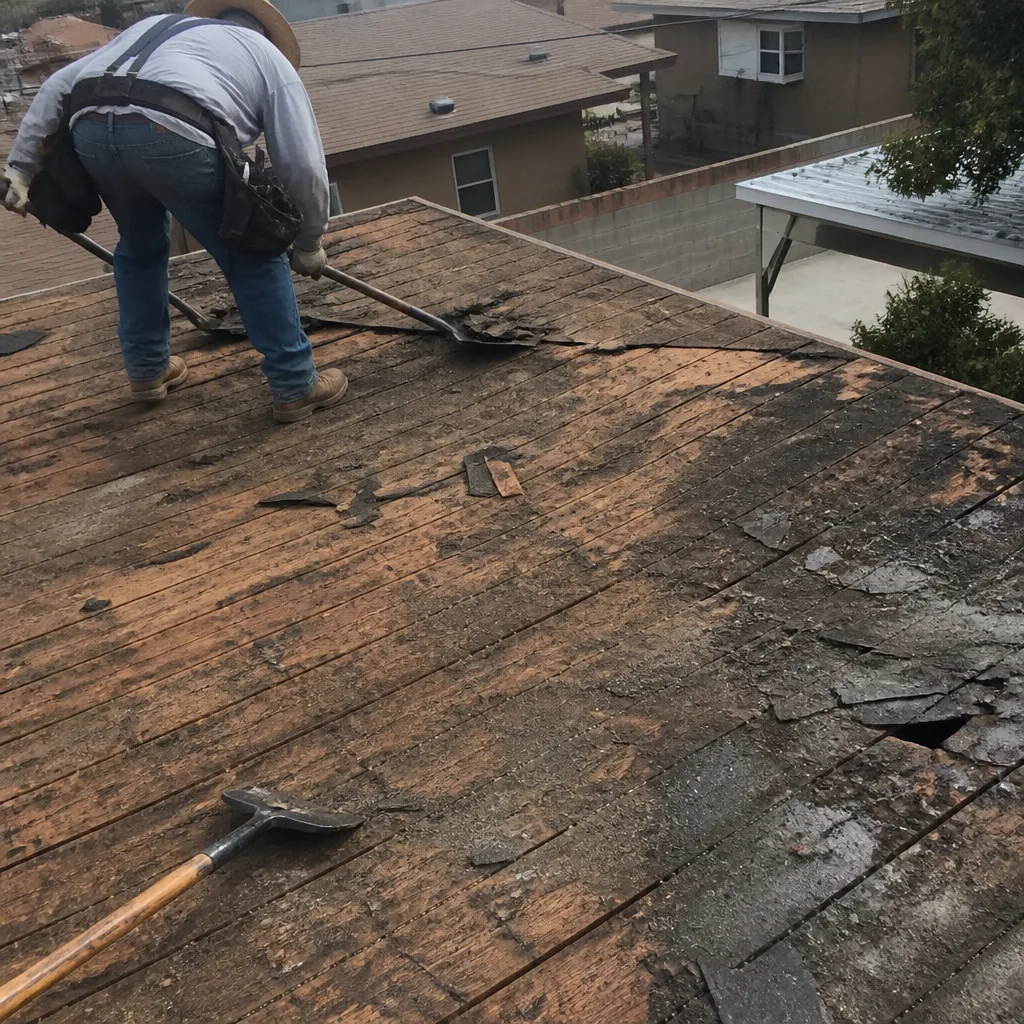 Before
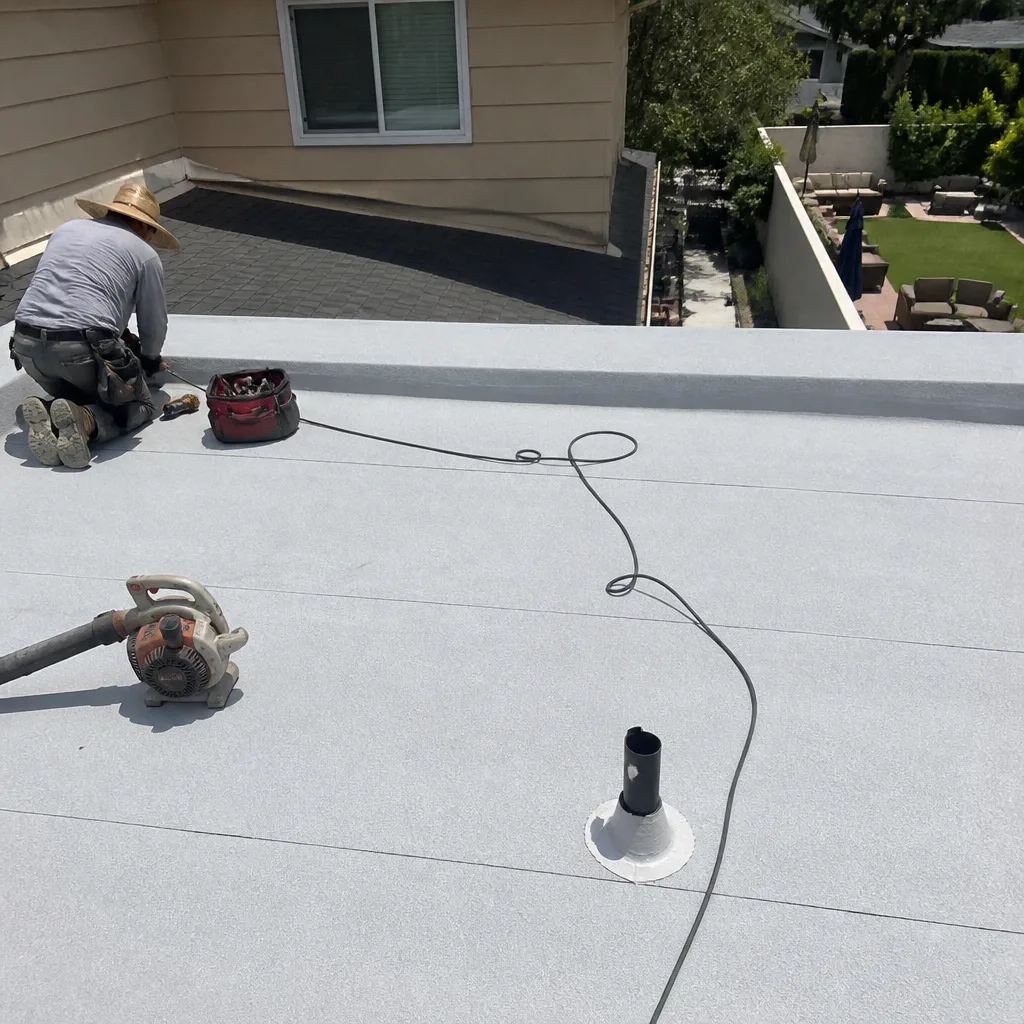 After
After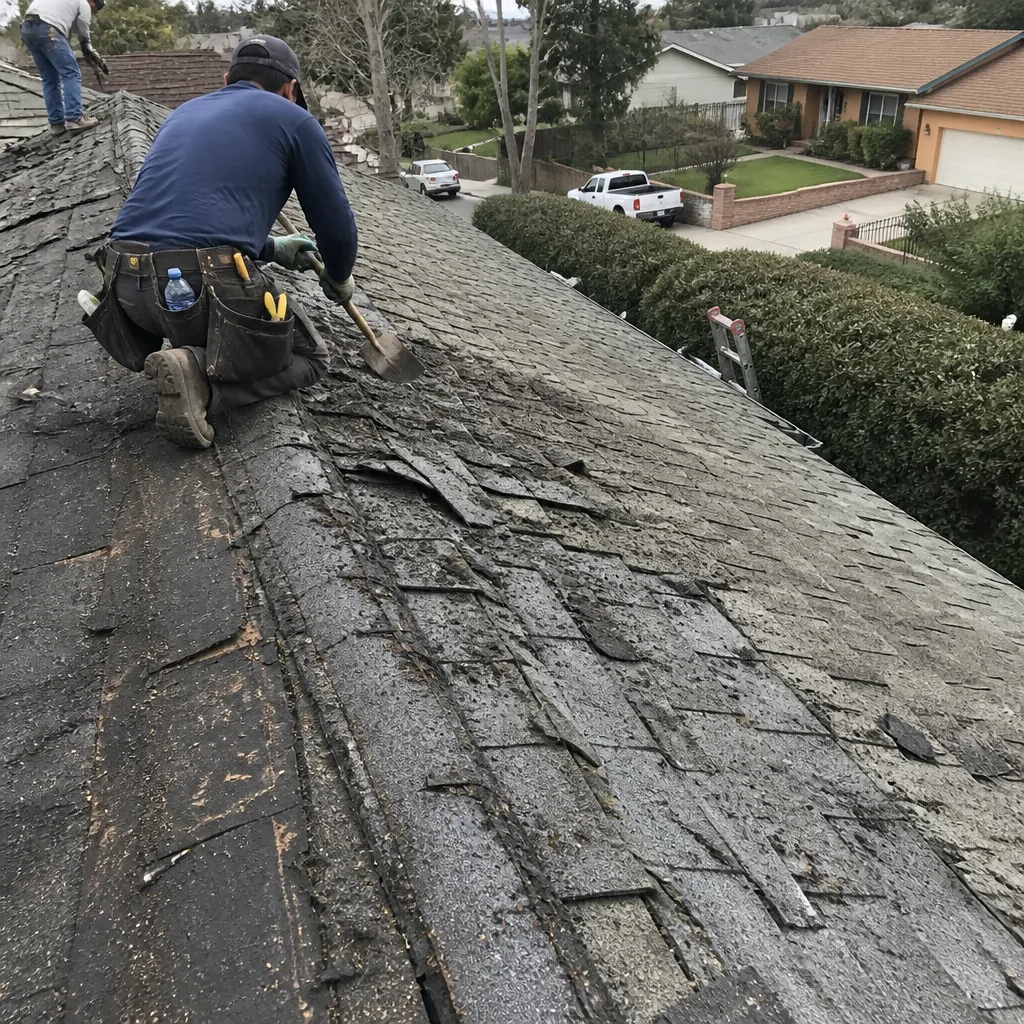 Before
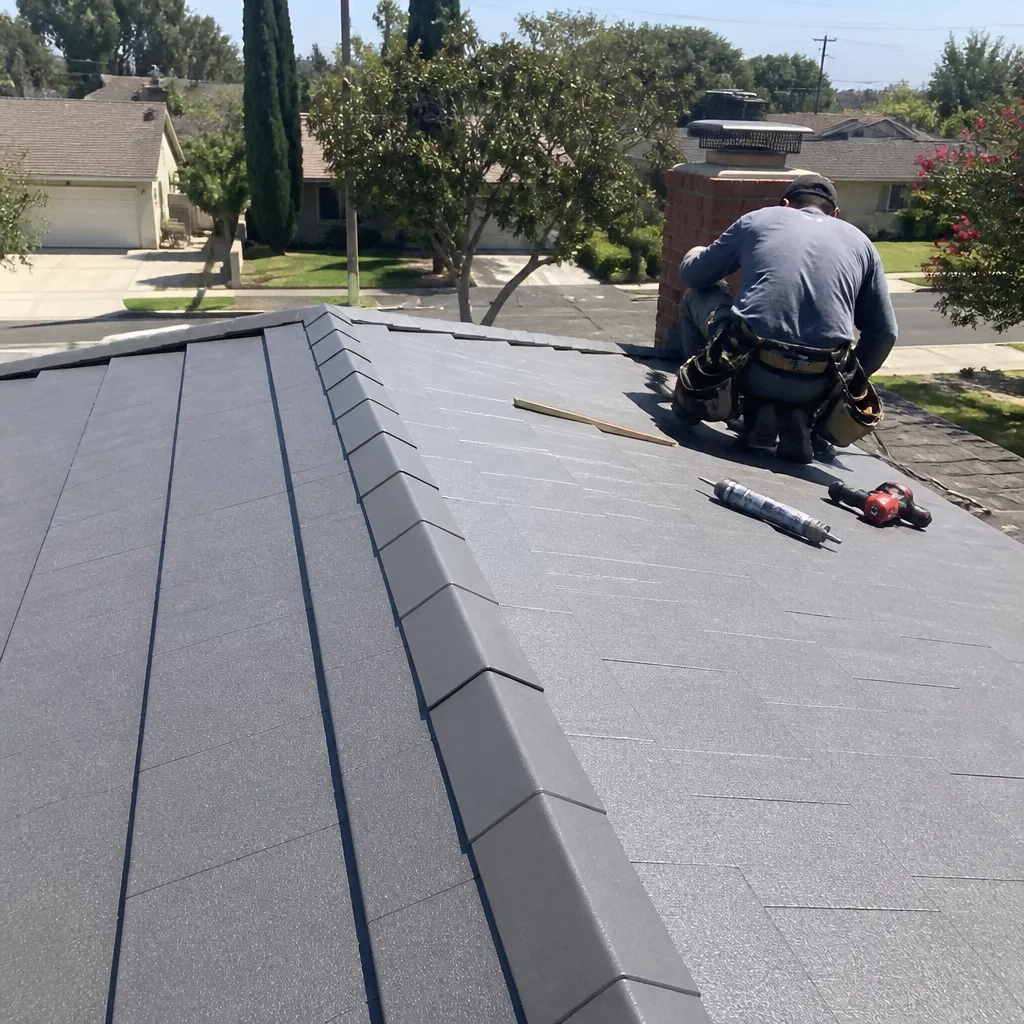 After
After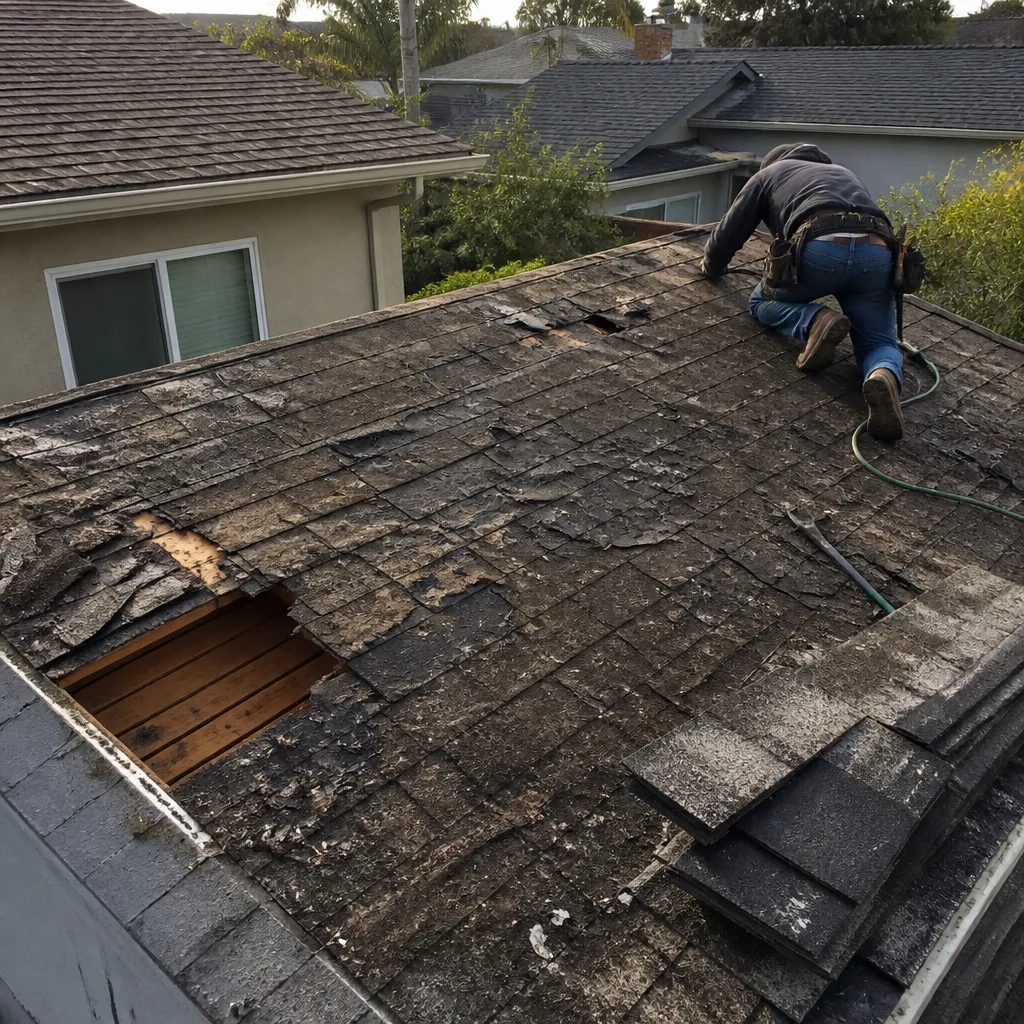 Before
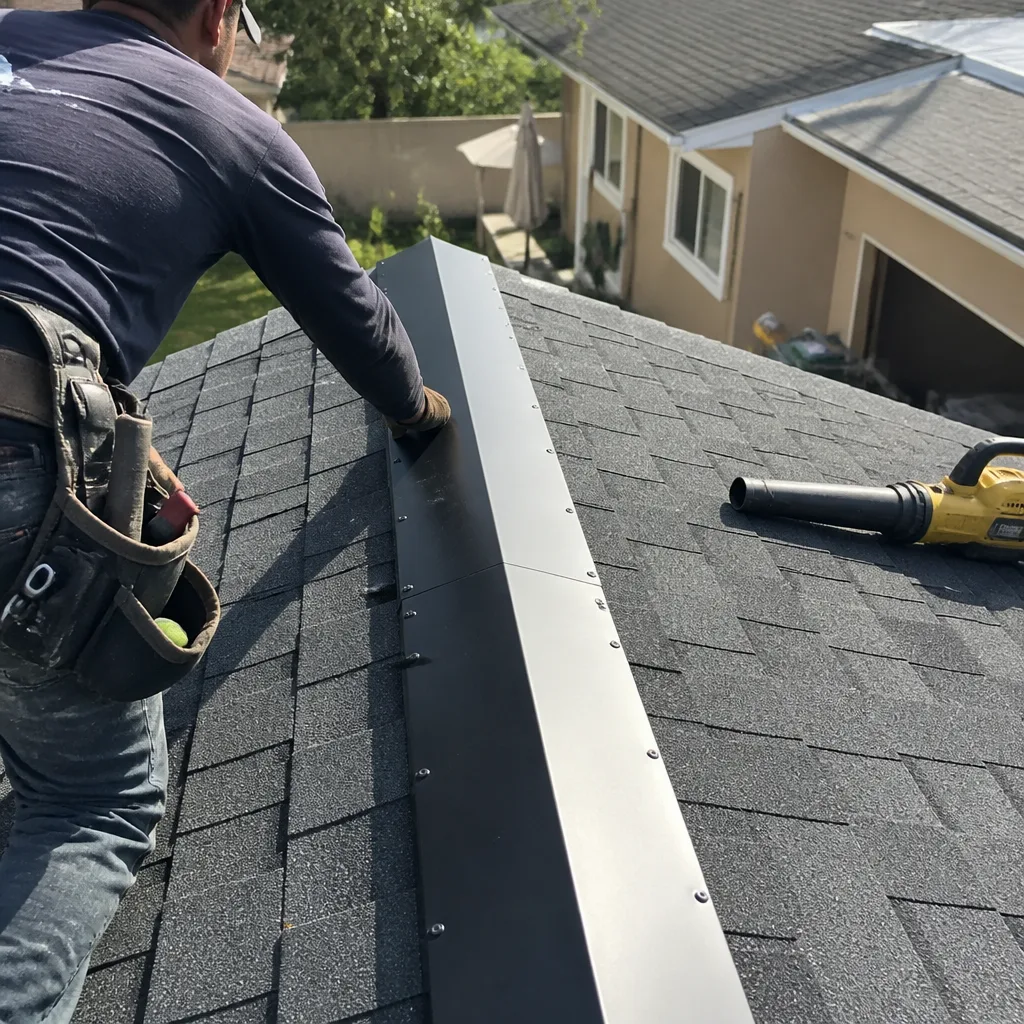 After
AfterRoofing Warning Signs: A Los Angeles Homeowner’s Reference Guide
In most American climates, a failing roof announces itself within days. Rain hits a compromised seam, water finds the ceiling, and the homeowner knows. Los Angeles breaks that rule. Our dry season runs eight months or longer, and during that stretch, a roof can degrade steadily while the interior stays bone dry. Then the first December storm arrives, and what looked like a cosmetic blemish becomes a ceiling stain, a buckled drywall seam, or water running down an interior wall. This guide-along with our Complete Guide to Roofing in Los Angeles-teaches you to read the exterior evidence before water ever enters the house, because in Los Angeles, the warning signs are almost always outside, visible from the ground, and present for months before the damage shows up indoors.
Quick Answer
The most common roofing warning signs in Los Angeles are cracked or slipped clay and concrete tiles, lifted flashing at roof-to-wall junctions and chimneys, granule accumulation in gutters and downspouts, algae streaking or moss growth on roof surfaces, and rusted or corroded pan flashings visible at tile edges. None of these require getting on the roof to spot. If you see any of them, call a Los Angeles roofing contractor for an inspection before the next rain season, because dry months hide what the first storm will reveal.
Table of Contents
- 1. Tile Roof Warning Signs: What LA’s Dominant Roof Type Hides
- 2. Flashing Failure: The Most Common Water Entry Point in Los Angeles
- 3. Reading Granule Loss: What Your Gutters Tell You About Roof Aging
- 4. Biological Warning Signs: Algae, Moss, and Soft Spots Before Interior Staining
- 5. Composition Shingle Warning Signs Specific to LA’s Climate
- 6. A Ground-Level Visual Triage System: Cosmetic vs. Structural
- 7. Los Angeles-Specific Risks: Santa Anas, Sun, and Seismic Movement
- 8. What to Do When Water Finally Appears Inside
1. Tile Roof Warning Signs: What LA’s Dominant Roof Type Hides
Clay and concrete tile roofs cover a large share of Los Angeles homes, from the Spanish-style ranches of the San Fernando Valley to the hillside properties in Silver Lake and Echo Park. Tile is durable, often lasting 50 years or more, but it fails in ways that look nothing like shingle failure. And because tile is heavy and rigid, homeowners tend to assume it’s bulletproof. It is not.
The most common tile roof failure we see in Los Angeles is not the tile itself, it’s the mortar and flashing system that holds the tile in place. Here are the specific warning signs to look for:
- Cracked or missing mortar at ridge caps and hip lines. The mortar beds along the peaks of your roof hold ridge tiles in place. In LA’s heat, this mortar dries, shrinks, and cracks. Once a ridge tile loosens, wind gets under it, and the next Santa Ana event can send it into your yard or a neighbor’s car. Cracked mortar is visible from the ground as dark gaps or missing chunks along the ridge line.
- Slipped or misaligned tiles. If a row of tiles looks uneven, with individual tiles sitting slightly lower or higher than their neighbors, something underneath has shifted. This can be a broken batten, a failed nail, or decking movement. Slipped tiles create gaps where water runs directly onto the underlayment, which is the last line of defense before your ceiling.
- Corroded pan flashings. Tile roofs use metal pan flashings beneath each tile junction to channel water into the gutter system. After 20 to 30 years in LA’s sun and occasional coastal salt air, these pans rust through. You can spot corroded pans by looking up at tile edges from the ground, if you see rust-colored streaks running down from under tiles, the pans are failing.
- Broken tile corners along the eaves. The bottom row of tiles takes the most abuse from wind, ladders, and tree branches. A missing corner on an eave tile is not cosmetic, it exposes the underlayment to direct sun, which accelerates its breakdown.
Tile roof maintenance in Los Angeles is not optional. The climate here is hard on the components that hold tile in place, even when the tile itself looks brand new.
2. Flashing Failure: The Most Common Water Entry Point in Los Angeles
Ask any experienced Los Angeles roofer what causes the most leaks, and the answer is rarely the shingle or tile surface. It’s the flashing. Flashing is the metal material installed wherever the roof meets something else, chimneys, walls, dormers, skylights, vents, and valleys. In LA, flashing fails faster than roof covering because it expands and contracts with temperature swings, corrodes in coastal air, and gets pulled apart by seismic movement.
Here’s what lifted or separated flashing looks like from the ground:
- A visible gap between the metal and the wall or chimney. Flashing should sit flush against the surface it protects. If you see daylight or a shadow gap where the metal meets the chimney or wall, water is getting behind it.
- Bent or wavy flashing lines. Metal that’s been pushed by heat expansion or ground movement will ripple. Rippled flashing pulls away at the corners, creating pinhole entry points that are almost invisible from the ground.
- Rust staining on the metal or the surface below it. Corroded flashing is compromised flashing. Rust means the metal has lost its protective coating and is actively thinning.
- Missing counter-flashing. Counter-flashing is the top layer that overlaps the base flashing, usually cut into the chimney or wall mortar. If it’s missing, you’ll see exposed caulking or sealant, which deteriorates within a few years of LA sun exposure. Sealant is a temporary patch, not a permanent water barrier.
Why is flashing the most common entry point in LA specifically? Because our dry season masks the problem. A lifted flashing seam can sit open through seven months of rain-free weather, collecting dust and pollen but no water. The homeowner sees nothing. Then a winter storm with wind-driven rain pushes water sideways into that gap, and the ceiling leak appears within hours. The homeowner thinks it’s a sudden failure. In reality, the flashing has been compromised since April.
3. Reading Granule Loss: What Your Gutters Tell You About Roof Aging
Composition shingle roofs, the standard asphalt shingle systems installed across Los Angeles from Westchester to Pasadena, shed granules as they age-something to weigh when choosing the right roofing brand for your Los Angeles home. Some granule loss is normal, especially in the first year after installation. But the pattern and volume of granules in your gutters tells a precise story about how fast your roof is aging and where the problem areas are.
Here’s a numbered approach to reading what’s in your gutters:
- Check after a dry period, not a storm. Wait at least a week after significant rain so the water flow doesn’t wash evidence away. In Los Angeles, that usually means checking in late fall, before the rainy season starts.
- Look at the volume. A thin, even dusting of granules spread along the gutter is normal. Piles of granules accumulating in corners or at downspout openings indicate accelerated wear.
- Check the color. If the granules in your gutter are a different shade than your shingles, that means the protective ceramic coating has worn off and you’re seeing the asphalt core. That’s late-stage granule loss.
- Map the distribution. Granules accumulate in the gutter directly below the roof slope that’s shedding them. If one section of gutter has noticeably more granules than another, that roof slope is aging faster, usually due to southern or western sun exposure, which is harsher in Los Angeles.
- Inspect the shingles themselves. From the ground, look for shiny or bald patches on shingles, especially on south-facing and west-facing slopes. Bald shingles have lost their UV protection and are deteriorating rapidly.
Granule loss matters because those granules are not decorative. They protect the asphalt core of the shingle from the sun, and in Los Angeles, that sun is the primary roof killer. A shingle that’s lost its granules on a west-facing slope in the San Fernando Valley can bake at 140 degrees on a summer afternoon. The asphalt underneath degrades, the shingle becomes brittle, and the next rain finds cracks that the granules once sealed.
If your roof is 15 to 20 years old and you’re seeing heavy granule loss on one slope, that slope may need replacement even if the rest of the roof looks serviceable. A Roof Repair in Los Angeles professional can determine whether localized replacement is viable or whether the underlayment has also degraded to the point where a full section replacement is needed.
4. Biological Warning Signs: Algae, Moss, and Soft Spots Before Interior Staining
Before water stains appear on your ceiling, biological growth often appears on your roof. Algae, moss, and lichen are not just cosmetic issues, they’re evidence that moisture is present on or under the roof surface, and in Los Angeles, that moisture has to come from somewhere specific.
Here’s what each biological warning sign tells you:
- Algae streaking. Black or dark green streaks running down roof slopes are colonies of gloeocapsa magma, a cyanobacteria that feeds on the limestone in asphalt shingles. It spreads via airborne spores and thrives in humid, shaded conditions. In Los Angeles, algae streaks are most common on north-facing slopes and roofs shaded by large trees, think mature oaks in Pasadena or overhanging eucalyptus in the hills. Algae itself doesn’t destroy shingles, but it indicates a roof surface that’s staying damp, which shortens shingle life.
- Moss colonization. Moss is rarer in Los Angeles than in the Pacific Northwest, but it appears wherever standing water or persistent shade exists. Moss grows in clumps, lifting shingle edges and trapping water against the roof surface. On tile roofs, moss can grow between tiles and block the drainage channels, forcing water sideways into the underlayment. If you see moss on any part of an LA roof, there’s a drainage problem somewhere nearby.
- Soft spots underfoot. Soft spots in the roof decking are the biological warning that requires the most attention. If a technician or homeowner walks a roof and feels a spongy area, that’s decking that’s been absorbing moisture. By the time the decking is soft, water has been entering for months or longer. In Los Angeles, this often traces back to a flashing failure that went unnoticed through an entire dry season, and the water sat trapped against the wood.
- Lichen growth on tile. Lichen attaches to concrete and clay tile with root-like structures that etch into the tile surface. Over time, this creates micro-cracks that expand with heat and cold. Lichen on tile is usually a sign that the roof is in a shaded, moist microclimate, and it’s worth having a professional check the underlayment beneath those tiles.
The key insight for Los Angeles homeowners: biological growth means water is not draining properly. It may not have reached your ceiling yet, but it’s working on it. These signs show up months or even years before interior staining, which means you have time to act, but only if you’re looking.
5. Composition Shingle Warning Signs Specific to LA’s Climate
Composition shingle roofs in Los Angeles face a different wear pattern than the same roof in Chicago or Seattle. Our damage comes primarily from UV radiation, heat cycling, and dry wind, not from ice, snow, or continuous rain. That changes which warning signs matter most.
Here are the shingle-specific warning signs that Los Angeles homeowners should watch for:
- Curling at the edges. In cold climates, curling is often caused by ice dams or poor attic ventilation. In Los Angeles, curling is primarily a heat and age response. Shingles curl when the asphalt core dries out and the shingle loses flexibility. Curled edges create wind catches, and the next Santa Ana can peel entire shingles off the roof.
- Cracking perpendicular to the shingle length. Surface cracks that run across the shingle face indicate thermal stress. These cracks form when shingles expand in afternoon heat and contract at night. In LA’s high-desert-adjacent communities like Santa Clarita and the Antelope Valley, daily temperature swings of 30 to 40 degrees accelerate this cracking dramatically.
- Blistering. Small raised bumps on the shingle surface are blisters caused by trapped moisture flashing to steam in extreme heat, or by improper ventilation during installation. Blisters eventually pop, leaving small craters that collect water and UV damage. Blistering is most common on roofs in the San Fernando Valley, where summer temps exceed 100 degrees regularly.
- Shingle cupping at the center. When the center of a shingle sinks while the edges stay raised, that’s cupping. It usually indicates that the underlayment beneath has failed or the decking is warping. By the time shingles cup visibly from the ground, the water intrusion is established.
A Los Angeles composition roof that’s been properly installed and ventilated can last 25 to 30 years, but only if it’s checked regularly during that lifespan. We recommend a professional inspection every 2 to 3 years, with a specific focus on the south and west slopes, which age fastest in our climate.
6. A Ground-Level Visual Triage System: Cosmetic vs. Structural
You don’t need to climb on your roof to assess its condition. You need a systematic way to look. Here’s a numbered visual triage system that works from the ground and requires nothing more than your eyes, a pair of binoculars if you have them, and about 20 minutes.
- Walk the perimeter at mid-morning or late afternoon. The low sun angle creates shadows that make irregularities easier to see. Look at the roof from each side of the house separately.
- Check the ridge line first. Is it straight? Any sagging between supports is structural, not cosmetic. A ridge that dips in the middle indicates decking or framing problems.
- Scan for tile or shingle deviations. On tile roofs, look for tiles that sit at different angles than their neighbors. On shingle roofs, look for lifted edges, missing tabs, or color variations that indicate patch repairs.
- Examine every flashing junction. Chimneys, vents, wall intersections, skylights. Look for gaps, rust, or visible sealant that’s pulling away. Flashing problems are structural, not cosmetic.
- Look at the eaves and fascia. Water damage often shows up at the roof edge first. Look for water stains on fascia boards, peeling paint, or soft-looking wood. All are evidence of drainage problems.
- Check the gutters and downspouts. Granule accumulation, rust, sagging, or separation at the seams. Your gutters carry away the water your roof sheds. If they’re failing, water is backing up onto the roof edge.
Here’s the triage rule: if something looks like it’s out of position, meaning a tile that’s shifted, flashing that’s pulled away, or a shingle that’s lifted, that’s a structural concern that needs professional attention. If something looks like it’s changed color, meaning algae, granule loss, or sun fading, that’s aging, which needs monitoring but may not require immediate action. The exception is rust on metal components, which is always structural because rust means active corrosion.
7. Los Angeles-Specific Risks: Santa Anas, Sun, and Seismic Movement
Los Angeles roofing faces three environmental forces that most of the country never deals with, and each one creates its own warning signs.
Santa Ana winds. Between September and January, the Santa Anas can hit sustained speeds of 40 to 60 mph with gusts over 80. These winds do three things to roofs. They lift tiles and shingles that aren’t fully secured. They drive debris, tree branches, and roof tiles from neighboring properties into your roof surface. And they push rain sideways into flashing gaps that shed water fine during a vertical downpour. If your roof survives a Santa Ana event intact, inspect it afterward anyway. We see more post-wind damage in Los Angeles from lifted edges and loosened fasteners than from direct impact.
UV radiation and heat. Los Angeles gets over 280 sunny days per year, and the UV index regularly reaches high and very high levels from April through September. This constant exposure dries out roofing materials in ways that rain-country roofs never experience. Asphalt shingles lose their oils and become brittle. Underlayment dries and cracks. Mortar at ridge lines shrinks and separates. Wood decking expands and contracts with temperature, loosening fasteners over time. A roof that looks intact from the ground may have severely degraded materials that only reveal themselves when you walk the roof or when water finally finds a path through.
Seismic movement. Los Angeles sits in one of the most seismically active regions in the country, and even small earthquakes that don’t damage a home’s structure can shift a roof’s components. Chimneys move slightly relative to the roof deck, which breaks the sealant bond and opens flashing gaps. Roof-to-wall junctions shift, pulling counter-flashing away from the wall surface. These movements are usually too small to see, but their cumulative effect over years of minor seismic activity creates water entry points that widen with each event.
If you’ve experienced any noticeable earthquake shaking in the past year, it’s worth a quick roof inspection afterward. The shift may be subtle, but it compounds with every subsequent event, and the first sign you’ll see from the ground is usually a small gap at a chimney or wall flashing junction.
8. What to Do When Water Finally Appears Inside
When water does show up inside a Los Angeles home, it’s usually after a long dry period, which makes the event feel sudden and dramatic. A ceiling stain spreads, paint bubbles, or water drips onto a floor. The immediate response matters for both damage control and the eventual repair.
Here’s the sequence we recommend:
- Contain the water. Move furniture and valuables away from the affected area. Place buckets or containers under active drips. If the ceiling is bulging, place a bucket under the bulge and consider puncturing it with a screwdriver to release the water in a controlled location rather than letting it spread through the ceiling cavity.
- Document the damage. Photograph the stain, the drip, and any visible water path. These photos are useful for insurance claims, even if you ultimately pay out of pocket.
- Look for the exterior warning signs described in this guide. In most cases, the interior water location will correlate with a flashing junction, a slipped tile, or a granule-bald section of shingles that’s been visible from outside for months.
- Call a professional. Water intrusion has a source, and until that source is fixed, every rain event will add to the damage. A professional inspection can identify whether the problem is localized, in which case a repair makes sense, or systemic, in which case replacement may be the better long-term investment.
One note on timing: in Los Angeles, you have a window after the first rain event where the weather usually clears. That’s the time to schedule an inspection, before the next storm arrives. Waiting through a dry spell means the next rain reopens whatever path water found the first time, and each event expands the damage footprint.
Common Mistakes to Avoid
- Ignoring exterior signs because the interior is dry. In Los Angeles, this is the most expensive mistake a homeowner can make. The dry season hides roof failures. If you see cracked ridge mortar or lifted flashing in August, don’t wait for a December rain to confirm the problem.
- Sealing over flashing gaps with caulk or roof patch compound. Sealant is a temporary band-aid. It degrades in LA’s UV exposure within a season or two, and it doesn’t address the underlying movement or corrosion that created the gap.
- Replacing visible tiles or shingles without checking the underlayment. The surface layer is what you see, but the underlayment is what keeps water out. If water has been entering through a shifted tile for eight dry months, the underlayment beneath is damaged, and replacing the tile alone leaves that damage in place.
- Assuming tile roofs don’t need maintenance. Tile lasts a long time, but the mortar, flashings, and underlayment beneath it do not. Neglecting these components turns a durable roof into a slow-motion failure.
- Walking the roof for an inspection without knowing what you’re looking for. If you don’t know how to identify decking movement, batten failure, or underlayment condition, a visual walk gives you false confidence. Ground-level triage combined with professional inspection is more reliable.
- Waiting until a complete failure to budget for replacement. Roof replacement in Los Angeles is a significant investment, but it’s cheaper when planned than when forced. A homeowner who tracks granule loss and flashing condition can plan a replacement on their schedule. A homeowner who ignores those signs gets a ceiling collapse and an emergency project.
When to Call a Professional
Some roofing situations are safe to monitor, and some demand professional attention. Call a Los Angeles roofing contractor when you see any of the following: cracked or missing ridge mortar, shifted or slipped tiles, rust staining below tile edges or on flashing, heavy granule accumulation in gutters with corresponding bald patches on shingles, moss growth on any roof surface, soft spots detected during an inspection, or water staining on ceilings during or after rain. These are all signals that water has found or is about to find a path through your roof. Mercer Roofing offers free estimates in Los Angeles, call (743) 200-8347 to schedule an inspection. A Roofing Company in Los Angeles with experience in the city’s specific tile, flashing, and climate conditions can identify the source of a problem and give you a written price before any work starts.
Frequently Asked Questions
Many Los Angeles roofing companies, including Mercer Roofing, offer inspections at no cost as part of the estimate process. The inspection identifies the condition of your roof surface, flashing, underlayment, and drainage components, and the written estimate that follows gives you a clear picture of what, if anything, needs attention. Call (743) 200-8347 to schedule yours.
Tile roofs in Los Angeles typically need repair when the damage is localized, cracked ridge mortar, a few slipped tiles, or isolated flashing failure. Full replacement or re-roofing is indicated when the underlayment beneath the tile has degraded across large sections, when multiple flashings have failed, or when the tile itself is extensively cracked or slipping. A professional inspection can tell you which situation applies. Call (743) 200-8347 for an exact assessment.
Roof leak repairs in Los Angeles typically range from $350 to $900 for a localized flashing repair or tile replacement, while more extensive repairs involving underlayment replacement can run $1,500 to $4,000 or more. The exact cost depends on the source of the leak, the roof type, and how long water has been entering. Mercer Roofing provides a written price before any work starts, so you’ll know the cost up front. Call (743) 200-8347 for your estimate.
Given LA’s intense sun, Santa Ana winds, and seismic activity, we recommend a professional roof inspection every 2 to 3 years, plus a visual check after any major wind event or noticeable earthquake. For more guides & resources on protecting your roof, see our blog. Most roofing failures in Los Angeles develop slowly and predictably, and regular inspections catch them before water enters the house.
It depends on the cause. Damage from sudden events like windstorms, falling trees, or fire is typically covered. Damage from gradual wear, aging, or long-term water intrusion is generally not covered. This is why early detection matters so much in Los Angeles, a problem that starts as a maintenance issue can become an insurance claim if left long enough to cause structural damage.
Partial roof replacement is possible when the damage is concentrated on one slope or section, such as a south-facing slope that has aged faster than the rest of the roof. However, matching new materials to old is imperfect, and if the rest of the roof is aging at a similar rate, full replacement may be more cost-effective in the long run. A professional assessment can help you weigh the tradeoffs. Call (743) 200-8347 to discuss your specific situation with Mercer Roofing.
The Bottom Line
Los Angeles roofing failures don’t follow the same script as roofing failures elsewhere. They develop over long dry stretches, hide behind the exterior of a house that looks perfectly fine, and announce themselves only when rain finally arrives. The warning signs are readable long before that happens. Cracked ridge mortar, lifted flashing, granule accumulation in gutters, biological growth on roof surfaces, and the slow creep of tile movement all tell a story that’s visible from the ground. Learning to read that story is the difference between a planned repair and an emergency call, between a written estimate and a water-damaged ceiling. If you’ve spotted any of the signs in this guide, or if you simply want a professional assessment of what your Los Angeles roof is telling you, call Mercer Roofing home at (743) 200-8347 or visit our Roof Installation in Los Angeles page to learn more. Estimates are free and every inspection comes with a written price before any work begins.
Written by Grant Whitlock, Owner at Mercer Roofing, serving Los Angeles since 2000.