
Last updated October 9, 2026
Free roof inspection with deck photos before we talk money - GAF and Owens Corning certified installation
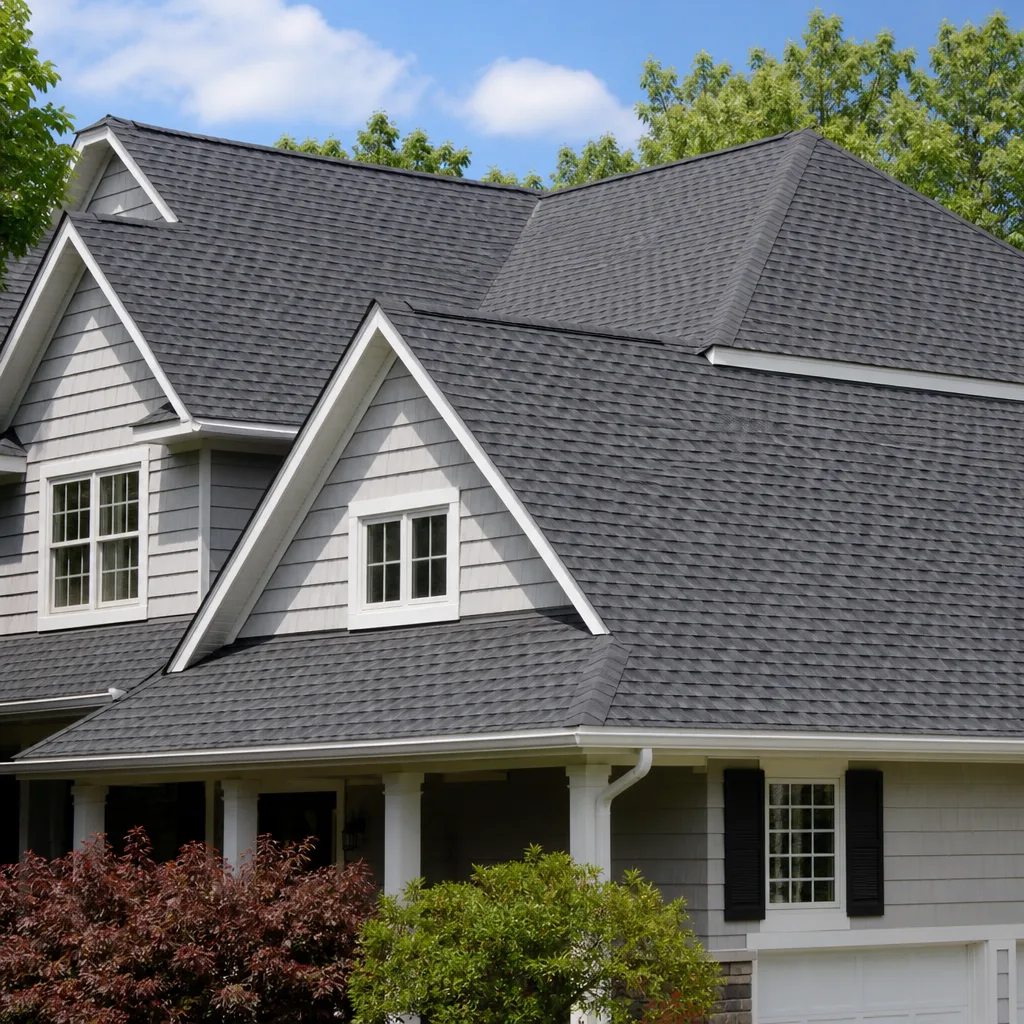
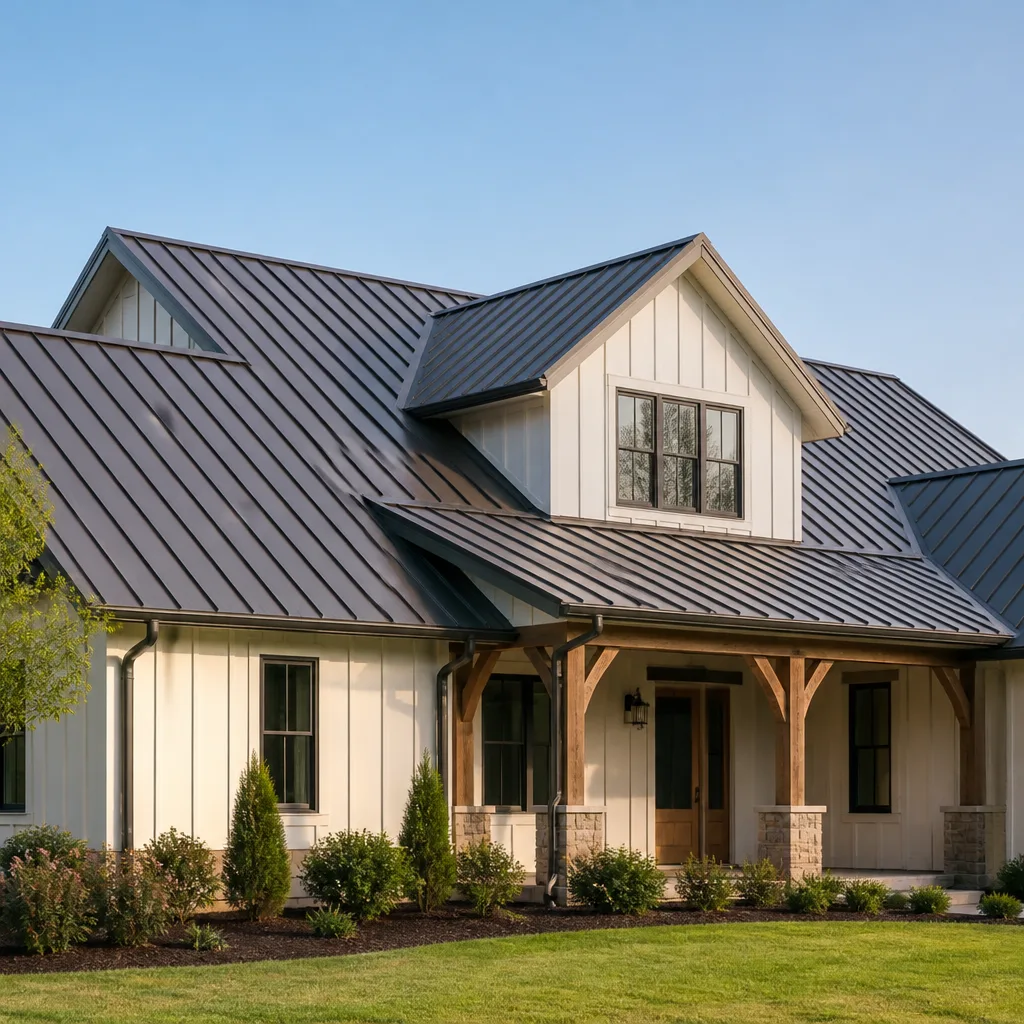
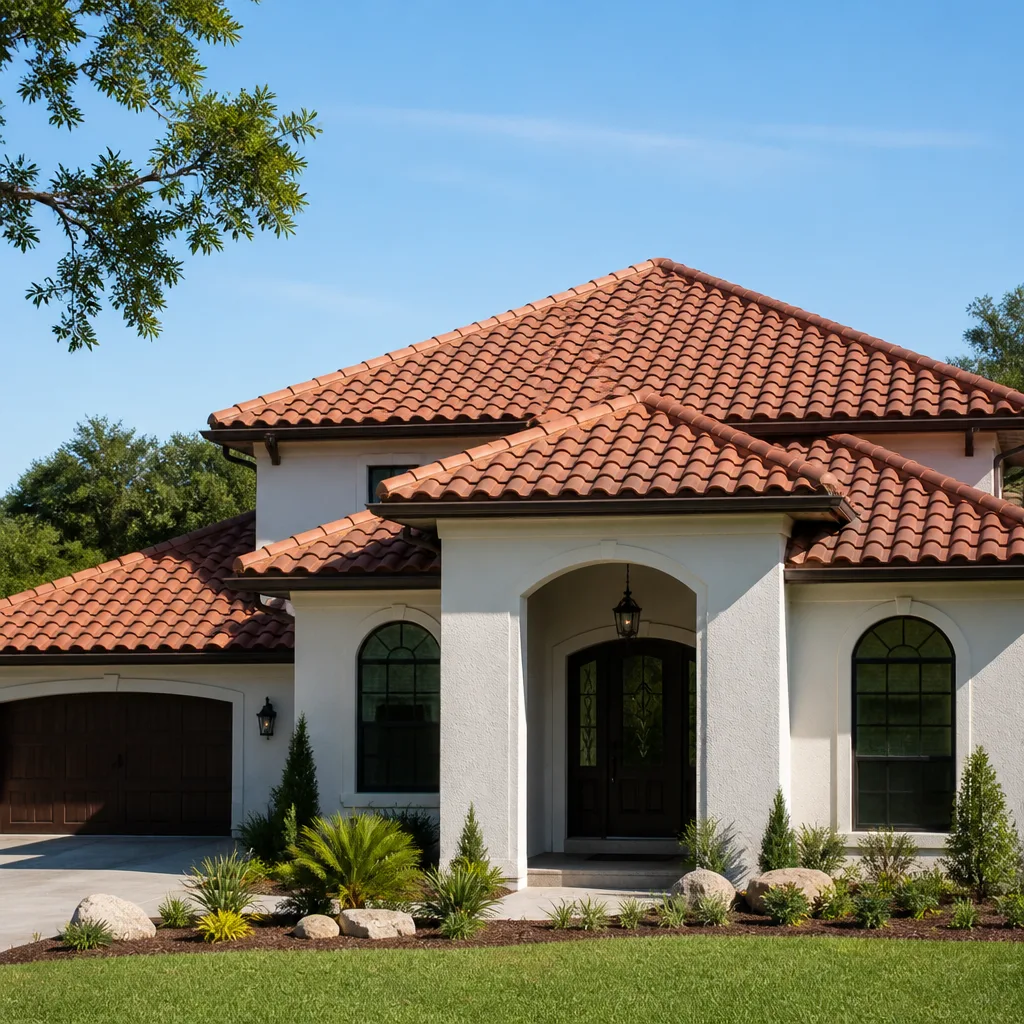
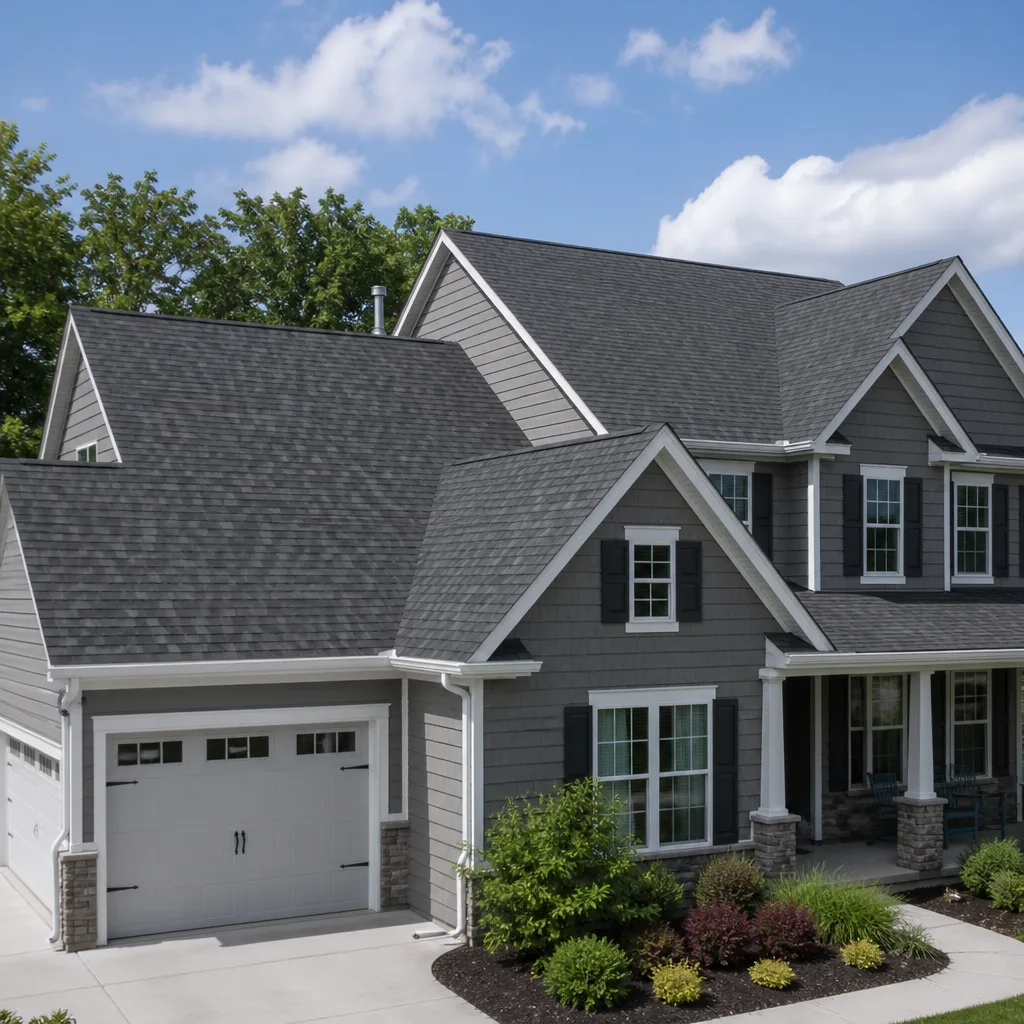
 Before
 After
After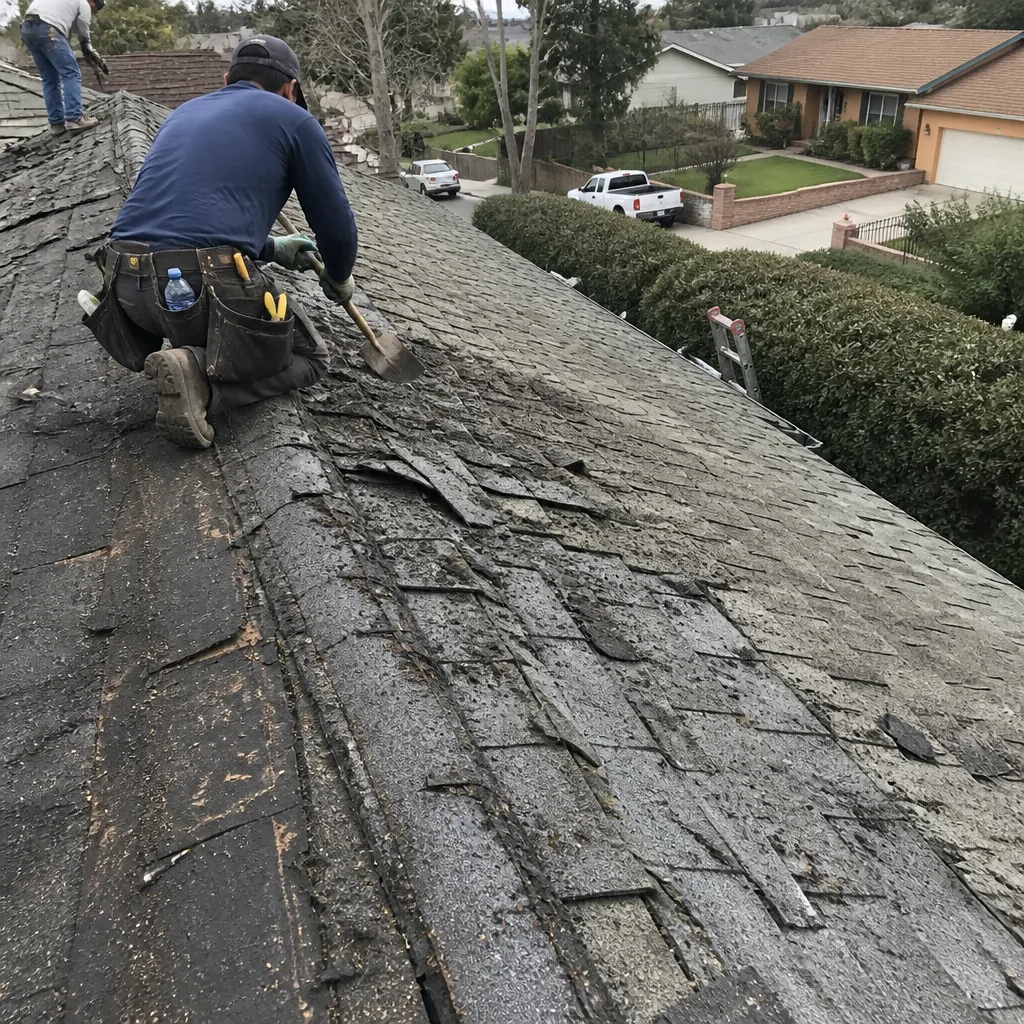 Before
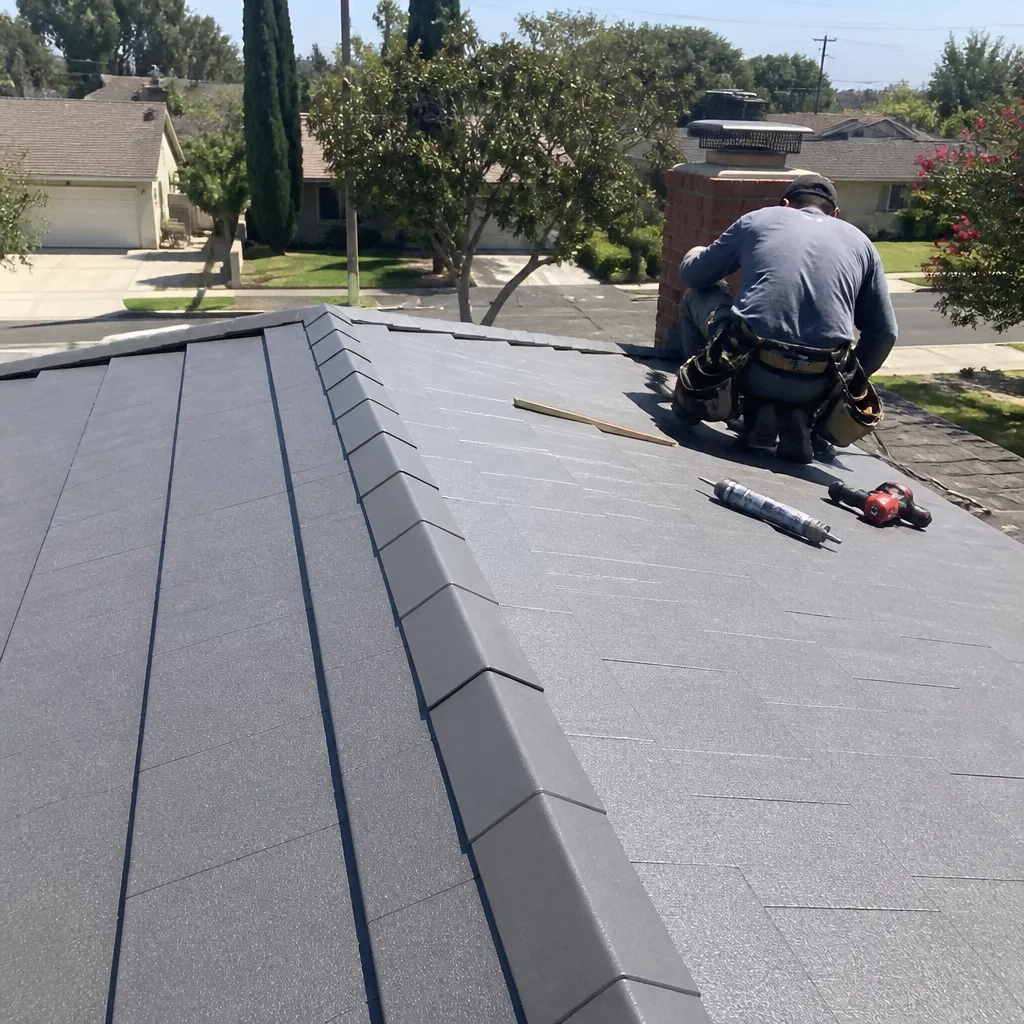 After
After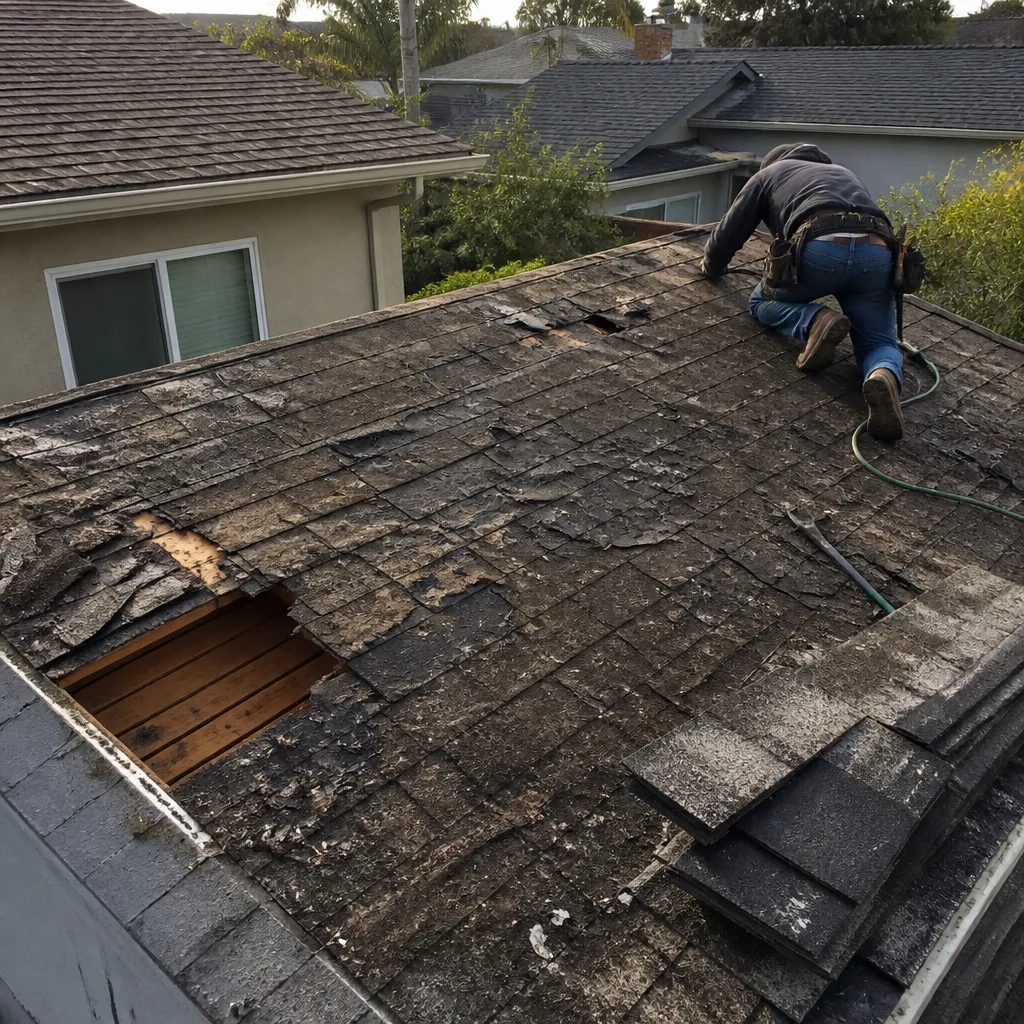 Before
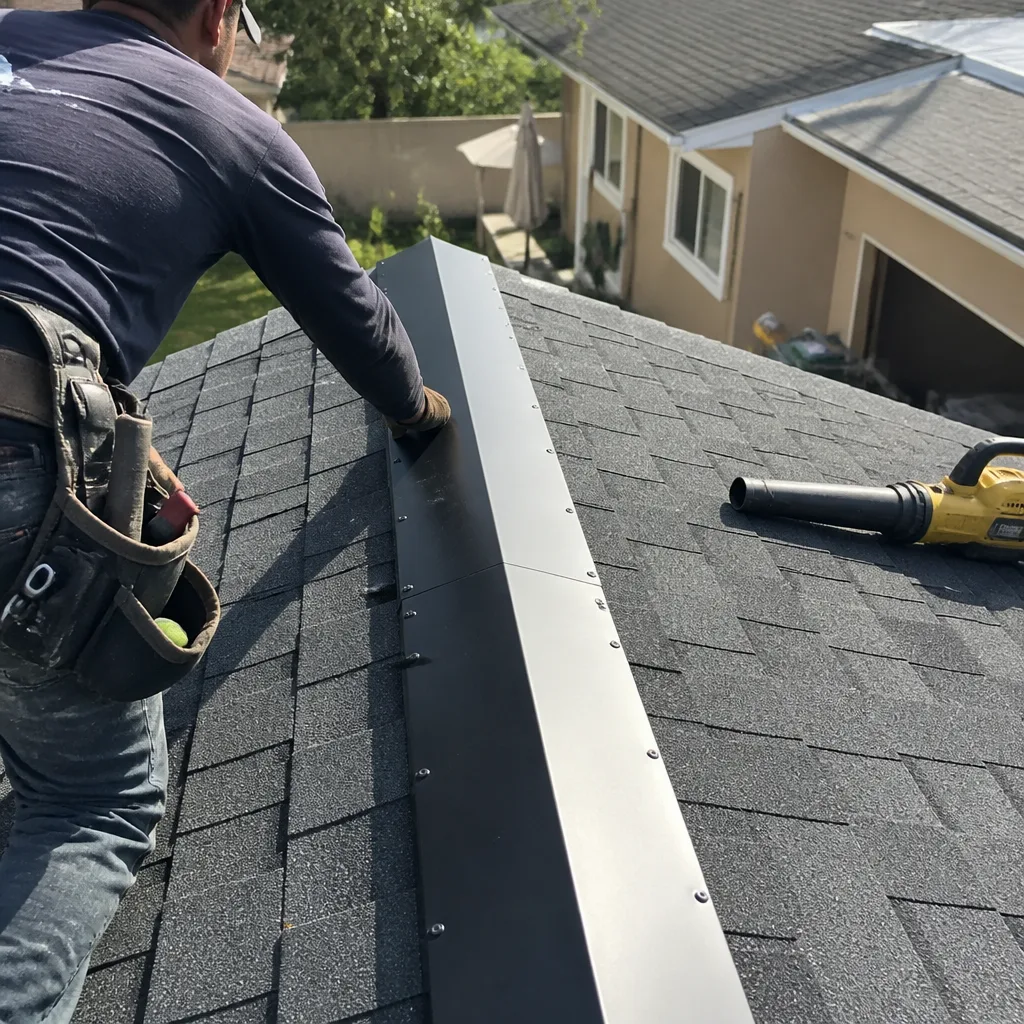 After
AfterRoofing Cost Breakdown: The Los Angeles Homeowner’s Reference for 2026
Two Los Angeles homeowners with nearly identical 1,800-square-foot houses in the same neighborhood can get re-roofing quotes of $14,000 and $22,000 for what sounds like the same job. Both quotes can be technically honest. The difference is almost never dishonesty; it’s scope. One contractor priced a tear-off, decking inspection, new underlayment, and architectural shingles with a permit. The other priced a nail-over on existing shingles with no permit and no decking review. If you can’t see the line items, you can’t see the difference. This Los Angeles guide walks you through real 2026 numbers, the exact line items you should see on a legitimate estimate, and the local factors that move pricing up or down. For related reading, see our Roofing Warning Signs: A Los Angeles Homeowner’s Reference Guide.
Quick Answer
Roofing costs in Los Angeles for 2026 run from roughly $6,500 for a basic composition shingle roof on a small single-story home to $65,000+ for a large two-story with clay tile, steep pitch, and decking replacement. Most mid-sized Los Angeles homes with composition shingles land between $11,000 and $19,000. Whatever your roof type, the number that matters isn’t the bottom line; it’s the seven line items behind it, which we detail below.
Table of Contents
- Los Angeles 2026 Cost Per Square Foot by Roofing System
- The Seven Line Items Every Legitimate LA Roofing Contract Should Itemize
- Why Los Angeles Pricing Differs from National Averages
- What Legitimately Drives Price Variation in LA
- What Should Never Inflate a Roofing Quote
- How to Read an Itemized Estimate vs. a Single-Number Proposal
- Common Mistakes to Avoid
- When to Call a Professional
- Frequently Asked Questions
- The Bottom Line
Los Angeles 2026 Cost Per Square Foot by Roofing System
Los Angeles roofing costs are quoted by “square,” which is 100 square feet of roof surface, not 100 square feet of home floor space. A 2,000-square-foot home often has 2,400 to 3,000 square feet of roof once you account for pitch, overhangs, and multiple planes. Here’s what we’re seeing across Los Angeles in 2026 for the four dominant roofing systems.
Composition Shingle
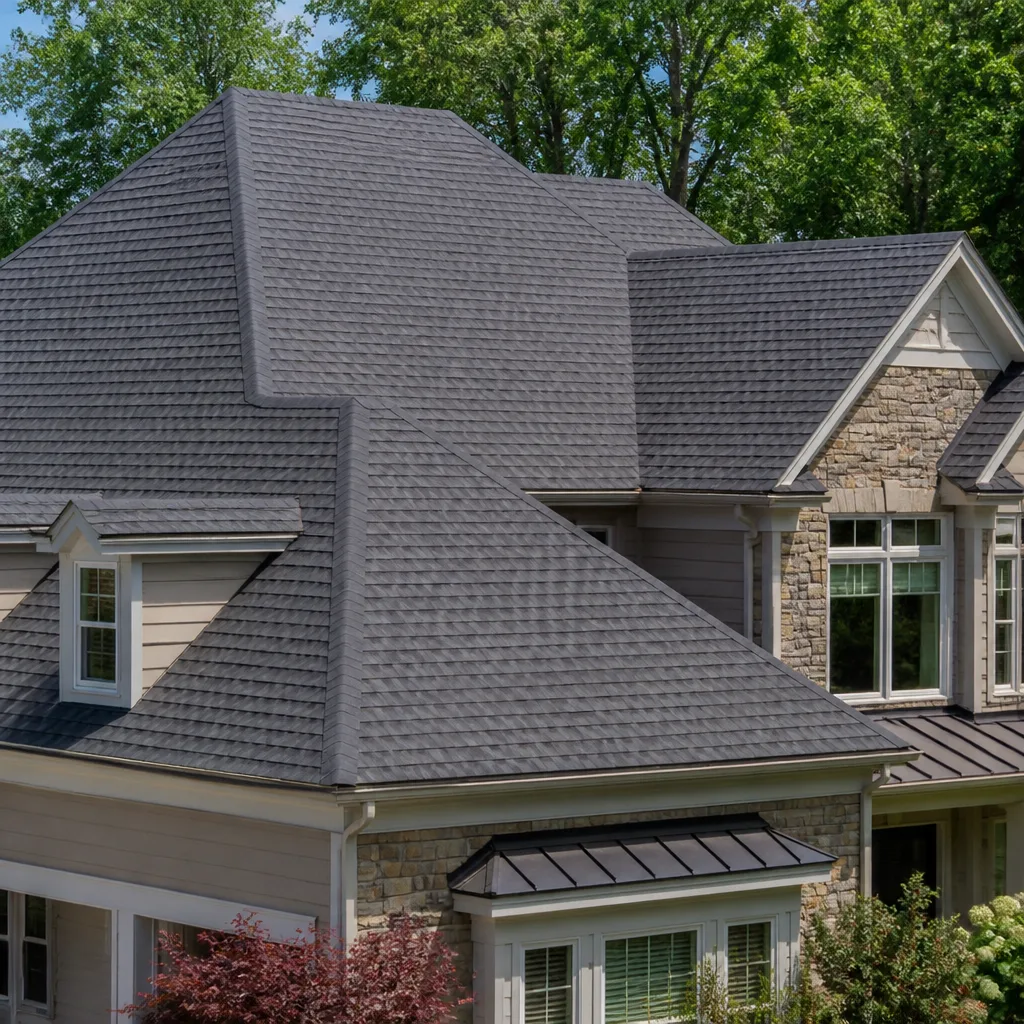
Low band: $420 – $520 per square. Mid band: $520 – $700 per square. High band: $700 – $950 per square. This remains the most common roofing material in Los Angeles. The mid band buys architectural shingles from brands like GAF, CertainTeed, or Owens Corning with full tear-off, new underlayment, and permit. The low band usually means three-tab shingles, a nail-over, or an economy underlayment. The high band typically reflects a steep pitch, two-story access, or upgraded underlayment like peel-and-stick over the entire deck. For a typical 2,400-square-foot roof, expect $12,500 to $16,800 in the mid band.
Concrete Tile
Low band: $900 – $1,200 per square. Mid band: $1,200 – $1,600 per square. High band: $1,600 – $2,100 per square. Concrete tile is heavy and common in Los Angeles hillside neighborhoods like Mount Washington, Eagle Rock, and Silver Lake. The broad range reflects tile profile, underlayment specification, and whether existing tile is being re-set or replaced. Most concrete tile roofs in Los Angeles last 40 to 60 years, but the underlayment fails first, often around year 25 to 30. A full re-roof with new tile on a mid-sized home runs $28,000 to $45,000.
Clay Tile
Low band: $1,100 – $1,400 per square. Mid band: $1,400 – $1,800 per square. High band: $1,800 – $2,600 per square. Clay tile is the premium standard in Los Angeles for Spanish and Mediterranean style homes, especially in neighborhoods like Hancock Park, Larchmont, and the older parts of Pasadena. It costs more than concrete because of the material itself and because Clay tile is more brittle and more labor-intensive to work around. Replacement of broken tiles during a re-roof is normal, and each replacement tile costs $15 to $45 depending on profile. A full clay tile roof on a 3,000-square-foot roof surface can exceed $55,000.
TPO and Flat Roof Membrane
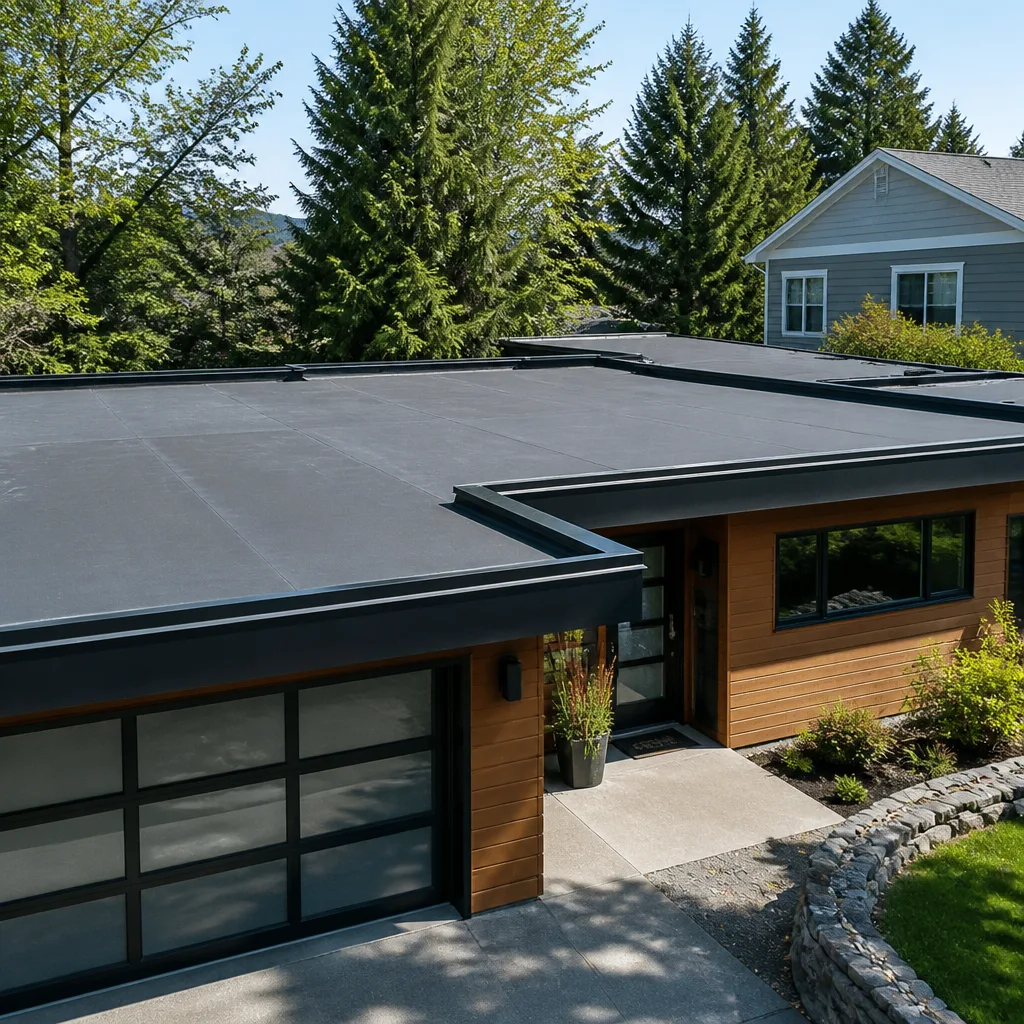
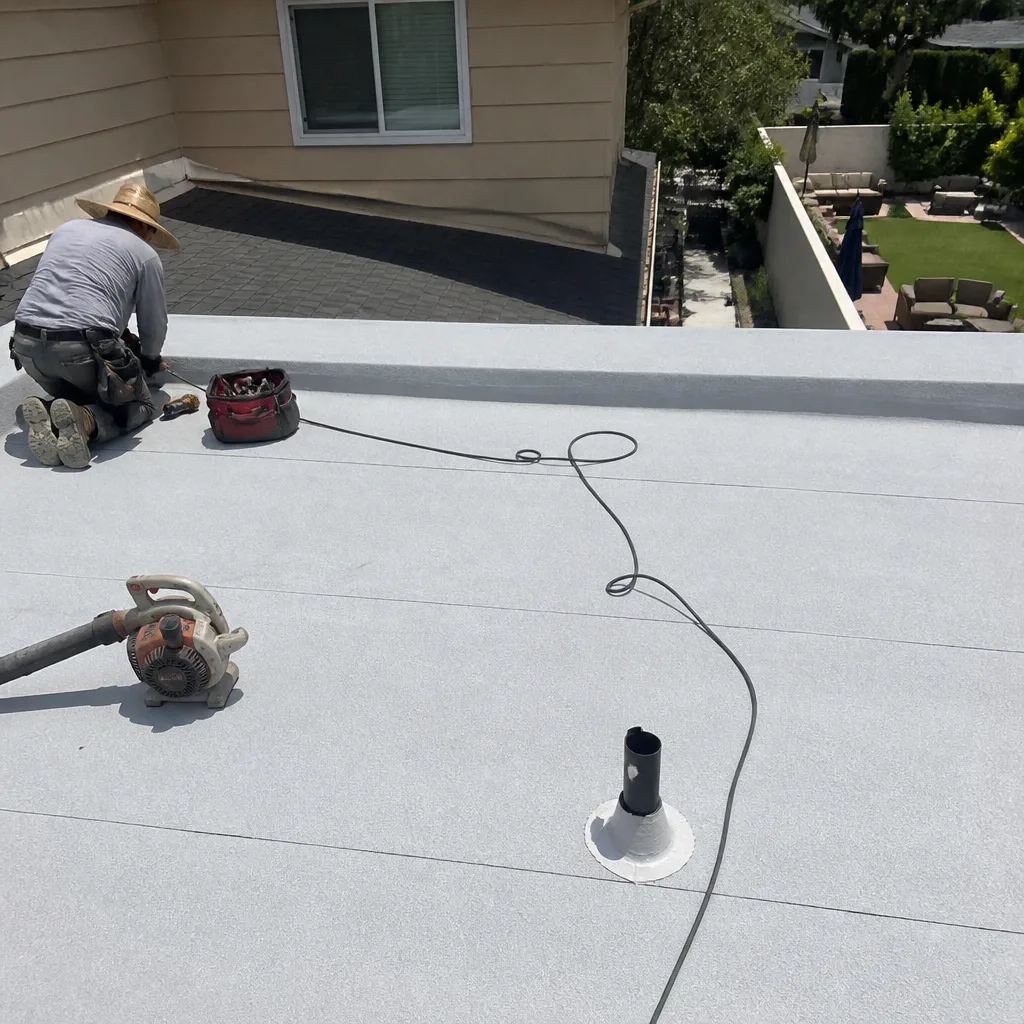
Low band: $650 – $850 per square. Mid band: $850 – $1,100 per square. High band: $1,100 – $1,400 per square. Flat and low-slope roofs are everywhere in Los Angeles, from mid-century homes in the hills to commercial-style residential boxes in Venice and Mar Vista. TPO, PVC, and modified bitumen are the three common membranes. TPO is the most common residential choice in 2026. The price includes tear-off of the old membrane, insulation inspection and replacement as needed, and new membrane installation. A typical 1,200-square-foot flat roof runs $10,000 to $13,500.
The Seven Line Items Every Legitimate LA Roofing Contract Should Itemize
If a Los Angeles roofing estimate gives you one number and a handshake, you don’t have an estimate. You have a guess. Here are the seven line items that should appear, in writing, on every legitimate roof replacement or major repair contract in Los Angeles.
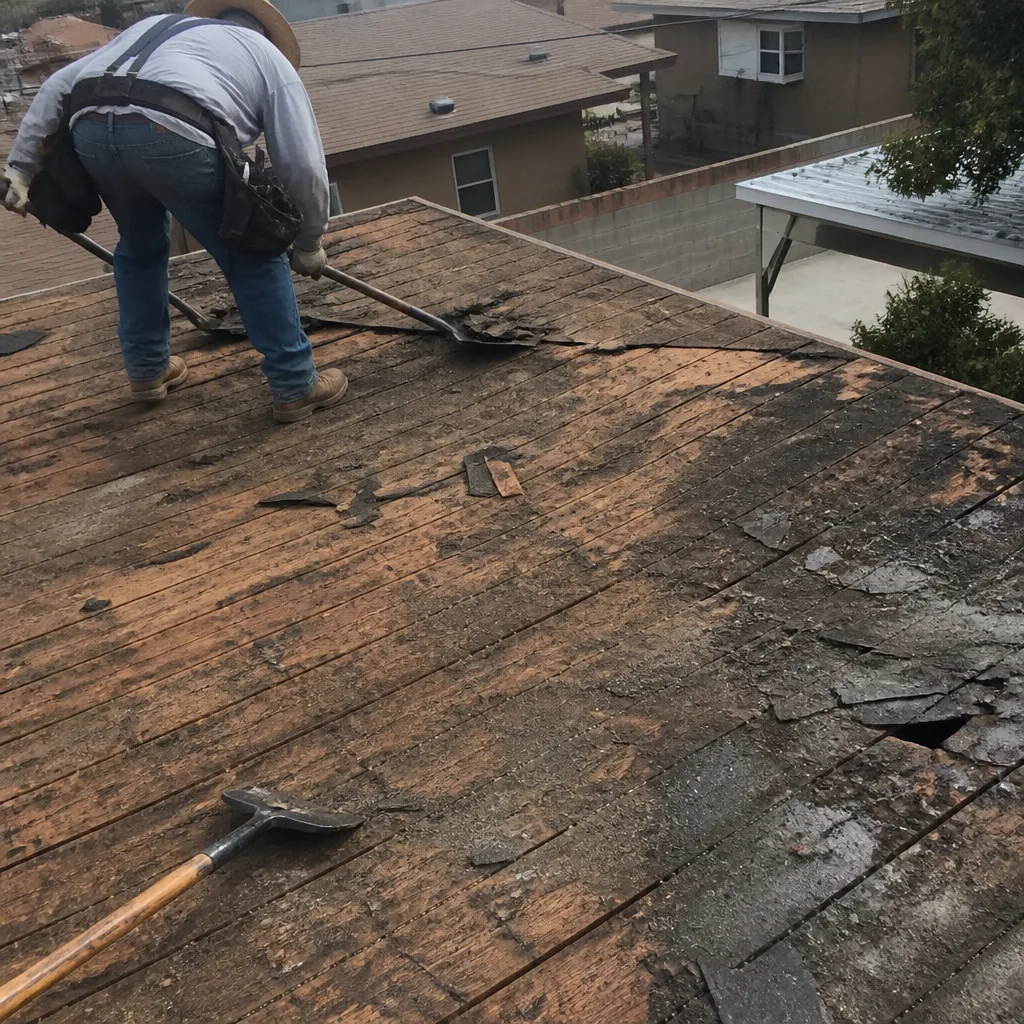
- Tear-off: Removal and disposal of existing roofing material, including felt, nails, and flashing. For an 1,800-square-foot house in Los Angeles, tear-off typically runs $2,500 to $4,500 depending on material weight and dump fees. Clay and concrete tile drive this number higher because of weight and debris volume.
- Decking inspection and repair: The plywood or OSB under your roofing material. Most Los Angeles homes have some dry rot around chimneys, valleys, and eaves, especially after the wet winters we’ve had. Contractors should inspect decking after tear-off and quote a per-sheet replacement cost, typically $90 to $140 per 4×8 sheet. If the estimate doesn’t mention decking, the contractor is either not planning to inspect it or planning to surprise you with a change order later.
- Underlayment: The water-shedding layer between decking and roofing material. Los Angeles building code requires specific underlayment types depending on roof slope and material. Standard synthetic underlayment runs $15 to $30 per square. Peel-and-stick self-adhered underlayment, now required in some Los Angeles fire zones, runs $45 to $75 per square. This line item matters more than most homeowners realize.
- Material: The actual shingles, tiles, or membrane. This is the line item most homeowners focus on, and it’s legitimately significant. Architectural shingles from GAF, CertainTeed, or Owens Corning run $140 to $220 per square. Atlas, IKO, and Tamko sit in a similar range with different aesthetic options. Concrete tile runs $250 to $500 per square. Clay tile runs $350 to $700 per square depending on profile and manufacturer, including Boral.
- Labor: Installation labor for the full crew. In Los Angeles, labor for a full re-roof typically runs $250 to $450 per square depending on pitch, access, and material type. Steep roofs in neighborhoods like Beachwood Canyon or Mount Washington command higher labor because of safety staging and slower work.
- Permit fee: The Los Angeles Department of Building and Safety charges roofing permit fees based on project valuation. Most residential re-roof permits in LA cost $300 to $1,200. The permit should be a line item, not buried in “administrative costs.” A contractor who won’t pull a permit, or who asks you to pull it yourself, is asking you to accept liability that should be theirs.
- Disposal: Dump fees, hauling, and site cleanup. In Los Angeles, roofing debris disposal typically runs $600 to $1,500 depending on material volume and weight. Clay and concrete tile are heavy and trigger higher disposal costs. Additionally, if your roof has asbestos-containing material, which is common on pre-1980 Los Angeles homes, abatement is a separate cost entirely and can add $3,000 to $10,000.
These seven line items are what a legitimate Los Angeles roofing estimate looks like. As the team at Mercer Roofing tells every homeowner: if a price doesn’t tell you what it includes, you can’t know what it excludes.
Why Los Angeles Pricing Differs from National Averages
National roofing cost guides will tell you a composition shingle roof averages $4.50 to $6.00 per square foot installed. Los Angeles runs 15 to 25 percent above that. Here’s what’s driving the difference, and why LA-specific pricing benchmarks matter.
First, labor. Los Angeles has one of the highest costs of living in the country, and skilled roofing labor reflects that. A journeyman roofer in LA commands $28 to $42 per hour plus benefits, workers’ compensation, and training. Compare that to $18 to $24 in lower-cost markets, and you can see where part of the premium comes from. This isn’t padding; it’s the cost of crews who know how to work on steep hillside pitches and navigate LA’s permit process. See our Roofing Permits, Codes & Inspections in CA: What You Need to Know for details on what that process involves.
Second, materials logistics. Los Angeles is a port city, and that’s a double-edged sword. On one hand, materials from overseas arrive here first and shipping costs are lower than for inland cities. On the other, port congestion and warehouse costs in LA are among the highest in the country. In 2026, a full container of roofing materials can sit in a Los Angeles-area warehouse paying $2,100 per month in storage. Those costs make their way into material prices.
Third, regulation. Los Angeles has stricter building codes than most of the country, particularly around fire-resistant roofing in Wildland-Urban Interface zones. Homes in areas like the Santa Monica Mountains, parts of Pacific Palisades, and neighborhoods bordering Griffith Park must use Class A fire-rated roofing materials. That’s not optional, and it raises material costs by 10 to 20 percent compared to standard materials.
Finally, demand. Los Angeles has roughly 1.4 million housing units, many of them built during the post-war boom of the 1940s and 1950s. Those roofs are failing on roughly the same timeline. High demand meets a limited supply of licensed, insured roofing crews, and the market reflects that.
What Legitimately Drives Price Variation in LA
When two Los Angeles roofing quotes for the same house differ by thousands of dollars, the difference usually traces to one or more of these factors. None of them are red flags on their own. All of them should be explained to you in the estimate.
Pitch. A 4/12 pitch roof is walkable and fast to work on. A steep 8/12 or 9/12 pitch, common in Los Angeles hillside homes, requires safety harnesses, roof jacks, and slower work. Steep pitch adds 15 to 30 percent to labor costs.
Access difficulty. A roof with clear access on all four sides, a driveway for debris containers, and no landscaping obstacles is the cheapest scenario. A Los Angeles home on a narrow canyon lot with a long staircase, minimal street parking, and terraced landscaping adds time and risk. Contractors price that access challenge at 5 to 15 percent above a standard-access roof.
Existing damage found on tear-off. You don’t know the condition of your decking until the old roofing comes off. LA homes built before 1980 often have plywood rather than OSB, and decades of moisture around penetrations, chimneys, and valleys means some rot is common. A good estimate anticipates this with a per-sheet repair price and a worst-case allowance. A bad estimate acts like it won’t happen, then hands you a surprise invoice.
Decking condition. Beyond individual sheet replacement, some Los Angeles roofs need full decking replacement. This happens when the original decking is too thin for modern code, or when widespread rot has compromised the structural layer. Full re-decking adds $1,800 to $3,500 for a typical mid-sized home, and it’s usually necessary on homes that have had years of deferred maintenance.
Material upgrades. Architectural shingles from GAF, CertainTeed, or Owens Corning are the standard mid-range choice. Moving up to premium designer shingles, or moving from composition to tile, changes the entire material line item. The right question isn’t “is this quote too high?” but “what material am I being quoted for?”
What Should Never Inflate a Roofing Quote
While the factors above legitimately move pricing, there are line items and tactics that should raise suspicion. Here’s what we tell Los Angeles homeowners to look for, and what to push back on.
Vague “administrative” or “project management” fees. A roofing company has overhead. That overhead should be built into the labor and material line items, not added on top as a 10 percent “project coordination fee” after the fact. If the estimate has a line item for managing the project, the estimate isn’t managing itself.
Charges for “premium” materials without naming the material. If the estimate says “architectural shingle” but doesn’t name GAF, CertainTeed, Owens Corning, IKO, Atlas, Tamko, or Boral, ask what’s actually going on the roof. A roofing company that works with manufacturer-recognized brands will say so in writing. A company that won’t name the material is often installing whatever’s cheapest at the local supply house that week.
Urgency discounts. No scarcity or urgency tactics. In Los Angeles, roofing has a long season and a legitimate contractor will not pressure you to sign today for a price that disappears tomorrow. The only discount that matters is a written one.
Refusing to itemize. A one-number proposal with no tear-off, no decking, no underlayment, no material, no labor, no permit, and no disposal breakdown is simply not a bid. It’s a starting point for a negotiation you’ll lose.
Cash-only pricing. Los Angeles has a real underground economy in construction, and some of it touches roofing. A contractor offering a “cash discount” that avoids a paper trail is asking you to give up your legal protections as a homeowner. Licensed contractors in California take payment in traceable forms and provide written contracts.
How to Read an Itemized Estimate vs. a Single-Number Proposal
Reading a roofing estimate is a skill, and in Los Angeles it’s a skill that can save you $5,000 to $15,000. Explore more guides & resources to protect your home and budget. Here’s the practical difference between an estimate you can hold a contractor to and a piece of paper that means nothing.
An itemized estimate lists each of the seven line items above with a dollar amount. It names the material manufacturer and product line. It specifies the underlayment type and brand. It includes the permit fee as its own line item. It includes a per-sheet price for decking replacement. It states who handles dumpster rental and site protection. And it says, in writing, what’s not included.
A single-number proposal says “full roof replacement $16,500.” It doesn’t tell you whether that includes tear-off or nails over the existing shingles. It doesn’t tell you if the shingles are architectural or three-tab. It doesn’t tell you if the underlayment is synthetic or felt. It doesn’t tell you who’s pulling the permit. It doesn’t tell you what happens if rotted decking is found.
Here’s how to compare two itemized estimates side by side:
- Check the material line item first. Are both quotes for the same manufacturer and product line? One quote for GAF Timberline HDZ and another for a generic three-tab can differ by $3,000 on an average Los Angeles home. That difference is real material value, not contractor markup.
- Compare the tear-off line. If one estimate includes full tear-off and the other says “re-cover” or “nail-over,” you’re comparing two different projects. Nail-overs are sometimes legitimate on single-layer composition roofs, but they add weight and reduce the new roof’s life. In Los Angeles, where building codes are strict, nail-overs require careful evaluation.
- Look at the underlayment specification. Synthetic underlayment from a named manufacturer costs more than standard felt and performs better. If one estimate is $900 cheaper on underlayment, find out why. The cheapest underlayment is a false economy on a roof that should last 30 years.
- Check the permit line. If both estimates include a permit but one is $400 and the other is $1,100, ask for the permit fee breakdown. LA’s permit fees are based on project valuation, so identical projects should have similar permit costs.
- Read the exclusions paragraph. Every good estimate has one. It should say things like “decking repair billed at $110 per sheet if needed” or “satellite dish removal not included.” If the exclusions paragraph is missing, the quote isn’t honest about the risks.
At Mercer Roofing’s repair division, every estimate is written with all seven line items, named materials, and a per-sheet decking price before any work is scheduled. The price you see is the price you pay. More importantly, the estimate you see is the estimate that tells you exactly what’s being proposed.
Common Mistakes to Avoid
- Comparing quotes by total price alone. A $2,000 difference usually means a scope difference, not a contractor ripping you off. Compare the line items first. If the cheaper quote is cheaper because it skips underlayment or doesn’t include a permit, the “savings” is a future cost.
- Ignoring the underlayment line item. In Los Angeles, underlayment is the difference between a roof that lasts 15 years and one that lasts 30. Ask what type is specified, what brand, and whether it meets current LA fire code for your zone.
- Letting a contractor proceed without a written decking repair price. Every Los Angeles roof tear-off has some chance of finding rotted decking. If the per-sheet price isn’t written before work starts, you’re negotiating from a weak position after the roof is already open.
- Paying in full before the final inspection. California law limits down payments for roofing contractors, and reputable Los Angeles contractors will never ask for 50 percent upfront. A reasonable deposit is 10 to 25 percent, with payment milestones tied to completed work.
- Skipping the permit because it “costs extra.” The Los Angeles Department of Building and Safety requires permits for re-roofing. A contractor who suggests skipping it is asking you to accept code compliance risk and potential resale problems down the line.
- Choosing a contractor who won’t name the technician. In Los Angeles, you’ll have multiple people on your property during a roof replacement. If the company can’t tell you who’s coming, when they’ll arrive, and how to verify their identity at the door, you don’t know who you’re letting in.
- Accepting an estimate with no written warranty terms. A verbal promise means nothing. The warranty should be in writing, state the coverage period in days, and explain what happens if the repair or installation fails. “We stand behind our work” is not a warranty. “365 days, written guarantee, with a free second visit if it fails” is.
When to Call a Professional
Some roofing situations are clear calls for professional help. If you have water staining on interior ceilings or walls, call. If you’ve lost shingles in a wind event and can see exposed underlayment or bare decking, call. If your flat roof has ponding water 48 hours after rain stops, call. If your roof is past 20 years old and you’re noticing granules from composition shingles in your gutters, call. In Los Angeles, the wet years and the dry years both accelerate roof wear; deferred maintenance rarely gets cheaper.
Mercer Roofing’s installation team offers free estimates in Los Angeles. Call (743) 200-8347 to schedule one. We send a written, itemized estimate before any work begins, and the technician who arrives at your door arrives with a name and photo you already have.
Frequently Asked Questions
A composition shingle roof on a typical Los Angeles home runs $11,000 to $19,000 in 2026. Concrete tile runs $28,000 to $45,000, clay tile $35,000 to $65,000, and TPO flat roofs $10,000 to $13,500 for a typical size. The final number depends on roof size, pitch, access, and the condition of the decking underneath. Call (743) 200-8347 for an exact written quote on your home.
A legitimate Los Angeles roofing estimate itemizes seven things: tear-off, decking inspection and repair, underlayment, material, labor, permit fee, and disposal. If your estimate is one number with no breakdown, you don’t yet have an estimate. Ask for the line items.
Los Angeles quotes vary because contractors scope the work differently, not usually because some are dishonest. One quote may include full tear-off, new underlayment, architectural shingles, and a permit. Another may price a nail-over with no permit and basic materials. The difference is scope, which is why reading the line items matters more than comparing the totals. Call (743) 200-8347 for an itemized estimate on your home.
Yes. The Los Angeles Department of Building and Safety requires a permit for re-roofing. Permit fees typically run $300 to $1,200 depending on project valuation. A contractor who suggests skipping the permit is transferring code compliance risk to you.
Most composition shingle roof replacements in Los Angeles take 2 to 5 days from tear-off to final inspection. Tile roofs take longer, usually 5 to 10 days, because tile installation is slower and more precise work. Access difficulty and weather can extend the timeline. Your contractor should give you a written schedule with the estimate.
Mercer Roofing’s 365-Day Done Right Promise means every repair includes a written guarantee for 365 days. If the work isn’t right within a year from the completion date, we make it right. That includes a free second visit if a repair we performed fails. Call (743) 200-8347 for details and a free estimate.
The Bottom Line
Roofing costs in Los Angeles for 2026 run from roughly $6,500 to $65,000+ depending on material, size, and access. The number that matters isn’t the one at the bottom of a proposal; it’s the seven line items that explain it: tear-off, decking, underlayment, material, labor, permit, and disposal. Compare line items, not totals. Ask for named materials and written warranty terms. And if you’re not sure what a legitimate estimate looks like for your Los Angeles home, start with one from a contractor who writes everything down before work begins. Mercer Roofing home is where you can learn more, schedule a free estimate, or talk through a quote you’ve already received.
Written by Grant Whitlock, Owner at Mercer Roofing, serving Los Angeles since 2000.